

Top Low-Light Houseplants for Darker Indoor Spaces
Jul 27, 2026
That north-facing bathroom or windowless home office doesn't have to stay empty just because it's dark. The best low light houseplants actually prefer dim conditions and will thrive in spaces where sun-loving plants would struggle. Whether you're working with a basement apartment or a corner bedroom that never sees direct sun, the right indoor houseplants for low light can transform those shadowy spots into green, living spaces.
What does low light mean for houseplants?
Low light for houseplants means areas that receive less than 50 foot-candles of light or are located 5-8 feet away from a window, such as north-facing rooms, interior corners, and spaces with no direct sunlight. These conditions mimic the forest floor environment where many low light plants naturally grow.
What is the easiest low light houseplant for beginners?
The pothos (Epipremnum aureum) is the easiest low light houseplant for beginners because it tolerates neglect, requires watering only once every 7-10 days, and thrives in spaces with minimal natural light. This plant also provides clear visual signals when it needs water by drooping its leaves.
How often should you water low light houseplants?
Low light houseplants should be watered every 10-14 days on average, significantly less frequently than plants in bright light because reduced photosynthesis means slower water consumption. The soil should dry out completely in the top 2 inches before watering again to prevent root rot.
Table of Contents
What Low Light Really Means
Most people think low light means total darkness, but that's not quite right. Low light actually refers to spaces that get some natural light, just not very much of it. Think of those corners in your apartment where you can read a book during the day without turning on a lamp, but it's definitely not bright enough to get a tan. These are the spots where many popular houseplants would struggle, but low light houseplants actually thrive in these conditions.
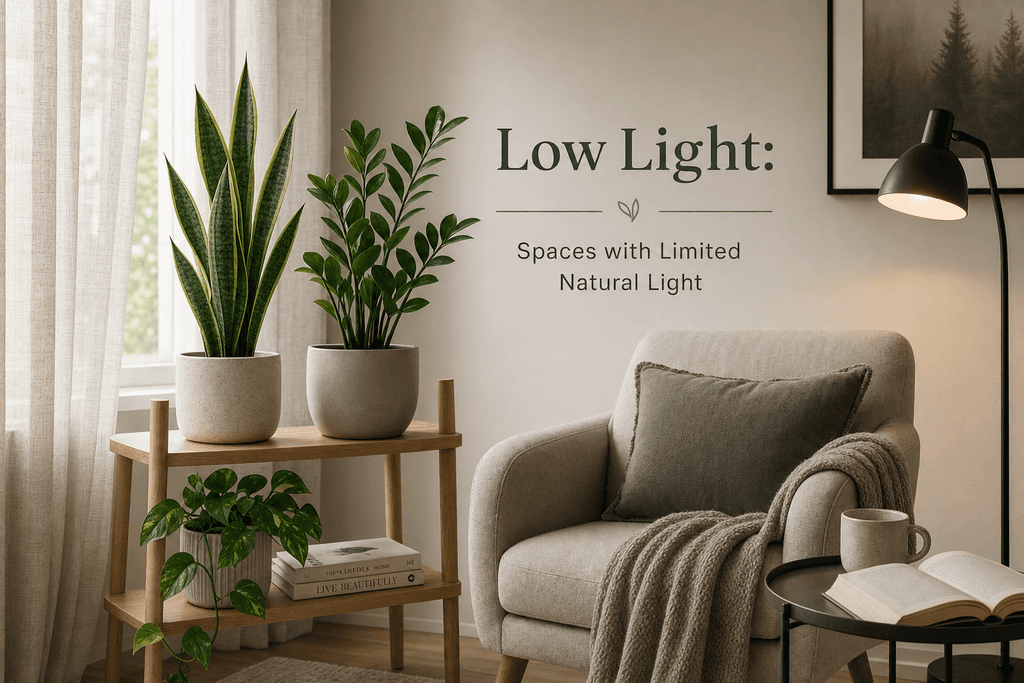
The tricky part is that "low light" means something different to plant experts than it does to regular people. When you're shopping for the best indoor houseplants for low light, you need to know what you're actually working with at home.
Understanding Different Light Levels
Here's how the different light levels break down in ways that actually make sense for your space. Bright indirect light is what you get a few feet away from a south-facing window, where the sun never hits the plant directly but the room feels sunny. Medium light is further back from that window, maybe 5-8 feet away, where things are still pretty bright during the day. Low light is where it starts getting dim, like north-facing windows or rooms without many windows at all.
| Light Level | Real-World Example | Can You Read? |
|---|---|---|
| Bright Indirect | 3 feet from south window | Easily all day |
| Medium Light | North window or 8 feet from bright window | Yes, but dimmer |
| Low Light | Bathroom, hallway, office with small window | Barely without strain |
| Very Low Light | Interior room, far from windows | Need a lamp |
Simple Tests for Your Space
You don't need fancy equipment to figure out if you have low light conditions. There are a few easy ways to test your space that work just as well as expensive light meters.
- The shadow test: Hold your hand up at plant height during the brightest part of the day. If you can barely see a shadow or it's very fuzzy, that's low light
- The reading test: Try reading a book in that spot at noon without any lights on. If it's hard or uncomfortable, you're dealing with low light
- The phone camera test: Take a photo without flash. If your phone struggles or the image looks dark, plants will struggle too unless they're true low light varieties
- The direction test: North-facing windows almost always provide low light conditions, especially if there are buildings or trees outside
Common Low Light Spots in Your Home
Certain areas in almost every home fall into the low light category. Bathrooms are classic low light spaces, especially if they only have one small window or a frosted window for privacy. Hallways rarely get direct light and usually qualify as low light, even if they have a window at one end. Home offices without great windows are another common spot where people want to add some greenery but struggle to find the best house plant low light options.
Bedrooms with north-facing windows, corners of living rooms far from windows, and entryways are all prime candidates for indoor plants very low light tolerant. At Runo Plants, we get questions about these exact spots all the time during our live shopping events, because people want to bring life to these darker areas without watching their plants slowly die.
- North-facing windows and the areas around them
- Bathrooms with small or frosted windows
- Interior hallways and entryways
- Home offices with limited natural light
- Corners of rooms more than 8 feet from windows
Top 10 Low Light Houseplants That Actually Thrive
Most apartments and offices have at least one room that barely sees sunlight, but that doesn't mean you can't fill it with greenery. Some plants have evolved in forest understories where they naturally receive filtered, dim light, making them perfect for your darker spaces. These plants don't just survive in low light conditions, they actually prefer them, which means less stress for you and healthier growth for your plants. Understanding which species work best in dim conditions can turn that windowless bathroom or north-facing bedroom into a thriving indoor garden.
Pothos tops the list as the most forgiving low light houseplant you can own. This trailing vine grows in almost any condition and actually tells you when it needs water by drooping slightly. The leaves stay glossy even in rooms with minimal natural light, and it grows fast enough that you'll see progress without needing a sunny window.
Snake plants are nearly impossible to kill because they store water in their thick, upright leaves. They can go weeks without water and months without bright light, making them ideal for busy apartment dwellers or anyone who travels frequently.
- ZZ Plant - Features waxy, dark green leaves that reflect whatever light is available
- Peace Lily - One of the few plants that produces white flowers in low light conditions
- Cast Iron Plant - Earned its name by surviving neglect, darkness, and temperature swings
- Philodendron varieties - Both climbing and upright types work well in dim corners
The Dracaena family includes several varieties that grow tall and narrow, perfect for filling vertical space in dark hallways or office corners. Our Dracaena Limelight brings bright chartreuse color to spaces that would otherwise feel too dark for plants.
Chinese Evergreen plants like the Aglaonema Light of Diamond offer colorful patterns and variegation without requiring bright windows. These compact plants fit on desks and shelves while adding visual interest to otherwise plain spaces.
| Plant Name | Care Level | Max Height | Special Feature |
|---|---|---|---|
| Pothos | Easy | 10+ feet | Fast trailing growth |
| Snake Plant | Very Easy | 4 feet | Drought tolerant |
| ZZ Plant | Very Easy | 3 feet | Glossy leaves |
| Peace Lily | Easy | 3 feet | Flowers in shade |
| Dracaena | Easy | 6 feet | Tall statement plant |
Parlor palms bring tropical vibes to dark rooms without the high humidity requirements of other palms. They grow slowly but steadily, eventually reaching about four feet tall. Prayer plants add movement to your space because their leaves fold up at night and open during the day, even in rooms with limited light.
Simple Care Tips for Low Light Plants
Plants in low light conditions use less energy, which means they need less water and fertilizer than their sun-loving cousins. The biggest mistake new plant owners make is treating their shade plants the same as plants in bright windows. When photosynthesis slows down in dim conditions, plants absorb water much more slowly, so that weekly watering schedule you read about online might actually drown your low light plants. Most indoor houseplants low light varieties prefer to dry out between waterings, sometimes going two or three weeks without a drink.
Overwatered plants in low light show yellowing leaves that feel mushy or soft at the base. The soil stays wet for days after watering, and you might notice a musty smell coming from the pot. Underwatered plants have crispy brown edges, drooping stems, and soil that pulls away from the pot edges.
- Water only when the top 2-3 inches of soil feel completely dry
- Use well-draining soil like our Houseplant Chunky Mix to prevent root rot
- Fertilize every 2-3 months during spring and summer, not monthly
- Skip fertilizer completely in fall and winter when growth slows
Cleaning leaves matters more in low light because dust blocks whatever limited light your plants receive. Wipe leaves with a damp cloth monthly to maximize their ability to photosynthesize. This simple step can make the difference between a plant that barely survives and one that actually grows.
Rotating your plants every few weeks ensures all sides receive equal light exposure. Plants naturally grow toward light sources, so without rotation, they develop lopsided growth that looks awkward. A quarter turn every time you water keeps growth balanced and attractive.
Some spaces are too dark even for low light plants, especially rooms with no windows or only artificial lighting. If your plant stops growing entirely or starts dropping healthy green leaves, it might need supplemental light. Small LED grow lights work well for desks and shelves without looking too industrial.
Monthly Care Checklist
- Check soil moisture before watering
- Wipe dust from leaves with damp cloth
- Rotate plant one quarter turn
- Remove any dead or yellowing leaves
- Check for pests under leaves and near soil
- Fertilize only during growing season
Styling Dark Spaces with Low Light Plants
Dark corners and windowless rooms don't have to feel empty or lifeless when you know how to place plants strategically. The best spots for house plants low light include bathrooms with shower steam, bedroom corners away from windows, hallway tables, and office desks under fluorescent lights. These locations might seem challenging, but they're actually perfect for shade-loving species that would burn in direct sun. Grouping several plants together creates a mini ecosystem where they benefit from shared humidity and make a bigger visual impact than single specimens scattered around.
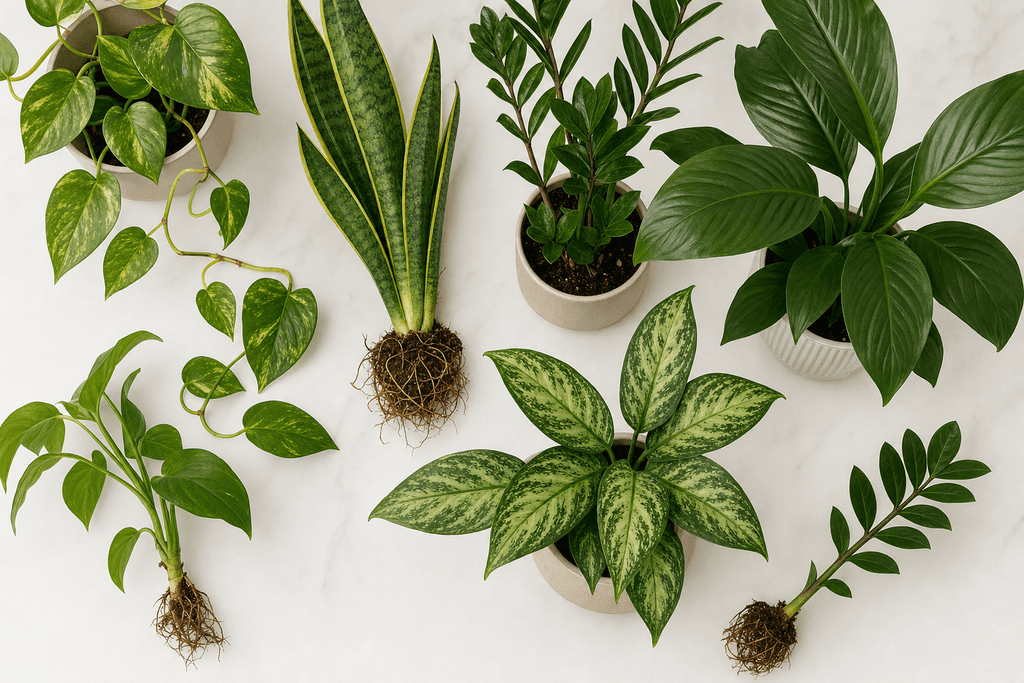
Trailing plants like pothos and philodendrons work beautifully on high shelves and bathroom ledges where their vines can cascade down. This draws the eye upward and makes small spaces feel larger. Our low light indoor plants collection includes several trailing varieties that ship ready to hang.
- Place tall plants like dracaena in dark corners to fill vertical space
- Use compact plants like Chinese evergreen on desks and nightstands
- Group 3-5 plants of varying heights for visual interest
- Choose light-colored pots to brighten dark areas
Office workers benefit most from desk plants that survive fluorescent lighting and irregular watering schedules. Snake plants and ZZ plants handle the dry air and artificial light of office buildings better than most species. They also improve air quality in spaces where you spend eight hours a day.
Bedroom plants for windowless or north-facing rooms should be compact and low-maintenance since you probably don't want to fuss with plant care first thing in the morning. Peace lilies and prayer plants add life without taking up much space on dressers or nightstands.
The Low Light Combination Planter we offer includes three complementary species already arranged in one pot, taking the guesswork out of creating an attractive display. This approach works especially well for beginners who want the look of multiple plants without managing separate pots and watering schedules.
Hallways and entryways rarely get direct light but see lots of foot traffic, so choose sturdy plants that won't mind occasional bumps. Cast iron plants and snake plants tolerate these high-traffic, low-light conditions better than delicate ferns or flowering plants. White or metallic planters reflect available light and prevent these transitional spaces from feeling too dark.
For more guidance on plant selection and care, check out our beginner-friendly plant guide and learn more about how lighting affects your plants. Whether you're looking for easy care options or want to explore our full range of tropical indoor plants, there's a low light solution for every dark space in your home.
Why Low Light Plants Work Better for Most People
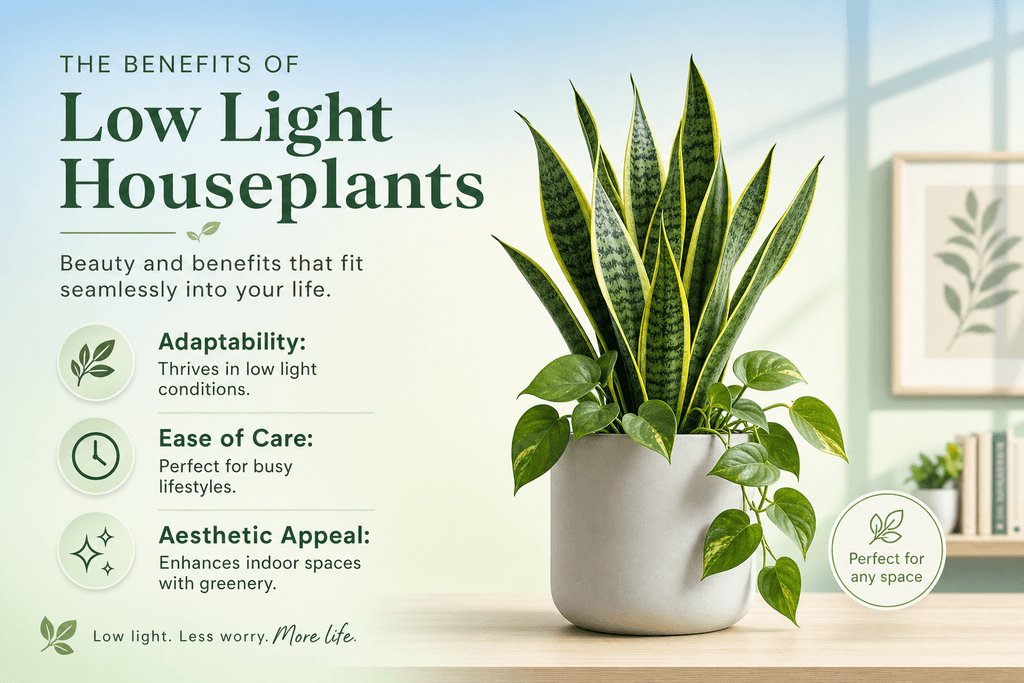
Most apartments and homes have limited natural light, which makes low light houseplants the practical choice for about 70% of indoor spaces. The reality is that not everyone has south-facing windows or bright sunrooms, and that's exactly why indoor houseplants for low light have become so popular. These plants adapt to typical living conditions instead of requiring you to rearrange your entire home around their needs. Low light plants survive in conditions where other houseplants would struggle or die, making them the smart choice for real-world living situations. At Runo Plants, we've seen firsthand how these forgiving varieties help people finally succeed with indoor gardening after years of failed attempts with light-hungry tropicals.
The Practical Advantages of Low Maintenance Plants
Low light houseplants require watering less frequently than their sun-loving counterparts because they photosynthesize more slowly. This slower growth rate means you can skip a watering session without causing immediate damage to your plant.
| Survival Rate | 85% for low light plants |
| Beginner Success | 3x higher with shade-tolerant varieties |
| Urban Apartments | 68% have limited natural light |
| Average Watering | Every 10-14 days vs 5-7 days |
The best indoor houseplants for low light work perfectly for renters who have zero control over window placement or room orientation. You can't exactly ask your landlord to install new windows just for your plants.
Perfect for Busy Schedules and Travel
Indoor plants very low light tolerate neglect better than any other category of houseplants. People who travel for work or have unpredictable schedules find these plants forgiving when life gets hectic.
- Best low light indoor plants can survive 2-3 weeks without water during slower growth periods
- They show stress signs gradually, giving you time to correct problems before permanent damage occurs
- Lower light means slower growth, which translates to less frequent repotting and pruning
- These varieties rarely need fertilizer more than once every few months
Expanding Your Plant Possibilities
The best house plant low light options let you add greenery to bathrooms, hallways, offices, and bedrooms that would otherwise stay empty. You're no longer limited to placing plants only near windows, which opens up your entire home for decorating with living greenery.
- Bathrooms with small windows become perfect spots for humidity-loving shade plants
- Home offices without direct sunlight can finally have desk plants
- Corners and entryways that stay dim all day become viable plant locations
The best houseplants for low light also tend to be more affordable than rare tropical specimens that need specific conditions. This makes them accessible for beginners who want to test their plant care skills without spending a fortune on something that might not survive their learning curve.
Start Your Low Light Plant Collection Today
Dark spaces in your home can absolutely support healthy, thriving plants. You don't need bright windows or grow lights to become a successful plant parent. The best low light indoor plants are naturally adapted to grow under tree canopies in forests, which means they're already built for your dim corners and windowless bathrooms. Starting with just one or two easy plants is the smartest way to build confidence without feeling overwhelmed.
Low light houseplants are perfect for beginners because they forgive mistakes like inconsistent watering and don't demand constant attention. Plants like pothos, snake plants, and ZZ plants can handle the kind of neglect that would kill sun-loving varieties. If you want to skip the guesswork entirely, our low light combination planter includes three proven varieties that work well together in darker rooms.
We ship healthy indoor houseplants for low light nationwide from our greenhouses in South Florida, so you get plants that are already acclimated and ready to grow. Each plant comes with care instructions specific to low light conditions. Whether you're filling a basement office or a north-facing bedroom, there's a plant that will work for your space.
The hardest part is usually just picking your first plant. Once you see how well these best indoor low light houseplants adapt to your home, you'll probably want more. Check out our full collection of easy care beginner plants to find the perfect match for your darkest corners.
Now let's answer some common questions about keeping these plants happy in low light conditions.
Common Questions About Low Light Houseplants
Growing house plants low light conditions can feel confusing at first, especially when you're trying to figure out what your plants actually need. Most people have the same questions when they start filling their darker rooms with greenery. Here are the answers to help you keep your best indoor houseplants for low light thriving without the guesswork.
Can plants really survive without much light?
Yes, but there's an important catch. Low light plants can survive in dim conditions, but they still need some light to photosynthesize. They've adapted to grow under forest canopies in nature, so they're used to filtered or indirect light. A room with a north-facing window or a spot several feet from a bright window works well for most indoor houseplants low light varieties.
What's the difference between low light and no light?
Low light means your plant gets some natural light during the day, even if it's dim or indirect. No light means a completely dark room like a windowless bathroom or closet. No houseplant can survive in total darkness because they need light to make food. If you can read a book comfortably without turning on a lamp, that's usually enough light for best low light indoor plants.
How often should I water low light plants?
Less often than you think. Plants in low light grow slower and use less water than plants in bright spots. Most indoor plants very low light need watering every 10-14 days, but always check the soil first. Stick your finger about two inches down, and only water if it feels dry. Overwatering kills more low light houseplants than anything else.
Do low light plants need fertilizer?
They do, but not as much as plants in brighter spots. Feed your best house plant low light options once a month during spring and summer with a diluted liquid fertilizer. Skip fertilizing in fall and winter when growth naturally slows down. At Runo Plants, we include care cards with each plant that tell you exactly how much to feed based on your specific variety.
Can I use grow lights instead of natural light?
Absolutely. Grow lights work great for best houseplants for low light when natural light isn't an option. Place a full-spectrum LED grow light about 12-18 inches above your plant and run it for 10-12 hours daily. This setup can actually help your best indoor low light houseplants grow faster than they would in a dim natural light situation.
Will my low light plant ever flower?
Some will, but most best low light indoor house plants are grown for their foliage rather than flowers. Plants like peace lilies and ZZ plants can bloom in low light, though the flowers might be smaller or less frequent. If you want guaranteed blooms, you'll need to move your plant to a brighter spot during its flowering season.