

Syngonium vs Alocasia for Indoors Which One Fits You
Sep 05, 2026
You bring home a gorgeous tropical plant, give it what you think it needs, and three weeks later it's either drowning or dying of thirst. The syngonium vs alocasia debate matters because these two popular houseplants look equally lush at the store but demand completely opposite care routines once they're sitting on your shelf. Choosing the wrong one for your apartment's light, your watering habits, or your work-from-home schedule means wasted money and a sad, crispy plant.
Which is easier to care for indoors Syngonium or Alocasia?
Syngonium is significantly easier to care for indoors than Alocasia, tolerating lower light conditions (down to 100-200 foot-candles) and forgiving irregular watering schedules. Alocasia requires bright indirect light (300-400 foot-candles minimum), consistent humidity above 60%, and precise watering to prevent root rot or leaf loss.
How often should you water Syngonium vs Alocasia?
Syngonium requires watering every 7-10 days when the top 2 inches of soil are dry, while Alocasia needs watering every 5-7 days to keep soil consistently moist but not waterlogged. Alocasia is more sensitive to both overwatering and underwatering, often dropping leaves when watering schedules are inconsistent.
Do Syngonium and Alocasia need the same humidity levels?
Alocasia requires humidity levels of 60-80% to thrive and prevent brown leaf edges, while Syngonium tolerates average household humidity of 40-50% without issue. Alocasia typically needs a humidifier or pebble tray in most indoor environments, whereas Syngonium adapts to standard indoor conditions without supplemental humidity.
Table of Contents
Meet Your Plant Candidates
Both Syngonium and Alocasia have been growing in tropical forests for millions of years, but they come from completely different parts of the world. Syngoniums call the rainforests of Central and South America home, where they climb up trees using aerial roots to reach filtered sunlight. Alocasias, on the other hand, evolved in the steamy jungles of tropical Asia, from the Philippines to Malaysia. These two plants might share a love for humidity, but their personalities couldn't be more different. Understanding where they come from helps explain why one might work better in your home than the other.
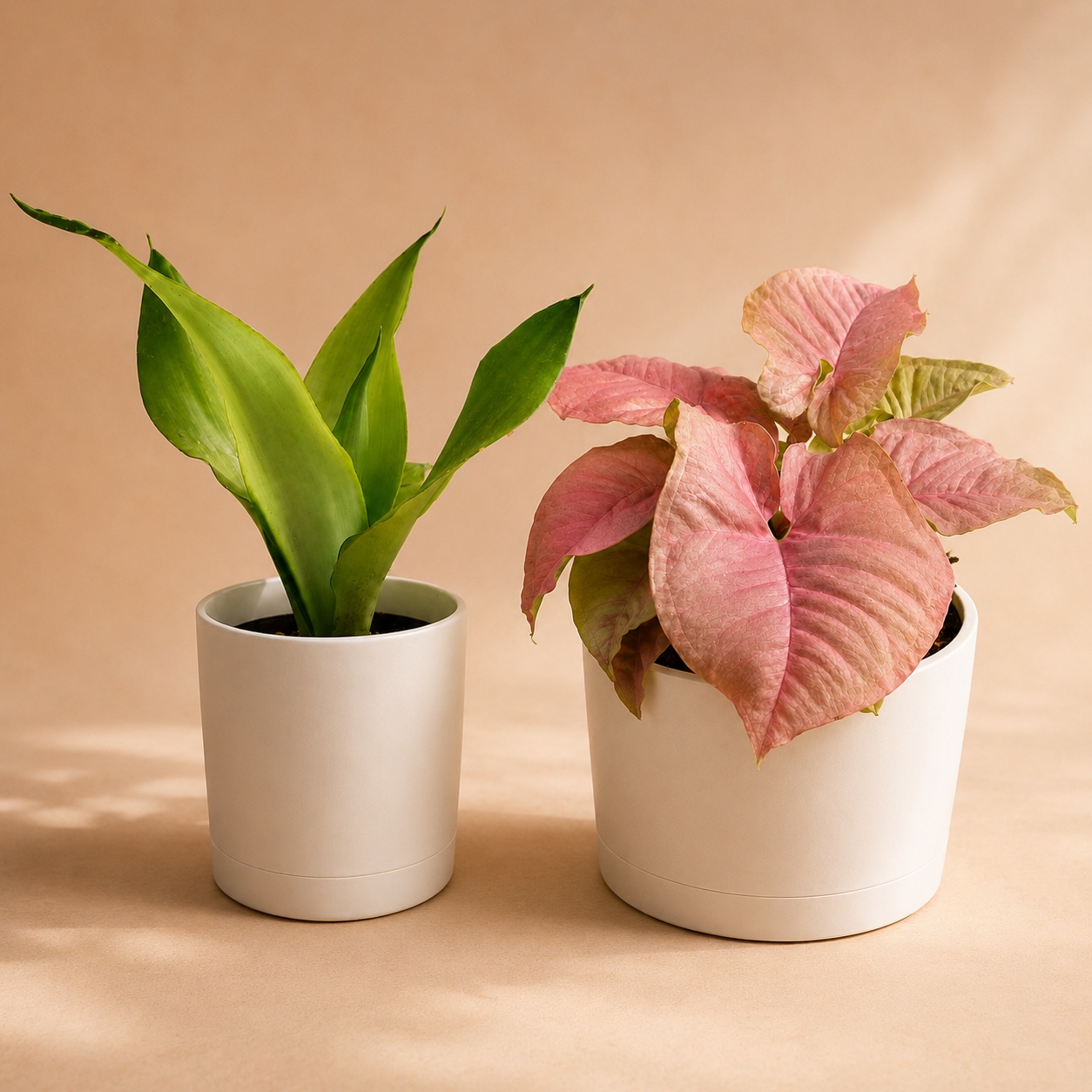
Syngonium Neon Pink & Sansevieria 'Moonshine' Bundle
Where These Plants Came From
Syngoniums spent thousands of years adapting to life on the forest floor and climbing up tree trunks. They developed arrow-shaped leaves that change as the plant matures, starting compact and getting bigger over time. Their vining nature made them perfect for small spaces, which is exactly why they became popular houseplants in the first place.
Alocasias took a different path entirely. They grew massive, dramatic leaves to capture every bit of light filtering through dense jungle canopies. Some species developed leaves that can grow over three feet long in the wild. The Alocasia 'Venom' we carry shows off this dramatic heritage with its dark, textured foliage that looks almost prehistoric.
- Syngoniums naturally climb and vine in their habitat
- Alocasias grow as upright clumps with bold leaves
- Both plants evolved in high-humidity environments
- Their wild origins directly affect their indoor care needs
How They Grow Indoors
When you bring a Syngonium home, expect it to start compact and gradually send out vines. The Syngonium Neon Pink in our bundle stays manageable in its 6-inch pot but will eventually want to climb or trail. You can train it up a moss pole or let it cascade from a shelf.
Alocasias grow completely differently. They send up new leaves from a central point, creating a clumping effect rather than vining. Each new leaf unfurls like a piece of living art, and older leaves eventually die back as part of their natural cycle.
- Syngoniums produce new growth from vine tips and nodes
- Alocasias push up new leaves from underground rhizomes
- Syngoniums can be pruned to stay bushy or allowed to vine
- Alocasias maintain their upright structure naturally
Quick Comparison at a Glance
| Feature | Syngonium | Alocasia |
|---|---|---|
| Origin | Central & South America | Tropical Asia |
| Growth Habit | Climbing vine | Upright clump |
| Leaf Size | Small to medium | Medium to large |
| Visual Style | Soft and trailing | Bold and dramatic |
| Mature Height | 3-6 feet (vining) | 2-4 feet (upright) |
The syngonium vs alocasia debate really comes down to what kind of plant personality fits your space. One adapts and forgives mistakes easily, while the other demands attention but rewards you with showstopping looks.
Light and Space Requirements
Most apartment dwellers lose their first houseplant because they put it in the wrong spot, not because they're bad at plant care. When you're comparing syngonium vs alocasia, the light situation in your home matters more than you might think. Syngoniums are the flexible friend who adapts to almost any lighting situation, while alocasias are pickier about where they'll thrive. Your window placement and room brightness will determine which plant actually survives in your space.
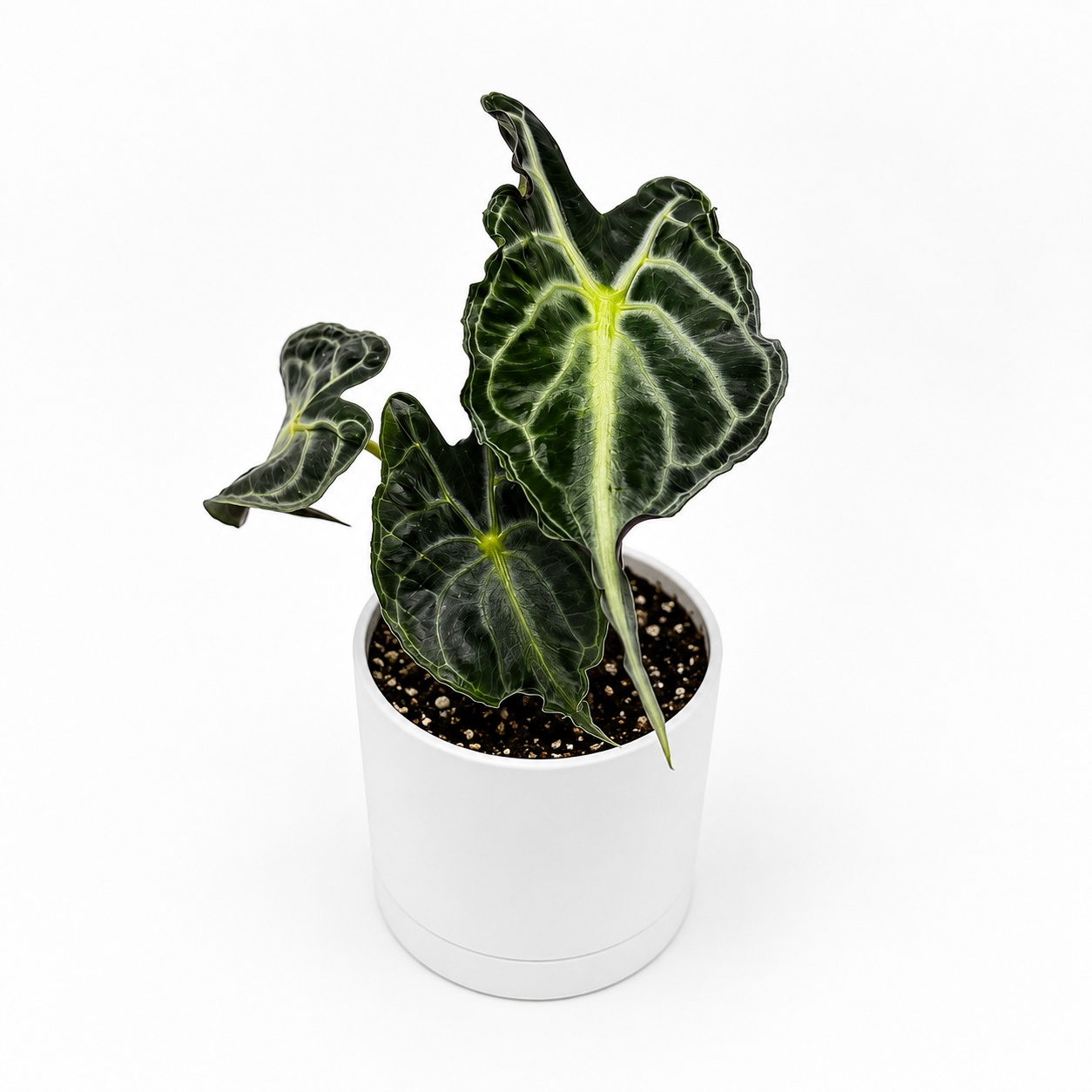
Alocasia 'Venom'
Syngoniums handle medium to bright indirect light and will even tolerate those darker corners where most plants give up. They're perfect for north-facing windows or rooms that don't get much natural light. Alocasias demand bright indirect light and will throw a fit in dim conditions, dropping leaves and going dormant when they don't get enough brightness.
Space Planning Tips:- Syngoniums climb and spread, needing vertical space or room to trail
- Alocasias grow upright and compact, fitting tight desk corners
- Place syngoniums 3-5 feet from east or west windows
- Position alocasias 2-3 feet from bright windows with sheer curtains
- Rotate both plants weekly for even growth
You can tell if your plant is getting the right light by watching the leaves. Syngoniums with pale, washed-out colors need more light, while scorched brown edges mean too much direct sun. Alocasias show their displeasure faster, with leaves pointing downward or new growth coming in smaller than older leaves.
| Light Factor | Syngonium | Alocasia |
|---|---|---|
| Minimum Light | Low to medium | Bright indirect |
| Ideal Placement | 3-5 feet from window | 2-3 feet from window |
| Tolerance | Very flexible | Picky |
The Syngonium Neon Pink & Sansevieria 'Moonshine' Bundle works great for apartment dwellers because both plants handle varying light conditions without drama.
Watering and Humidity Needs
Watering mistakes kill more houseplants than pests and diseases combined. The difference between syngonium vs alocasia watering needs is like comparing a camel to a tropical fish. Syngoniums prefer their soil to dry out slightly between waterings, making them forgiving if you forget for a few days. Alocasias want consistently moist soil but will rot if you overdo it, which is a tricky balance for beginners.
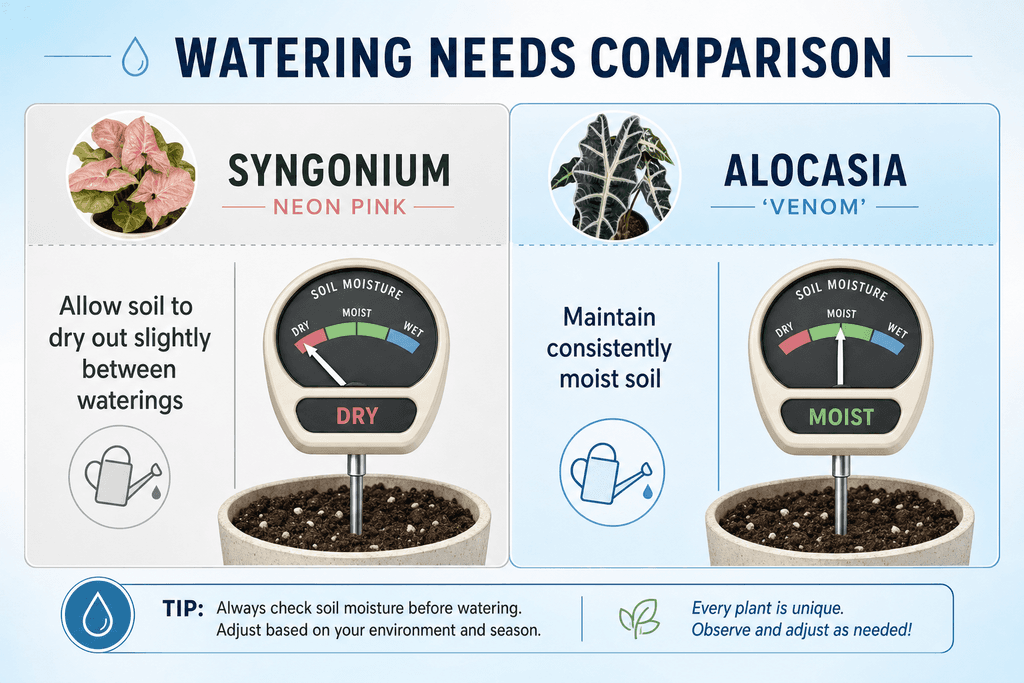
Water syngoniums when the top 2 inches of soil feel dry, which usually means once every 7-10 days in most apartments. Alocasias need checking every 3-5 days because they drink faster and hate drying out completely. The soil should feel like a wrung-out sponge, not wet or bone dry.
Watering Checklist for Syngoniums:- Check soil moisture with your finger before watering
- Water thoroughly until it drains from bottom holes
- Empty saucer after 15 minutes to prevent root rot
- Reduce watering in winter to every 10-14 days
Humidity is where alocasias get really demanding. They need 60-80% humidity to look their best, while syngoniums are happy with normal household levels around 40-50%. Home office workers can group plants together to create a humidity microclimate or run a small humidifier nearby.
Watering Checklist for Alocasias:- Never let soil dry out completely
- Use filtered or distilled water to avoid leaf spots
- Mist leaves daily or use a pebble tray
- Watch for drooping as a sign of thirst
Yellow leaves with brown edges usually mean overwatering in both plants. Crispy brown leaf tips signal underwatering or low humidity, especially common with alocasias in dry apartments. During winter, both plants need less water because they grow slower and the soil stays moist longer.
The Alocasia 'Venom' shows off its dramatic dark foliage best when humidity stays high and watering stays consistent.
Maintenance and Common Problems
Real talk about difficulty levels: syngoniums are beginner-friendly plants that forgive your mistakes, while alocasias will humble even experienced plant parents. Syngoniums grow fast, propagate easily from stem cuttings, and bounce back quickly from neglect. Alocasias go dormant when stressed, drop leaves for seemingly no reason, and take months to recover from problems. If you're a first-time plant owner working from home, this difference matters a lot.
Alocasias naturally cycle through leaves, dropping old ones as new ones emerge, which freaks out new owners who think they're killing their plant. This is normal behavior, not a care mistake. Syngoniums keep their leaves unless something is actually wrong, making problems easier to spot and fix.
| Care Factor | Syngonium | Alocasia |
|---|---|---|
| Difficulty Level | Easy | Intermediate |
| Propagation | Very easy | Difficult |
| Pest Resistance | Good | Moderate |
| Dormancy | Rare | Common in winter |
Spider mites love alocasias and will set up camp on the undersides of those big leaves if humidity drops. Syngoniums occasionally get aphids or mealybugs but resist pests better overall. Wipe down alocasia leaves weekly with a damp cloth to prevent dust buildup and spot pests early.
Common Problems and Solutions:- Yellowing syngonium leaves: reduce watering frequency
- Alocasia going dormant: normal in winter, reduce water and wait
- Brown leaf edges on both: increase humidity immediately
- Leggy syngonium growth: move closer to light source
- Small new alocasia leaves: needs more light or fertilizer
Both plants are toxic to cats and dogs, so pet owners need to keep them out of reach. Repot syngoniums every 1-2 years in spring using well-draining potting mix with perlite. Alocasias prefer staying slightly rootbound and only need repotting every 2-3 years.
For more detailed guidance, check out our Syngonium care guide and Alocasia care tips. You can explore our full Syngonium collection or browse the Alocasia collection to find varieties that match your space and skill level.
Which Plant Matches Your Lifestyle
The syngonium vs alocasia debate comes down to how much time you actually have for plant care and what kind of space you're working with. Most people overestimate their ability to maintain high-maintenance plants, which is why understanding your real lifestyle matters more than just picking the prettiest option. Your daily schedule, living space size, and budget all play a role in whether you'll end up with a thriving plant or a sad brown mess in the corner. The good news is that both plants can work for different situations, but one will almost always be a better fit for your specific needs.
Best for Busy Professionals
Syngonium plants win for anyone who travels frequently or works long hours. They forgive missed waterings and don't throw a fit if you forget about them for a week.
- Syngonium can survive 7-10 days without water in most indoor conditions
- Alocasia requires consistent moisture checks every 2-3 days during growing season
- Syngonium tolerates lower light in offices without windows
- The Syngonium Neon Pink & Sansevieria 'Moonshine' Bundle pairs two low-maintenance plants at $39.80
Ideal for Plant Collectors
Alocasia 'Venom' serves as a centerpiece plant that draws attention and starts conversations. Collectors who already maintain 10+ plants and understand humidity needs will appreciate its dramatic foliage.
- Alocasia 'Venom' features rare reptilian-textured leaves that stand out in collections
- Syngonium varieties are common at big-box stores like Costa Farms locations
- Premium alocasias hold resale value better than common aroids
- The Alocasia 'Venom' at $88.80 offers collector-grade quality
Space and Budget Considerations
Small apartments under 600 square feet benefit from compact syngoniums that can climb a small trellis or trail from shelves. Alocasia plants need at least 18-24 inches of clearance around them for proper air circulation and to show off their leaf spread.
| Factor | Syngonium | Alocasia |
|---|---|---|
| Space needed | 12-15 inches | 18-24 inches |
| Entry price | $39.80 bundle | $88.80 |
| Monthly care time | 15-20 minutes | 45-60 minutes |
Your home office aesthetic matters too. Syngonium's softer pink tones suit Scandinavian or minimalist spaces, while alocasia's dark dramatic leaves match moody, maximalist interiors. Budget-conscious plant parents should start with the syngonium bundle to build confidence before investing in premium specimens.
Your Perfect Plant Match Awaits
The syngonium vs alocasia debate really comes down to what kind of plant parent you are. Syngoniums are forgiving, fast-growing, and perfect if you want something that adapts to different light conditions without much fuss. Alocasias bring drama and beauty but need you to pay closer attention to humidity, watering schedules, and light levels. Neither plant is better than the other, they just fit different lifestyles and spaces.
If you're working from home in a room with medium light and want something low-maintenance, a syngonium makes sense. The Syngonium Neon Pink & Sansevieria 'Moonshine' Bundle gives you a vibrant 6-inch syngonium plus a bonus snake plant for under $40 with free shipping. If you're ready to level up your plant game and have a bright spot with good humidity, check out the alocasia collection where plants like the Alocasia 'Venom' bring that dark, sculptural look that turns heads.
Both plants can thrive indoors when you match them to the right conditions. The trick is being honest about how much time you have and what your space actually offers. Once you know that, picking between these two becomes pretty straightforward.
Still have questions about care requirements or which variety to start with? The answers below cover the most common concerns new plant owners have.
Common Questions About Syngonium and Alocasia
Choosing between syngonium vs alocasia brings up a lot of practical questions that most plant guides skip over. These are the real-world concerns that come up after you've already decided you want one of these plants but need to know what you're actually getting into. Whether you're worried about your skill level, your pets, or your budget, these answers should clear things up before you make your choice.
Can beginners successfully grow Alocasia?
Alocasia plants can be tricky for complete beginners because they're sensitive to overwatering and need consistent humidity. They tend to go dormant if conditions aren't right, which can freak out new plant owners who think their plant is dying. If you're new to plants, a Syngonium is honestly a safer bet since it forgives mistakes much more easily.
Do Syngoniums need to climb or can they trail?
Syngoniums are super flexible and can do either depending on how you want to style them. Without support, they'll naturally trail and cascade down from shelves or hanging planters. If you give them a moss pole or trellis, they'll happily climb and develop larger, more mature leaves as they grow upward.
Are these plants toxic to pets?
Both Syngonium and Alocasia contain calcium oxalate crystals, which means they're toxic to cats and dogs if chewed or ingested. Symptoms can include mouth irritation, drooling, and digestive upset. Keep them on high shelves or in rooms your pets don't access if you have curious animals at home.
How fast do each of these plants grow?
Syngoniums are pretty fast growers during spring and summer, often putting out new leaves every week or two when they're happy. Alocasia growth depends heavily on the variety, but most grow at a moderate pace and may slow down or go dormant in winter. The Syngonium Neon Pink in our Syngonium & Sansevieria Bundle typically shows noticeable growth within the first month of proper care.
Can you grow both plants in the same room?
You can absolutely grow both in the same room as long as you place them according to their light needs. Put your Alocasia closer to a bright window while keeping your Syngonium a bit further back where light is moderate. Just remember they have different watering schedules, so don't fall into the trap of watering them at the same time.
What's the price difference and is it worth it?
Alocasia plants typically cost more because many varieties are rarer and harder to propagate. Our Alocasia 'Venom' runs $88.80 while the Syngonium bundle is just $39.80 with free shipping. Whether the price difference is worth it depends on your experience level and what you want from a plant—Alocasia offers drama and collector appeal, while Syngonium gives you reliable beauty without the stress.