

Palm Tree Indoor Plant Care for Healthy Growth at Home
Sep 07, 2026
Your palm tree indoor plant probably isn't dying because you have a black thumb—it's struggling because most people water, light, and feed all palms the same way, even though a Cat Palm needs completely different care than a Ponytail Palm. The good news is that once you understand what your specific palm actually needs, keeping it lush and healthy becomes surprisingly straightforward. This guide breaks down the exact care routines for different palm varieties so you can stop guessing and start growing.
How often should you water an indoor palm plant?
Indoor palm plants should be watered when the top 1-2 inches of soil feels dry to the touch, typically every 7-10 days during growing season and every 10-14 days in winter. Overwatering is the leading cause of indoor palm death, so allowing slight drying between waterings is essential for healthy root development.
What humidity level do indoor palm trees need?
Indoor palm trees thrive in humidity levels between 40-60%, with most tropical varieties preferring the higher end of that range. Maintaining adequate humidity prevents brown leaf tips and can be achieved through daily misting, pebble trays, or placing a humidifier within 3-6 feet of the plant.
How much light does an indoor palm plant need?
Most indoor palm plants require bright, indirect light for 6-8 hours daily, positioned 3-5 feet from an east or west-facing window. Direct sunlight causes leaf scorch and yellowing, while insufficient light leads to slow growth and sparse, weak fronds.
Table of Contents
Understanding Your Indoor Palm Varieties
Not all palm tree indoor plants are actually palms, and that's the first thing you need to know before bringing one home. While some grow tall trunks and others form bushy clumps, each variety has its own personality and care needs. The term "palm" gets thrown around pretty loosely in the plant world, which can make shopping confusing when you're trying to figure out what will actually work in your space. Understanding the differences between popular indoor palm varieties helps you pick the right one and avoid the frustration of watching it struggle in the wrong conditions.
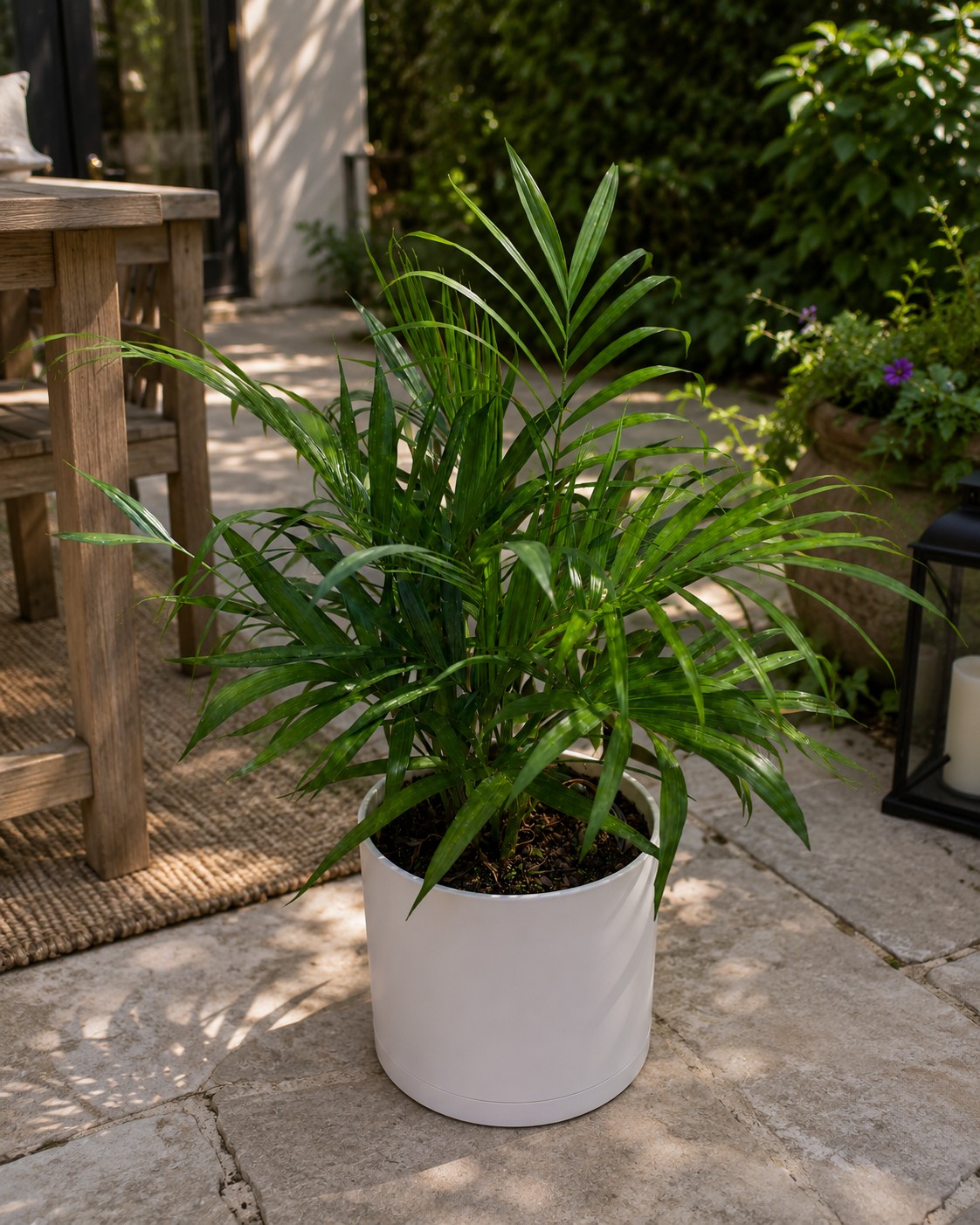
Cat Palm
The Three Main Types You Need to Know
The Cat Palm grows in dense, bushy clumps rather than developing a single trunk like you might picture when thinking of palm trees. Its soft, feathery fronds arch gracefully and create a full, tropical look that works well in corners or as a room divider. This variety is also pet-friendly, which makes it popular for households with curious cats or dogs who like to nibble on plants.
The Lady Palm, or Rhapis excelsa, brings a more refined look with its fan-shaped leaves that grow in neat clusters. It's known for surviving in conditions where other palms would give up, including lower light and inconsistent watering schedules. This makes it a solid choice if you're not home much or tend to forget about your plants for a week or two.
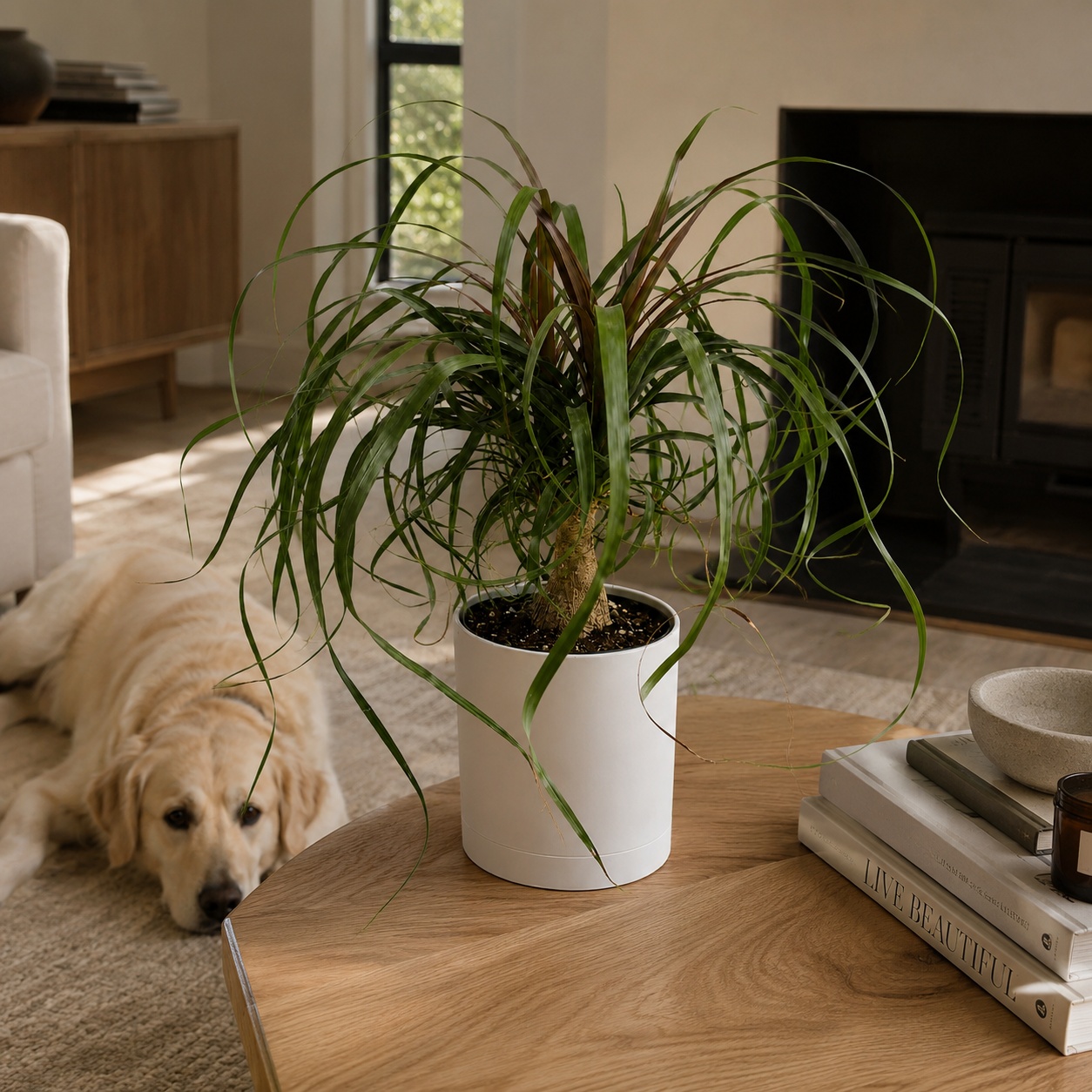
The Ponytail Palm isn't technically a palm at all. It's a semi-succulent that stores water in its swollen trunk base, which means it can handle neglect better than almost any other "palm" you'll find. Its ribbon-like leaves cascade down like a fountain, and it grows slowly enough that you won't need to repot it every year.
Quick Comparison of Care Needs
Each of these palm tree indoor plant varieties needs different things to stay healthy. Here's how they stack up against each other when it comes to the basics.
| Palm Variety | Light Needs | Water Frequency | Difficulty Level | Pet Safe |
|---|---|---|---|---|
| Cat Palm | Bright, indirect | 2-3 times weekly | Easy | Yes |
| Lady Palm | Low to bright | Weekly | Very easy | Yes |
| Ponytail Palm | Bright, direct OK | Every 2-3 weeks | Very easy | Yes |
Why These Differences Matter
Picking the wrong palm for your space is one of the fastest ways to end up with brown, crispy leaves or a plant that just sits there looking sad. The watering needs alone vary wildly between these three types, and what works for a Cat Palm will actually harm a Ponytail Palm over time.
Your lifestyle matters just as much as your space. If you travel frequently or work long hours, the Lady Palm or Ponytail Palm will forgive you for missing a watering or two. But if you're home most days and enjoy tending to plants regularly, the Cat Palm will reward your attention with lush, full growth. At Runo Plants, our Cat Palm, Lady Palm, and Ponytail Palm all come ready to thrive in their ideal conditions, so you can match the right variety to your actual routine instead of the routine you wish you had.
The good news is that all three varieties are considered pet-safe, so you don't have to choose between having plants and having animals. But beyond that shared trait, treating them all the same way is a recipe for disappointment. The care requirements might seem small on paper, but they add up to big differences in how these plants perform in your home.
Light Requirements That Make or Break Your Palm
Most palm tree indoor plant failures happen because people treat all palms the same when it comes to light. The truth is that different palm varieties have completely different light needs, and putting them in the wrong spot can mean the difference between a thriving plant and one that slowly declines. Understanding what your specific palm needs is the first step to keeping it healthy for years. Some palms will tolerate a dim corner while others demand a sunny window, and mixing this up is one of the fastest ways to watch your plant struggle.
Ponytail Palm
The Cat Palm needs bright, indirect light to maintain its lush, bushy appearance, though it can adapt to medium light conditions if needed. Think of a spot near an east-facing window or a few feet back from a south-facing one. The Lady Palm is your most forgiving option and handles low light better than almost any other palm, making it perfect for offices or rooms without great natural light.
- Cat Palm: Bright, indirect light preferred; tolerates medium light but grows slower
- Lady Palm: Adapts to low light; thrives in medium to bright indirect light
- Ponytail Palm: Needs direct sunlight; place in your brightest window
The Ponytail Palm is completely different from its tropical cousins because it actually loves direct sunlight and needs the brightest spot you have. This semi-succulent thrives when it gets several hours of direct sun each day, so a south or west-facing window works best. If you notice your palm developing brown, crispy leaf tips or pale new growth, it's probably not getting enough light.
On the flip side, too much direct sun on a Cat Palm or Lady Palm will cause bleached or scorched leaves. You'll see yellowing or brown patches on the fronds where the sun hits hardest. For apartment dwellers with limited windows, rotating your palms every few weeks helps them grow evenly, and sheer curtains can diffuse harsh afternoon sun while still providing plenty of brightness.
- Measure how many hours of direct sun each room gets
- Note which direction your windows face
- Check if trees or buildings block light outside
- Test spots with a light meter app on your phone
- Observe where shadows fall throughout the day
Watering Schedules That Actually Work
Watering mistakes kill more indoor palms than any other care issue, and the problem is that most people either water on a fixed schedule or treat all palms the same. Each palm type stores and uses water differently, so what works for one can drown another. The key is learning to read your soil and adjust based on what your specific palm needs, not what day of the week it is. Your home's temperature, humidity, pot size, and season all affect how quickly soil dries out.
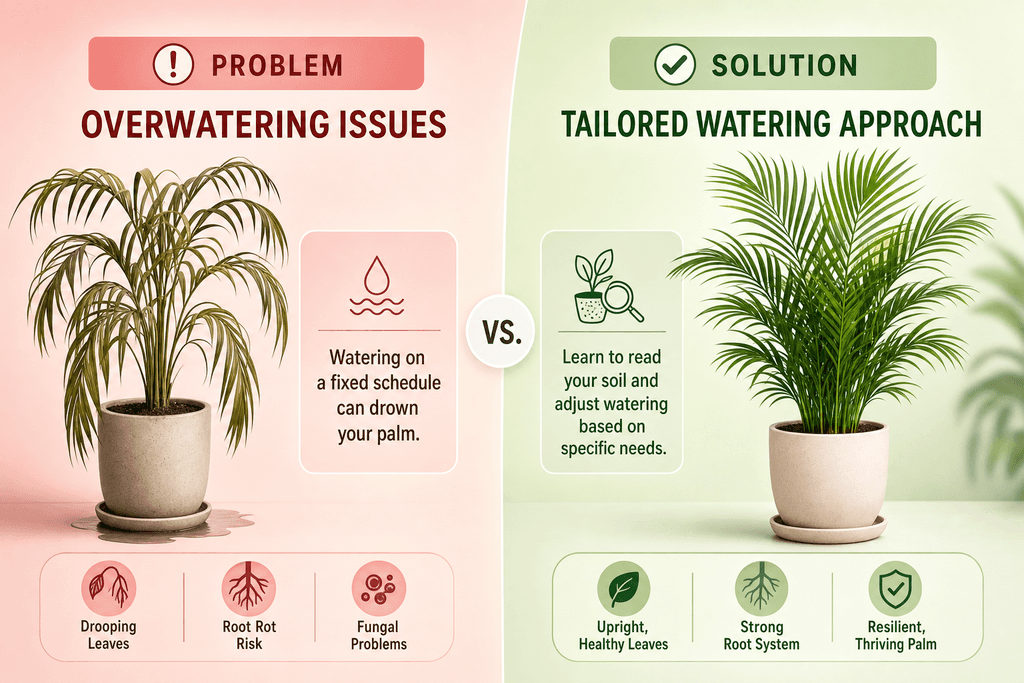
Cat Palms like consistently moist soil but will rot if the roots sit in water. Check the top inch of soil, and when it feels slightly dry, give it a thorough watering until water drains from the bottom. Lady Palms prefer to dry out a bit more between waterings, so let the top two inches of soil dry before watering again.
| Palm Type | Spring/Summer | Fall/Winter |
|---|---|---|
| Cat Palm | Every 5-7 days | Every 10-14 days |
| Lady Palm | Every 7-10 days | Every 14-21 days |
| Ponytail Palm | Every 14-21 days | Every 3-4 weeks |
The Ponytail Palm is the easiest to water because it stores water in its bulbous trunk and actually prefers to dry out completely between waterings. Overwatering is the number one killer of Ponytail Palms, so when in doubt, wait another few days. To check soil moisture properly, stick your finger into the soil up to your second knuckle or use a wooden chopstick to test deeper levels.
Winter changes everything because heating systems dry out the air but plants grow slower and need less water. You might water your Cat Palm twice a week in July but only once every two weeks in January. Signs of overwatering include yellowing lower fronds, musty soil smell, and soft brown spots on leaves, while underwatering shows up as brown, crispy leaf tips and fronds that curl inward.
Humidity and Temperature Sweet Spots
Indoor palms evolved in tropical environments where humidity stays high year-round, but most homes sit around 30-40% humidity, especially during winter when heating runs constantly. Most palm tree indoor plant varieties prefer 40-60% humidity but can adapt to lower levels with a few adjustments. The good news is you don't need expensive humidifiers or complicated setups to keep your palms happy. What matters more is consistency and understanding why your palm reacts the way it does to your home's conditions.
Brown leaf tips are almost always a humidity issue, not a watering problem, which confuses a lot of new plant owners. You can water perfectly and still see crispy tips if your air is too dry. The easiest way to boost humidity is grouping plants together so they create their own microclimate through transpiration.
- Place a shallow tray of water with pebbles near your palm
- Group multiple plants together in the same area
- Run a small humidifier in the room during dry months
- Mist leaves occasionally, though this provides temporary relief
- Keep palms away from heating vents and air conditioners
Temperature-wise, most indoor palms are comfortable between 65-80°F, which matches typical home temperatures perfectly. The Cat Palm and Lady Palm both handle normal household temps without issue. Avoid placing any palm near drafty windows in winter or directly under air conditioning vents in summer, as sudden temperature swings stress the plant.
Heating and air conditioning don't just change temperature but also dramatically reduce humidity. Central heating in winter can drop humidity below 20%, which is desert-level dryness. If you notice your palm's leaf tips turning brown during winter months, humidity is likely the culprit, not your watering routine.
- Keep bathroom door open when showering to share humidity
- Place plants on kitchen counters where cooking adds moisture
- Use a small personal humidifier near plant groupings
- Avoid placing palms near radiators or forced-air vents
- Monitor with an inexpensive hygrometer to track levels
Feeding, Repotting, and Long Term Care
Palms are slow growers compared to many houseplants, which means they need less frequent feeding and repotting than you might expect. Feed your palms with a balanced liquid fertilizer diluted to half strength every 4-6 weeks during spring and summer, then stop fertilizing completely in fall and winter when growth naturally slows. Over-fertilizing causes more problems than under-fertilizing, leading to brown leaf tips and salt buildup in the soil. The Cat Palm care guide goes into more detail about specific feeding schedules.
Repotting should happen every 2-3 years or when roots start growing out of drainage holes. Choose a pot only one size larger than the current one because palms actually prefer being slightly root-bound. Spring is the best time to repot since the plant can recover quickly during its active growing season.
- Spider mites: Appear as tiny dots and webbing; treat with insecticidal soap
- Scale insects: Look like brown bumps on stems; remove with rubbing alcohol
- Fungus gnats: Hover around soil; let soil dry more between waterings
Pruning dead or brown fronds keeps your palm looking its best and prevents pest problems. Use clean, sharp scissors to cut fronds at the base where they meet the stem, but never remove more than 20% of the plant at once. The Lady Palm and other varieties naturally shed lower fronds as they age, which is completely normal.
Understanding that palms grow slowly helps set realistic expectations. Your Cat Palm might only put out 2-3 new fronds per year, while a Ponytail Palm might take years to add noticeable height. This slow growth is actually an advantage because it means less frequent repotting and a plant that stays the right size for your space longer. For more tropical plant options that complement palms, check out the tropical indoor plants collection.
- Spring: Resume fertilizing, repot if needed, increase watering frequency
- Summer: Monitor for pests, maintain consistent watering, watch humidity levels
- Fall: Reduce fertilizing, prepare for slower growth, check for drafts
- Winter: Stop fertilizing, reduce watering, boost humidity near heaters
Your Path to Palm Success
Growing a palm tree indoor plant really comes down to three main things: getting the light right, watering when the soil actually needs it, and keeping the air from getting too dry. Most palm problems happen when people treat all palms the same way, but a Cat Palm needs more water than a Ponytail Palm, and a Lady Palm can handle lower light than most other varieties. Once you figure out what your specific palm wants, the daily care becomes pretty straightforward.
The first few weeks are always the trickiest because you're still learning your plant's rhythm. You might underwater once or notice some brown tips while you dial in the humidity. That's completely normal and doesn't mean you're failing at this.
At Runo Plants, we grow healthy palms like the Cat Palm, Rhapis Excelsa 'Lady Palm', and Ponytail Palm that are already established and ready to adapt to your home. Starting with a strong plant makes the learning curve a lot easier.
If you want more detailed care instructions for specific varieties, check out our guides on how to care for Cat Palm, how to care for Rhapis Excelsa Lady Palm, and how to care for Ponytail Palm. Each one breaks down the exact light, water, and humidity needs so you're not guessing.
The questions below cover the most common palm care issues people run into, especially in apartments and home offices where conditions aren't always ideal.
Common Palm Care Questions Answered
Indoor palm care can feel confusing when you're dealing with browning leaves or wondering if you're watering too much. Most palm problems come down to just a few common issues that are easy to fix once you know what to look for. These questions come up all the time from people growing palm tree indoor plant varieties, so you're definitely not alone if you've wondered about any of these things. Let's clear up the confusion so your palms can actually thrive instead of just survive.
Why are my palm leaves turning brown?
Brown tips usually mean low humidity or inconsistent watering, while brown spots often point to overwatering or fungal issues. Palms are tropical plants that need moisture in the air, not just in their soil. If the browning starts at the tips and works its way down, try misting your palm daily or placing it near a humidifier.
How often should I water my indoor palm?
Most indoor palms need water when the top inch or two of soil feels dry to the touch. This usually works out to once a week in summer and every 10-14 days in winter, but it really depends on your home's temperature and humidity. The Cat Palm from Runo Plants prefers consistently moist soil, while varieties like the Ponytail Palm can go longer between waterings since it stores water in its trunk.
Can palms survive in low light?
Some palms tolerate low light better than others, but none actually thrive in dark corners. The Lady Palm is one of the most shade-tolerant options and can handle spaces with just indirect light from a nearby window. Most palm tree indoor plant varieties do best in bright, filtered light where they get plenty of brightness without direct sun hitting their leaves.
Are indoor palms safe for cats and dogs?
Many palms are pet-friendly, but not all of them. The Cat Palm is completely safe for cats and dogs, which is actually how it got its name. The Ponytail Palm is also non-toxic to pets, making both great choices if you have curious animals at home.
How fast do indoor palms grow?
Growth speed varies a lot depending on the species and growing conditions. The Lady Palm is famously slow-growing and might only add a few inches per year, while the Cat Palm grows faster and can put out several new fronds in a growing season. Better light and regular feeding during spring and summer will help any palm reach its full potential.
When should I repot my palm plant?
Repot your palm when roots start growing out of the drainage holes or when growth slows down significantly. Most palms only need repotting every 2-3 years since they actually like being slightly rootbound. Spring is the best time to repot because the plant is entering its active growing season and will recover faster from the stress.