

Monstera Care Guide for Light, Water, Soil, and Yellow Leaves
Sep 09, 2026
Your Monstera is trying to tell you something every time it sends out a new aerial root or leans toward the window. In the wild, these tropical climbers spend their lives wrapping around tree trunks in Central American rainforests, reaching up through the canopy for brighter light. Understanding this natural climbing habit is the secret to keeping your apartment Monstera happy, and this guide will show you exactly how to give it the light, water, soil, and support it needs while fixing those frustrating yellow leaves that pop up when something's off.
How often should I water my Monstera plant?
Monstera plants should be watered when the top 2-3 inches of soil feel dry to the touch, typically every 7-10 days depending on environmental conditions. Overwatering is the most common cause of Monstera health problems, so checking soil moisture before watering is essential.
What kind of light does a Monstera need?
Monstera plants thrive in bright, indirect light and should be placed near an east or west-facing window where they receive filtered sunlight. Direct sunlight will scorch the leaves, while too little light causes leggy growth and smaller leaves with fewer fenestrations.
Why are my Monstera leaves turning yellow?
Yellow Monstera leaves are most commonly caused by overwatering, which leads to root rot and prevents the plant from absorbing nutrients properly. Other causes include insufficient light, natural aging of lower leaves, or nutrient deficiencies from depleted soil.
Table of Contents
- Getting the Light Right for Your Monstera
- Watering Your Monstera Without Overdoing It
- Choosing the Best Soil Mix for Healthy Roots
- Supporting Your Monstera as It Grows
- Fixing Yellow Leaves, Drooping, and Common Problems
- Why Monstera Care Is Easier Than You Think
- Your Monstera Care Routine Starts Now
- Common Monstera Care Questions
Getting the Light Right for Your Monstera
Monsteras grow naturally on the rainforest floor where they climb up trees to reach filtered sunlight through the canopy above. This means your plant wants bright indirect light, which in apartment terms means a spot near a window but not directly in the sun's path. Think of it like sitting under a beach umbrella on a sunny day—you get plenty of light, but the harsh rays aren't hitting you directly. Most apartment dwellers find success placing their Monstera about 3 to 6 feet from an east or west-facing window, or even closer to a north-facing one.
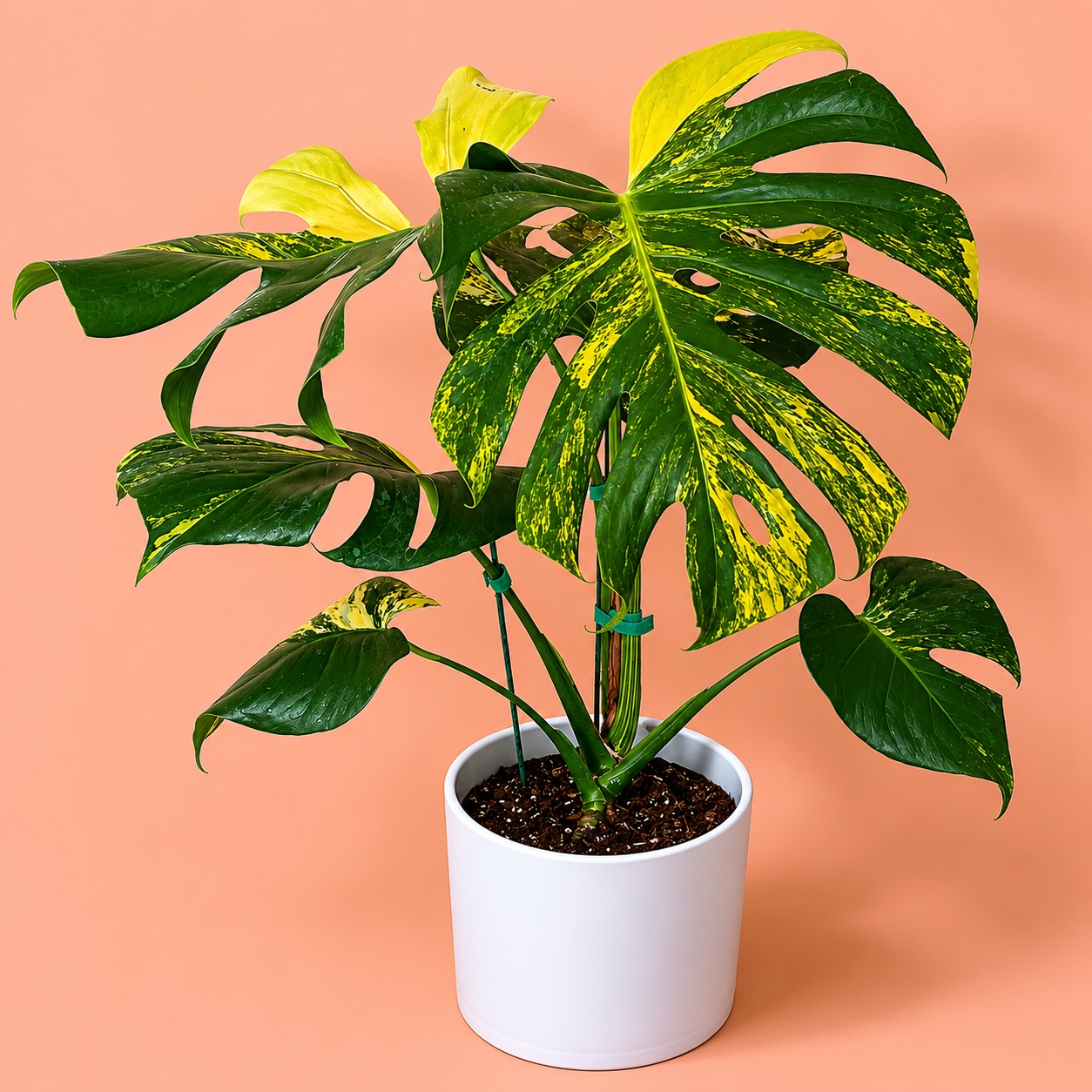
Monstera Yellow Marylin
The tricky part is that different Monstera varieties have slightly different light needs. A standard Monstera Deliciosa can handle lower light conditions better than variegated types.
Variegated Monsteras like the Yellow Marylin need more light because their yellow and white sections don't produce chlorophyll, so the green parts have to work harder to keep the plant fed.- East-facing windows give gentle morning sun and bright light the rest of the day
- West-facing windows work well if your plant is set back a few feet from direct afternoon sun
- South-facing windows provide the most light but require sheer curtains or more distance
- North-facing windows offer the softest light and work for green varieties but might be too dim for variegated ones
Your plant will tell you if it's unhappy with its light situation. Brown, crispy edges on leaves mean too much direct sun is scorching the foliage. On the flip side, if your Monstera starts growing long stems with lots of space between leaves and the new leaves stay small without developing splits, that's the plant stretching toward light it can't quite reach.
For those living in basement apartments or rooms without great natural light, a grow light can make all the difference. Position it about 12 to 18 inches above your plant and run it for 10 to 12 hours daily to mimic natural daylight.
- Hold your hand between the window and your plant spot at midday
- If you see a soft shadow, that's bright indirect light
- If you see a sharp, dark shadow, that's too much direct sun
- If you barely see a shadow, you need a brighter spot
- Check the spot at different times of day since sun angles change
Watering Your Monstera Without Overdoing It
More Monsteras die from overwatering than any other cause, which makes sense when you remember these plants evolved climbing trees in well-draining conditions where water never pools around their roots. The golden rule is to let the top 2 inches of soil dry out completely before watering again. Stick your finger into the soil up to your second knuckle—if it feels damp, wait a few more days. If it feels dry, it's time to water.
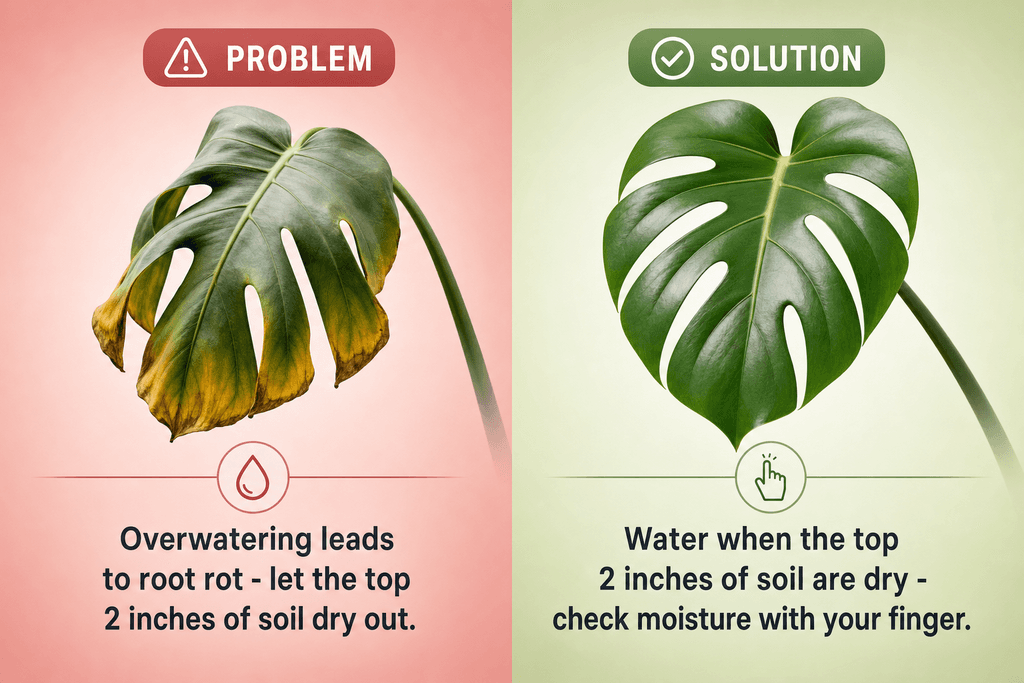
Most apartment Monsteras need water every 7 to 10 days during spring and summer, but this changes based on your specific conditions. Air conditioning, heating, humidity levels, pot size, and light exposure all affect how quickly soil dries out.
When you do water, do it thoroughly. Take your plant to the sink or bathtub and water until you see it flowing out the drainage holes at the bottom. This ensures the entire root ball gets moisture and helps flush out any salt buildup from tap water or fertilizer.
| Problem | Overwatering Signs | Underwatering Signs |
|---|---|---|
| Leaves | Yellow, mushy | Brown, crispy edges |
| Stems | Soft, black spots | Drooping, wilted |
| Soil | Always wet, smells bad | Pulls from pot edges |
| Growth | Stunted, root rot | Slow, leaves curl |
Here's something many people miss: drainage holes are absolutely necessary. Without them, water sits at the bottom of the pot creating a swamp where roots rot. If you have a decorative pot without holes, use it as a cover pot and keep your Monstera in a plastic nursery pot with drainage inside it.
Winter changes everything because your plant grows slower and needs less water. You might go two weeks or more between waterings when it's cold and your heating is running.
Choosing the Best Soil Mix for Healthy Roots
Regular potting soil from the garden center is too dense for Monsteras and holds water for too long, which leads straight to root rot. These plants need a chunky, airy mix that drains quickly while still holding some moisture. In nature, Monsteras grow in decomposing bark, leaves, and organic matter on tree trunks—not in compact dirt. Your soil should mimic that loose, well-draining environment with visible chunks of material that create air pockets around the roots.
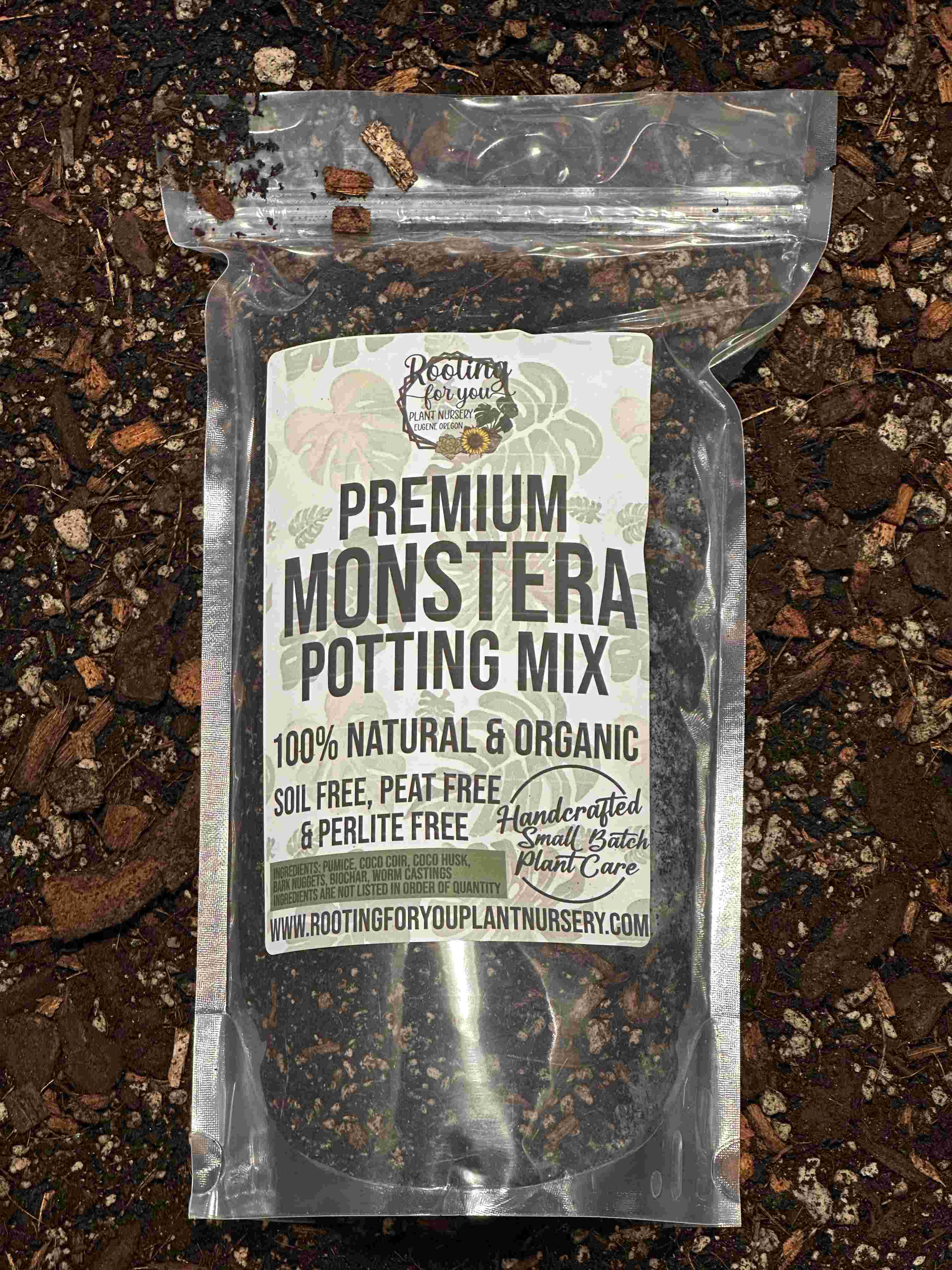
Monstera Premium Potting Mix
The best Monstera soil contains three main components working together. Orchid bark or wood chips create structure and air spaces, perlite or pumice improves drainage and prevents compaction, and peat moss or coco coir holds moisture and nutrients without getting soggy.
- 40% orchid bark or pine bark chunks
- 30% peat moss or coco coir
- 20% perlite or pumice
- 10% worm castings or compost for nutrients
If mixing your own soil sounds like too much work, the Monstera Premium Potting Mix comes pre-blended with the right ratios already dialed in. It's a soil-less blend made in Oregon that gives you excellent drainage and aeration without any guesswork.
Soil breaks down over time as organic materials decompose, usually becoming too compact after 18 to 24 months. When you notice water sitting on top of the soil instead of soaking in quickly, or if your plant seems unhappy despite proper care, it's probably time to repot with fresh mix.
Good soil is your first defense against yellow leaves and root problems. When roots can breathe and water drains properly, most common Monstera issues never develop in the first place.
Supporting Your Monstera as It Grows
Monsteras are climbers, not bushes, and they actually need something to climb up to reach their full potential. In the wild, they use their aerial roots to grip onto tree bark and pull themselves upward toward the light. When you give your Monstera a support structure to climb, it responds by growing larger leaves with more dramatic splits and fenestrations. Without support, the plant stays smaller and the leaves don't develop those iconic holes as much.
You have three main options for support structures. Moss poles are the most popular because aerial roots can actually grip into the moist moss, mimicking natural tree bark. Bamboo stakes work fine for younger plants but don't give roots anything to grab onto. Trellises look nice and provide plenty of climbing space but require more work to train the plant around them.
- Push the pole into the soil near the center of the pot before the roots get too big
- Make sure it goes deep enough to stay stable (at least 3-4 inches)
- Gently position the main stem against the pole
- Use soft plant ties or velcro strips to attach the stem loosely
- Guide aerial roots toward the pole so they can grip it
- Mist the moss pole regularly to keep it slightly damp
The best time to add support is when your plant is still young, but it's never too late to start. Even mature Monsteras can be trained onto poles with a little patience.
Attach stems without squeezing them too tight—you want to guide the plant, not strangle it. As the Monstera grows, keep adding ties higher up the pole and remove lower ones once the aerial roots have taken hold.
Fixing Yellow Leaves, Drooping, and Common Problems
Yellow leaves are the number one reason people panic about their Monstera, but one or two yellow leaves on an otherwise healthy plant is completely normal. Older leaves at the bottom naturally yellow and drop as the plant puts energy into new growth. The problem starts when you see multiple yellow leaves appearing quickly, which usually points to a watering issue. Overwatering causes yellow leaves that feel soft and mushy, while underwatering creates yellow leaves that feel dry and papery. Check your soil moisture and adjust your watering schedule before the problem spreads.
Drooping leaves tell a different story. If the whole plant looks sad and wilted, stick your finger in the soil immediately. Bone-dry soil means your plant is desperately thirsty and needs a thorough watering.
| Problem | Most Likely Cause | Quick Fix |
|---|---|---|
| Yellow leaves | Overwatering or nutrients | Check soil, reduce water |
| Drooping stems | Underwatering or root rot | Water or check roots |
| Brown tips | Low humidity or chemicals | Mist or use filtered water |
| Small new leaves | Not enough light | Move closer to window |
If the soil is wet but the plant still droops, you might have root rot happening underground. This requires removing the plant from its pot, cutting away black mushy roots, and repotting in fresh soil.
Brown tips and edges usually mean low humidity or a reaction to chemicals in tap water like chlorine and fluoride. Apartment air gets especially dry in winter when heating runs constantly. Try grouping plants together to create a humid microclimate, or let tap water sit out overnight before using it so chlorine can evaporate.
Spider mites and scale insects sometimes show up on indoor Monsteras, especially when the air is dry. Look for tiny webs between leaves or small brown bumps stuck to stems. Wipe leaves down with a damp cloth regularly and isolate any plant showing pest problems until you've treated it.
Whether you're growing a classic Large Monstera Deliciosa or a rare Monstera Yellow Marylin with stunning variegation, the care basics stay the same. For more specific guidance on different Monstera varieties, check out our detailed guides on variegated Monstera Adansonii, Monstera Peru, and other unique types.
Why Monstera Care Is Easier Than You Think
Monsteras survive in the wild under dense rainforest canopies with inconsistent light and irregular rainfall, which means they're built to handle less-than-perfect conditions. The biggest mistake new plant owners make is overthinking Monstera care instead of letting the plant guide them. Most Monstera problems stem from complicated watering schedules and unnecessary products rather than simple neglect. When you strip away the noise, Monstera care comes down to watching your plant and responding to what it shows you.
The plant itself will communicate its needs through visible signs like leaf color, drooping, or growth patterns. Your Monstera will literally tell you when it's thirsty by slightly drooping its leaves, and it will show you if it's getting too much sun through brown spots or yellowing.
What Prevents Most Monstera Problems
Starting with the right foundation eliminates the majority of care issues before they begin. Quality soil with proper drainage prevents root rot, overwatering damage, and nutrient deficiencies all at once.
- Well-draining soil stops water from pooling around roots
- Proper aeration allows roots to breathe and grow strong
- The right soil structure reduces how often you need to water
- Good potting mix maintains consistent moisture without becoming soggy
The Monstera Premium Potting Mix from Runo Plants handles all these requirements in one bag. This means you can focus on simple observation instead of constantly adjusting your care routine.
Simple Routines Beat Complicated Schedules
A basic weekly check-in works better than rigid watering calendars or fertilizer schedules. Consistency in observation matters more than consistency in timing because your plant's needs change with seasons, growth phases, and indoor conditions.
| Complicated Approach | Simple Approach |
|---|---|
| Water every 7 days | Water when top 2 inches dry |
| Fertilize monthly schedule | Feed during active growth |
| Measure light levels | Watch leaf response |
The Large Monstera Deliciosa from Runo Plants arrives already established and healthy, which gives beginners a head start. You're not nursing a struggling cutting or fixing someone else's care mistakes.
Your Monstera Care Routine Starts Now
Monstera care comes down to five main areas that work together to keep your plant healthy. You need bright indirect light near a window, watering when the top two inches of soil feel dry, well-draining soil that doesn't hold too much moisture, a support structure for climbing, and quick action when you spot yellow leaves. Getting all five right at once sounds like a lot, but most people find that fixing just one problem makes everything else easier to manage. The truth is that consistency beats perfection every time with these plants.
Starting with the right soil makes the biggest difference because it affects both watering and root health. Our Monstera Premium Potting Mix handles drainage and aeration without you having to mix ingredients yourself, which saves time and reduces the chance of root rot down the road. If you're working with a plant that already has issues, switching to proper soil often fixes multiple problems at once.
Pick one thing to improve this week instead of trying to overhaul everything. Maybe you move your plant closer to a window or you start checking soil moisture before watering. Small changes add up faster than you think, and your Monstera will show new growth when conditions improve.
Different Monstera varieties have slightly different needs, so if you're caring for a Monstera Deliciosa, Variegated Monstera Adansonii, or Monstera Peru, check out the specific care guides for those plants. The basics stay the same, but knowing the details helps you avoid common mistakes.
You probably still have questions about specific situations with your plant, and that's completely normal. The next section covers the most common questions people ask about Monstera care.
Common Monstera Care Questions
Monstera care can feel overwhelming when you're just starting out, but most problems have simple solutions. These are the questions that come up most often from plant parents trying to keep their Monsteras happy and healthy. Whether you're dealing with yellow leaves or wondering about watering schedules, these answers will help you troubleshoot the most common issues.
How often should I water my Monstera?
Water your Monstera when the top two inches of soil feel dry to the touch, which usually works out to about once a week in most homes. The exact timing depends on your home's humidity, temperature, and how much light your plant gets. Stick your finger in the soil before watering to check moisture levels rather than following a strict schedule.
Why are my Monstera leaves turning yellow?
Yellow leaves usually mean you're watering too much or too little, with overwatering being the most common culprit. If the soil stays wet for days after watering, your roots might be sitting in water and starting to rot. Check your drainage and make sure you're using a well-draining mix like our Monstera Premium Potting Mix, which keeps moisture balanced without getting soggy.
Does my Monstera need a moss pole?
Monsteras don't absolutely need a moss pole to survive, but they'll grow bigger leaves with better fenestrations when they can climb. In nature, these plants climb up trees to reach more light, so giving them vertical support mimics their natural growing conditions. You can add a moss pole anytime, though it's easier when the plant is younger and smaller.
Can Monstera survive in low light?
Monsteras can tolerate low light but won't thrive or grow much in those conditions. You'll notice slower growth, smaller leaves, and less fenestration when light is limited. Bright indirect light works best for healthy growth, though they can handle a few hours of gentle morning sun without burning.
How do I know if I'm overwatering?
Overwatering shows up as yellow leaves, brown spots with yellow halos, and soil that stays wet for more than a few days. The leaves might also feel soft or mushy rather than firm and crisp. If you catch it early, you can let the soil dry out completely before watering again and adjust your schedule going forward.
Are Monsteras safe for pets?
Monsteras are toxic to cats and dogs if eaten, causing mouth irritation, drooling, and stomach upset. Keep them on high shelves or in rooms your pets can't access if they like to chew on plants. The Large Monstera Deliciosa makes a beautiful floor plant but needs to be in a pet-free zone for safety.