

Pothos Care Guide for Light, Watering, Pruning, and Propagation
Sep 16, 2026
A pothos can go three whole weeks without water and still bounce back with fresh growth. That kind of toughness is why it's the top pick for busy plant parents in Homestead apartments and home offices alike. This guide breaks down light, watering, pruning, and propagation into simple steps, plus quick fixes for yellow leaves and leggy vines, so your Pothos care routine actually sticks.
How often should you water pothos?
Water pothos only when the top 1-2 inches of soil feel dry, which typically means every 7-10 days indoors. Overwatering, not underwatering, is the most common cause of pothos death, so always let the soil dry out between waterings.
How do you fix a leggy pothos plant?
Prune leggy pothos vines back to just above a leaf node, cutting off up to one-third of the plant's length to encourage bushier new growth. New stems will sprout from the cut points within 2-4 weeks, filling out the plant's fullness.
Why are my pothos leaves turning yellow?
Yellow pothos leaves are most often caused by overwatering and root rot, though natural aging of older leaves and insufficient light can also be culprits. Check soil moisture first: if it feels consistently wet, let it dry out completely before watering again and trim away any mushy roots.
Table of Contents
- Pothos Overview Why It's Easy to Care For
- Getting Light and Watering Right
- Pruning to Stop Legginess and Encourage Fullness
- Propagating Pothos in Water or Soil
- Fixing Yellow Leaves and Other Common Problems
- Choosing the Right Pothos Variety for Your Space
- Wrap-up Simple Habits for a Thriving Pothos
- Pothos Care Frequently Asked Questions
Pothos Overview Why It's Easy to Care For
Pothos has been kicking around homes and offices since way before "plant parent" was even a phrase people used. This vine grows naturally on the floor of tropical forests, climbing up trees and stretching across the ground wherever it can find a spot. That background is actually why pothos care feels so forgiving compared to other houseplants. It doesn't need perfect light or a strict watering schedule to stay alive and looking good. This makes it a popular starter plant, and honestly, a lot of experienced plant folks still keep one around because it's just easy.
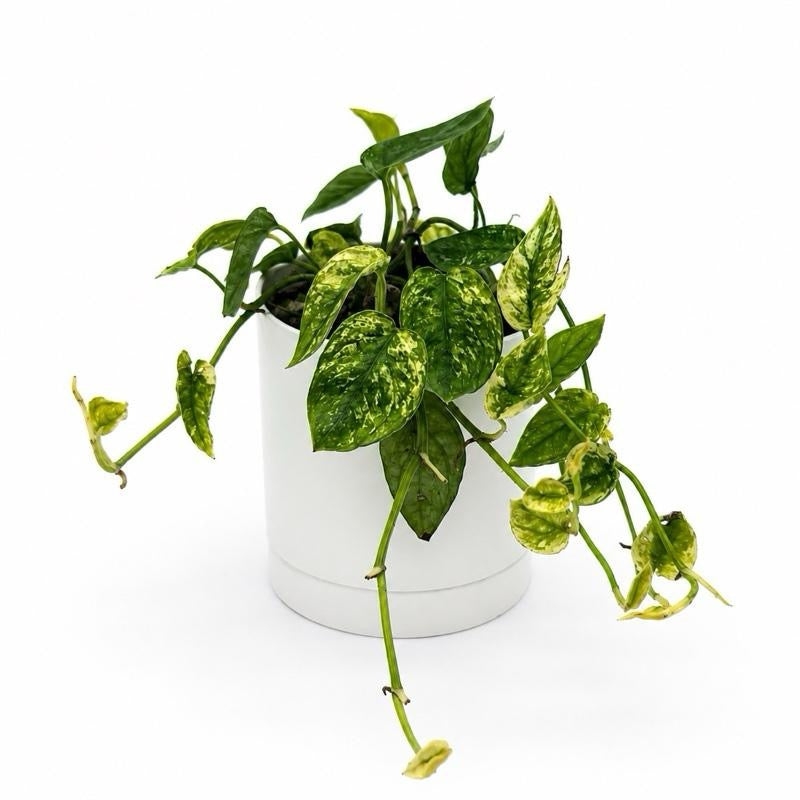
Variegated Pothos Cebu Blue
One reason people love pothos is how well it handles low light. It won't grow as fast in a dim corner, but it will survive there, which is more than you can say for a lot of trendy houseplants. On the flip side, it also does great in bright, indirect light, so you've got some wiggle room depending on where you live or how many windows you have.
- Grows fine in low light rooms with no direct sun
- Thrives even more in bright, indirect light spots
- Handles normal indoor humidity without extra fuss
- Bounces back quickly after a missed watering
Watering is another spot where pothos just doesn't stress people out. Pothos care is basically built around the idea that it's okay to forget sometimes. The leaves will droop a little when it's thirsty, which is your signal to water it, and it perks right back up within a day. That kind of feedback loop is rare in the plant world.
Different varieties like the Variegated Pothos Cebu Blue, Jungle Mint, and Neon all look totally different from each other, but under the surface they want the same basic things. That's part of why collectors like mixing varieties together in one space. You get variety in color and leaf shape without needing a different care routine for each pot.
| Care Factor | What Pothos Needs |
|---|---|
| Light | Low to bright indirect light |
| Water | Every 1-2 weeks, when soil dries out |
| Humidity | Average home humidity is fine |
| Temperature | 65-85°F (18-29°C) |
| Toxicity | Mildly toxic to pets and kids if eaten |
Sites like thesill.com and bloomscape.com will tell you similar basics, but the real difference shows up once you start looking at specific varieties and how their leaf patterns respond to light changes, which is where things get a little more interesting.
Getting Light and Watering Right
Pothos plants need bright, indirect light to keep their leaves looking sharp and colorful. This is especially true for varieties like the Cebu Blue and Jungle Mint, where the silvery patterns and mint marbling can fade if the plant doesn't get enough light. A spot near an east or north-facing window works well for apartment dwellers in Homestead, where the sun can get intense during the day. Low light won't kill your pothos, but it will slow things down and mute those pretty variegated patterns you paid for. If you notice your Jungle Mint leaves turning mostly green with no marbling, that's your plant asking for a brighter spot.
Watering is where most people mess up. The rule is simple: only water when the top 1-2 inches of soil feel dry to the touch. Stick your finger in the pot before grabbing the watering can, every time.
- Finger test: dry top 1-2 inches means it's time to water
- Light placement: bright, indirect light near a window without direct afternoon sun
- Thirsty signs: leaves droop, soil pulls away from pot edges
- Overwatered signs: yellow leaves, mushy stems, soggy soil
Overwatering is the number one cause of yellow leaves and root rot in pothos plants. It's easy to think more water means a happier plant, but pothos actually prefer to dry out a bit between drinks. If you're growing a Pothos Neon on your desk at home, let that bright chartreuse color be your reminder that this plant wants consistency, not a daily soak.
Pruning to Stop Legginess and Encourage Fullness
Legginess happens when a pothos vine grows long bare stretches of stem with leaves only at the tips. This usually comes from low light or simply not trimming the plant often enough. Left alone, a pothos will just keep stretching toward whatever light it can find, leaving you with a sad, sparse-looking vine instead of the full, bushy plant you were hoping for. The good news is that pruning is one of the easiest things you can do to fix this, and it doesn't require any special skill. A few snips every couple months is really all it takes to keep your plant looking dense and healthy.
The trick is cutting just above a leaf node, which is the little bump on the stem where a leaf or root grows out. Cutting here signals the plant to send out new growth right at that spot.
- Find a leaf node along the vine
- Cut about a quarter inch above it with clean scissors
- Wipe your blade with rubbing alcohol between cuts
- Repeat every 2-3 months for a fuller plant
Regular trims keep the vines full instead of scraggly, and there's a bonus here too. Pruned stems can be reused for propagation instead of tossed in the trash, which brings us to the next part.
Propagating Pothos in Water or Soil
Pothos is one of the easiest houseplants to multiply, and you've got two solid options for doing it. Water propagation lets you actually watch the roots form, which is oddly satisfying and great if you're new to plant parenting. Soil propagation skips that step entirely and often builds stronger roots faster since the cutting adapts directly to its final environment. Either way, your cutting needs at least one node on the stem, since that's where roots will actually grow from. This video walks through both methods side by side if you want to see it in action.
| Method | Speed | Difficulty | Root Strength |
|---|---|---|---|
| Water | 2-4 weeks | Easy | Weaker at first |
| Soil | 3-5 weeks | Slightly harder | Stronger long-term |
Cuttings from a Pothos Neon or Jungle Mint make genuinely nice gifts for friends who are just starting their own plant collection. You get a low-cost way to spread the hobby, and honestly, watching someone's face light up over a free plant never gets old.
Fixing Yellow Leaves and Other Common Problems
Yellow leaves on a pothos almost always point to overwatering or poor drainage. If the pot doesn't have a drainage hole or the soil stays wet for days, roots start to suffocate and rot, and yellowing leaves are the plant's way of telling you something's wrong. Brown, crispy leaf tips mean the opposite problem, usually low humidity or the plant going too long without water. Faded or all-green leaves on a variegated variety like Cebu Blue mean it's time to move the plant somewhere brighter. And if you've got pets at home, this one matters a lot: pothos is toxic to cats and dogs if chewed or eaten, so keep it up on a shelf or in a hanging basket out of reach.
| Symptom | Likely Cause | Fix |
|---|---|---|
| Yellow leaves | Overwatering | Let soil dry out more |
| Brown crispy tips | Low humidity | Mist or use a humidifier |
| Faded variegation | Not enough light | Move to brighter spot |
| Wilting despite wet soil | Root rot | Check roots, repot if mushy |
Most pothos problems come down to one of these four fixes, so a quick check of your watering habits and light spot usually solves things fast. If you're dealing with a specific variety and want more detailed steps, our Cebu Blue care guide and Neon pothos guide break down the details for those exact plants. And if you want the full rundown on general pothos care across every variety, the pothos care tips library is a good place to start.
Choosing the Right Pothos Variety for Your Space
Pothos plants are not all the same, even though people talk about them like they are. Light needs, growth speed, and leaf color can shift quite a bit between varieties. That matters more than most plant guides let on, especially if you're picking one for a specific room. A vine that thrives in a sunny kitchen window might just sit there doing nothing in a dim hallway. So before you grab the first pothos you see, it helps to know what you're actually working with.
| Variety | Light Needs | Growth Speed | Best Placement |
|---|---|---|---|
| Cebu Blue | Medium to bright | Fast | Moss pole, vertical shelf |
| Jungle Mint | Bright indirect | Fast | Open shelves, hanging basket |
| Neon | Low to medium | Fast | Office desk, dim corners |
Cebu Blue handles more light than most pothos types and its silvery-blue leaves actually look better with a bit of direct sun. If you want a plant that climbs, this one does best trained onto a moss pole where it can stretch upward instead of just trailing down.
Jungle Mint's cool, frosted variegation shows up best in bright spots. A shelf near a window or a hanging basket in a sunroom lets that mint-and-cream pattern really pop instead of fading into plain green.
Neon works the opposite way. Its bright chartreuse color holds up even in low light, which makes it a solid pick for home offices or corners that don't get much sun.
- Cebu Blue: best for climbing setups and brighter rooms
- Jungle Mint: best for visual contrast in bright, open spaces
- Neon: best for adding color where light is limited
- All three: same watering, feeding, and pruning routine
The real upside is that pothos care stays consistent across varieties. Unlike shopping through sites like thesill.com or bloomscape.com where plant needs can vary wildly from one listing to the next, mixing Cebu Blue, Jungle Mint, and Neon in one space is low effort since they all follow the same basic pothos care routine.
Wrap-up Simple Habits for a Thriving Pothos
Pothos care really comes down to four things: light, water, pruning, and knowing when to take cuttings. Bright indirect light keeps the leaves happy, and the finger test (stick your finger an inch into the soil, water only if it's dry) solves most watering problems before they start. Pruning stops your vine from getting leggy and bare, plus it gives you free cuttings to root in water or soil. And if you catch yellow or brown leaves early, you can usually fix the issue before it spreads to the rest of the plant.
Here's the short version if you're skimming:
- Bright, indirect light (no direct afternoon sun)
- Water only when the top inch of soil is dry
- Prune regularly to keep it full and bushy
- Watch leaf color for early warning signs
The good news is this routine works whether you've got a Cebu Blue with its silvery-blue leaves, a Jungle Mint with its frosty variegation, or a Neon with its bright chartreuse color. Same rules, different look. That's part of why pothos is such a solid pick for apartment dwellers in Homestead dealing with limited light, or anyone just starting out with houseplants.
If you want more detail on specific varieties, our pothos care tips guide breaks down watering schedules by variety, and the general pothos care guide covers troubleshooting for common leaf problems. Now that you've got the basics down, you might still have a few specific questions about your plant's quirks, so let's get into those next.
Pothos Care Frequently Asked Questions
Got more questions? That's normal. Pothos are easy plants, but everyone runs into the same handful of head-scratchers when they first bring one home. Here are the quick answers to what people ask us the most.
How often should I water my pothos
Water when the top two inches of soil feel dry, which is usually once a week but can stretch to every 10 days in cooler months. Sticking your finger in the pot beats any set schedule because light and humidity change things a lot.
Why are my pothos leaves turning yellow
Yellow leaves almost always mean too much water, not too little. Check the roots for a sour smell or mushy texture, cut back on watering, and let the soil dry out more between drinks.
Can pothos grow in low light
Yes, pothos can survive in low light, but they won't grow fast and variegated types like the Pothos Neon may lose some of their bright color. For the best look, give them bright, indirect light instead of a dark corner.
Is pothos safe for cats and dogs
No, pothos is toxic to cats and dogs if chewed or eaten, so it's best kept up high or in a hanging basket. A little nibble usually just causes mouth irritation or upset stomach, but it's smart to call your vet if you're worried.
How do I make my pothos bushier
Pruning is the trick here. Snip the vines back every few months, and the plant will push out new growth from those cut points instead of just getting longer and stringier.
- Cut just below a leaf node
- Pinch back leggy vines regularly
- Rotate the pot so all sides get light
Can I propagate pothos in soil directly
Yes, you can skip the water jar and stick cuttings straight into moist soil, though roots may take a bit longer to show up since you can't see them forming. If you want to watch roots grow before committing, plants like the Variegated Pothos Cebu Blue and Pothos Jungle Mint both root well in water first, then move to soil once roots are an inch or two long.