

Hanging Pothos Plant Care and Display Ideas Indoors
Aug 17, 2026
You've probably walked past a coffee shop or friend's apartment and noticed those gorgeous green vines cascading down from a shelf, wondering how hard they are to keep alive. The truth is, a hanging pothos plant is one of the easiest ways to bring life into your space without much effort, and these trailing beauties can grow vines up to 10 feet long indoors with minimal fuss. Whether you're working from a cramped home office or trying to green up your studio apartment, hanging pothos plants make the most of your vertical space while practically taking care of themselves.
How often should you water a hanging pothos plant?
Hanging pothos plants should be watered every 7-10 days, allowing the top 2 inches of soil to dry out completely between waterings. Overwatering is the most common cause of pothos problems, so it's better to underwater than overwater.
Can pothos survive in low light conditions?
Pothos can survive in low light conditions and tolerate areas as dim as 50-100 foot-candles, though growth will be slower and variegation may fade. For optimal growth and vibrant leaf patterns, bright indirect light is preferred.
How long do pothos vines grow indoors?
Pothos vines can grow 20-40 feet long indoors when provided with proper care and support. Individual vines typically grow 12-18 inches per month during the active growing season from spring through summer.
Table of Contents
What Makes Pothos the Ultimate Hanging Plant
In their native tropical forests of Southeast Asia, pothos plants climb up trees using aerial roots to reach sunlight filtering through the canopy above. But here's the interesting part—when you bring them indoors and put them in a hanging basket, they completely switch gears and become beautiful trailing plants instead. This natural flexibility makes them perfect for hanging displays, where their vines can cascade down several feet, creating living curtains of greenery that work in almost any room.
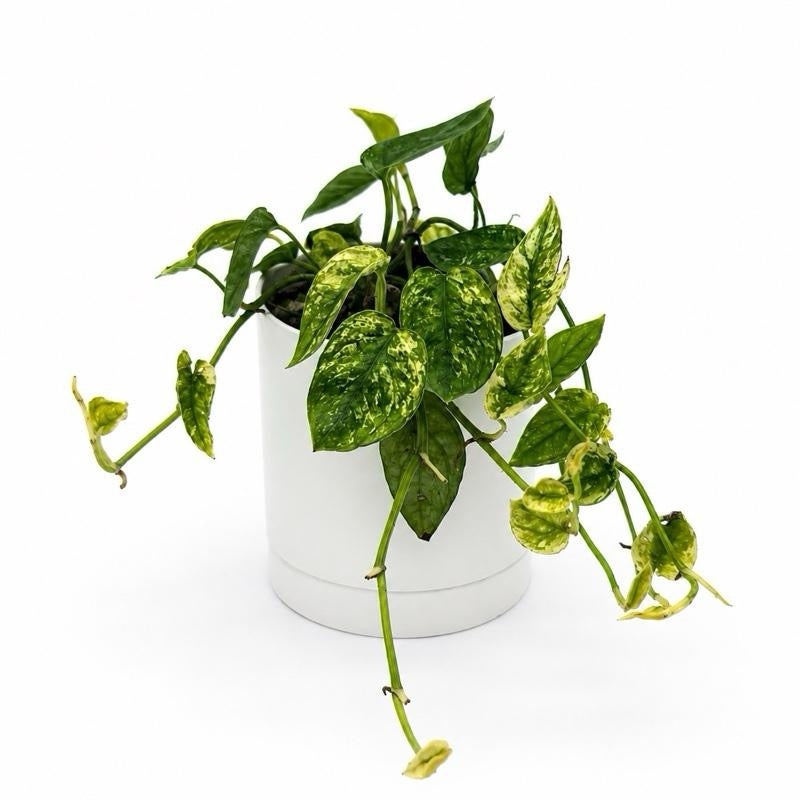
Variegated Pothos Cebu Blue
Natural Climbers Turned Trailing Beauties
The same features that help pothos climb in the wild make them excellent hanging plants at home. Their stems are strong but flexible, so they drape nicely without breaking. Plus, they grow fast enough that you'll see real progress in just a few weeks, but not so fast that they take over your entire living room overnight.
Most hanging pothos plants grow between 6 to 10 feet indoors, though some varieties can stretch even longer if you let them. The vines naturally branch out as they grow, creating fuller, bushier displays over time.
- Aerial roots along the stems help anchor the plant whether climbing or trailing
- Flexible stems bend without snapping, perfect for draping over basket edges
- New growth appears at the tips, keeping the plant looking fresh and full
- Vines can be trimmed and propagated easily to control length or create new plants
Variety Options for Every Style
Not all pothos look the same, which is great news if you want to match your hanging plant to your room's vibe. Some have heart-shaped leaves in solid green, while others show off splashes of white, yellow, or even silvery-blue coloring. The Variegated Pothos Cebu Blue stands out with its unique metallic sheen and slender leaves that catch light differently than standard pothos varieties.
| Variety | Leaf Color | Light Needs | Growth Speed |
|---|---|---|---|
| Golden Pothos | Green with yellow | Low to bright | Fast |
| Marble Queen | Green with white | Medium to bright | Medium |
| Cebu Blue | Silvery blue-green | Medium to bright | Fast |
| Jade Pothos | Solid green | Low to medium | Fast |
| Neon Pothos | Bright lime green | Medium to bright | Medium |
Air Cleaning Benefits with Style
Beyond looking good, hanging pothos plants actually do some work for you. Research shows they remove common indoor air pollutants like formaldehyde and benzene from the air around them. They're not going to replace your air purifier, but having a few around definitely doesn't hurt.
The larger the plant and the more leaves it has, the more air it can filter. This is where hanging displays really shine—those long trailing vines mean lots of leaf surface area working to clean your air while looking gorgeous doing it.
- Removes formaldehyde from furniture and cleaning products
- Filters benzene found in some plastics and synthetic materials
- Absorbs carbon dioxide and releases oxygen during the day
- Works continuously as long as the plant stays healthy
Simple Care Basics That Keep Your Pothos Thriving
Pothos plants are nearly impossible to kill, which makes them perfect for anyone who's ever forgotten to water a plant for three weeks straight. These vines adapt to almost any indoor environment, but giving them the right conditions helps them grow those long, lush cascades everyone loves. When you hang a pothos, you're working with gravity to create a living curtain of green that gets better with time. The care routine stays simple, but a few tweaks make all the difference between a plant that survives and one that actually thrives.
Light requirements matter less than you'd think. Bright indirect light produces the fastest growth and most vibrant leaf colors, but pothos handle low-light corners better than most houseplants. A hanging pothos near a north-facing window or several feet from an east or west window usually does great. The Variegated Pothos Cebu Blue shows off its silvery-blue shimmer best when it gets enough brightness, though it won't die in dimmer spots.
Watering becomes your main job. Let the top two inches of soil dry out completely before watering again. Stick your finger into the soil to check, because hanging planters dry out faster than pots sitting on shelves. The elevated position and air circulation around a hanging basket pull moisture away quicker than you'd expect.
- Water thoroughly until it drains from the bottom holes
- Empty the saucer or cache pot after 15 minutes to prevent root rot
- Reduce watering frequency in winter when growth slows
- Use room-temperature water to avoid shocking the roots
Soil and drainage become even more important in hanging planters. Use a well-draining potting mix that contains perlite or orchid bark to keep roots from sitting in soggy conditions. Hanging baskets need drainage holes, period. Without them, water pools at the bottom where you can't see it, and roots rot before you notice anything's wrong.
Feed your hanging pothos once a month during spring and summer with a balanced liquid fertilizer diluted to half strength. Skip feeding in fall and winter when the plant naturally slows down. The hanging position means vines work harder to pull nutrients upward, so consistent feeding during active growth keeps leaves from getting pale or stunted.
Creative Display Ideas for Every Room
The best thing about a hanging pothos plant is how it fills empty air space that nothing else can use. Most apartments and homes have dead zones near ceilings, in corners, or above furniture where floor plants can't reach. A pothos suspended at the right height turns these forgotten spots into focal points. The vines grow several feet long over time, creating layers of greenery that soften hard edges and make rooms feel more alive.
Macrame hangers bring that bohemian vibe that works in bedrooms and living rooms, while simple rope or leather hangers suit modern minimalist spaces. The planter itself matters too. Ceramic pots with drainage trays work for traditional looks, and lightweight plastic nursery pots fit inside decorative cache pots without adding too much weight to your ceiling hook.
Corner displays maximize vertical space that usually goes to waste. Hang a pothos in the corner where two walls meet, and the vines will eventually cascade down both sides. This works especially well in small apartments where floor space is precious. You get a big visual impact without sacrificing any usable square footage.
- Place on high shelves and let vines trail down for renters who can't install ceiling hooks
- Use command hooks rated for the weight of your pot plus soil and water
- Layer multiple pothos at different heights for a jungle effect
- Train vines along curtain rods or picture rails for horizontal growth
Bathrooms and kitchens offer natural humidity that pothos love. Hang one near a shower or above the sink where steam rises during daily use. The extra moisture in the air keeps leaves glossy and reduces brown tips. Just make sure there's enough light, since windowless bathrooms won't work unless you add a grow light.
Home offices benefit from the air-purifying qualities and the mental break that greenery provides. Hang a pothos where you can see it from your desk without it blocking your screen. The movement of vines swaying slightly in air currents gives your eyes something natural to rest on during long work sessions. Studies show plants in workspaces reduce stress and boost focus, though you probably already knew that from experience.
The Variegated Pothos Cebu Blue creates a different look than standard golden pothos. Those silvery-blue leaves catch light in unexpected ways and add a cooler color palette to rooms dominated by warm tones. The metallic sheen stands out even from across a room, making it worth the slightly higher price point for anyone who wants something beyond basic green.
Troubleshooting Common Hanging Pothos Problems
Yellow leaves show up for two opposite reasons, and figuring out which one applies to your plant determines the fix. Overwatering causes yellow leaves that feel soft and mushy, often starting with lower, older leaves. The soil stays wet for days after watering, and you might notice a sour smell from the pot. Underwatering also yellows leaves, but they feel dry and crispy instead of soft. The soil pulls away from the edges of the pot and becomes hard and compacted.
Check the soil moisture before doing anything else. If it's soggy, let it dry out completely and reduce your watering frequency. If it's bone dry, give the plant a thorough soak and water more often going forward.
| Problem | Likely Cause | Quick Fix |
|---|---|---|
| Yellow soft leaves | Overwatering | Let soil dry, reduce watering |
| Yellow crispy leaves | Underwatering | Soak thoroughly, water more often |
| Brown leaf tips | Low humidity or chemicals | Mist leaves, use filtered water |
| Leggy sparse vines | Insufficient light | Move closer to window |
| No new growth | Needs fertilizer | Feed monthly in growing season |
Leggy, sparse growth happens when a pothos doesn't get enough light. The vines stretch out searching for brightness, and the spaces between leaves get longer. New leaves come in smaller than older ones. Moving the plant closer to a window usually fixes this within a few weeks. You can also prune back the longest vines to encourage branching and fuller growth closer to the base.
Brown tips indicate either low humidity or sensitivity to chemicals in tap water. Pothos aren't picky, but fluoride and chlorine in city water sometimes cause tip burn. Switch to filtered or distilled water if you see this pattern. Misting the leaves once or twice a week also helps, though it's not required for basic survival.
Pests rarely bother pothos, but spider mites and mealybugs occasionally show up on indoor plants. Spider mites leave fine webbing between leaves and cause stippled yellow spots. Mealybugs look like tiny cotton balls stuck to stems and leaf joints. Wipe leaves with a damp cloth dipped in diluted dish soap, or spray with neem oil for heavier infestations. Both treatments work safely indoors without harsh chemicals.
Pruning encourages bushier growth and gives you cuttings to propagate. Cut just below a node (the bump on the stem where leaves emerge) using clean scissors. The plant will branch out from that point, creating multiple vines instead of one long strand. Those cuttings root easily in water or soil, so you can fill in sparse areas of the same plant or start new ones. For more detailed guidance on different pothos varieties, check out our pothos care tips or explore specific varieties like Marble Queen and N'Joy.
Your Hanging Pothos Journey Starts Here
Hanging pothos plants are one of the easiest houseplants you can grow, and they give you a lot of visual impact for very little effort. They tolerate low light, forgive missed waterings, and grow fast enough that you'll see progress within weeks. If you're new to plants or live in a small apartment, a hanging pothos plant is probably the best place to start your indoor garden.
The best part about pothos is that mistakes won't kill them. You'll learn as you go, and your plant will bounce back from almost anything you throw at it. Start with one plant and see how it fits into your space, then expand your collection once you get the hang of basic care.
Our Variegated Pothos Cebu Blue makes an excellent first hanging pothos because its silvery-blue leaves look different from the standard green varieties you see everywhere. You can check out our full pothos collection to see which variety matches your style, or dive into specific care guides like Marble Queen or N'Joy if you want something with more variegation.
The key things to remember are simple: indirect light, water when the top two inches of soil are dry, and don't overthink it. Your hanging pothos plant will adapt to your home and grow into whatever space you give it. Whether you hang it in a corner, drape it across a bookshelf, or train it up a wall, you're setting yourself up for years of easy greenery.
Now that you know the basics, you probably have a few specific questions about your setup. Let's tackle the most common ones.
Common Questions About Hanging Pothos Plants
New to hanging pothos plants or just want to make sure you're doing everything right? These are the questions that come up most often from people who are growing their first hanging pothos plant indoors. The answers are simpler than you might think, and once you know the basics, keeping your pothos happy becomes second nature.
How often should I water my hanging pothos?
Water your hanging pothos plant when the top two inches of soil feel dry to the touch. This usually works out to about once a week, but it depends on your home's humidity and temperature. Hanging plants dry out faster than ones sitting on a shelf, so check them more often than you'd expect.
Can pothos survive in low light conditions?
Yes, pothos can handle low light better than most houseplants, which is why they're so popular for apartments and offices. They won't grow as fast or develop as much variegation in dim spots, but they'll stay alive. If you want fuller, more colorful vines, give them medium to bright indirect light when possible.
Are pothos safe for pets?
No, pothos plants are toxic to cats and dogs if eaten. The leaves contain calcium oxalate crystals that can cause mouth irritation, drooling, and stomach upset. Keep your hanging pothos plant out of reach if you have curious pets, or choose a pet-safe alternative for lower spots in your home.
How do I make my pothos fuller and less leggy?
Trim back long vines and propagate the cuttings to plant back in the same pot for a bushier look. Leggy growth usually means your plant needs more light, so moving it closer to a window helps too. Pinching off the growing tips encourages the plant to branch out instead of just getting longer.
What's the best way to hang pothos without damaging walls?
Command hooks work great for lightweight hanging planters and come off clean when you move. For heavier pots, ceiling hooks with toggle bolts give you a secure hold without visible damage. You can also use tension rods in window frames or doorways if you're renting and want zero wall holes.
How long do pothos vines get indoors?
Indoor pothos vines can easily reach six to ten feet long with proper care, and some people grow them even longer. The Variegated Pothos Cebu Blue from our collection is a fast grower that looks stunning when allowed to trail several feet down from a hanging basket. You can trim them back anytime if they get too long for your space.