

Safe Houseplants for Cats That You Can Grow Indoors
Aug 15, 2026
You spot the perfect fiddle leaf fig at the nursery, then remember your cat treats every new plant like a personal salad bar. The truth is, many gorgeous houseplants are toxic to cats, but safe house plant for cats options like Cat Palm and Syngonium Mickey let you build a lush indoor jungle without worrying about midnight nibbling sessions. This guide shows you exactly which plants are truly pet-safe and how to care for them in your apartment or home office.
What houseplants are safe for cats?
Spider plants, Boston ferns, African violets, areca palms, and calatheas are completely non-toxic houseplants that are safe for cats to be around. These plants pose no health risk if nibbled or ingested by felines.
Why do cats eat houseplants?
Cats eat houseplants primarily to aid digestion, obtain nutrients like folic acid, or relieve boredom and stress. This instinctive behavior mimics their wild ancestors who consumed grass and vegetation to help digest prey and expel hairballs.
How do you keep cats away from houseplants?
Place plants on high shelves or in hanging planters out of reach, apply citrus peels or diluted citrus spray around pots as a natural deterrent, and provide cat grass as an alternative chewing option. Double-sided tape on pot edges also discourages cats from approaching plants.
Table of Contents
Why Plant Safety Matters for Cat Parents
Every year, the ASPCA Animal Poison Control Center receives over 200,000 calls about pets eating potentially toxic plants, and cats make up a big chunk of those cases. The thing is, cats are naturally curious creatures who love to nibble, chew, and bat at anything green and leafy in your home. What looks like a harmless houseplant to you might actually be dangerous to your furry friend. Understanding which plants are safe and which ones to avoid can literally save your cat's life and save you from a scary emergency vet visit.
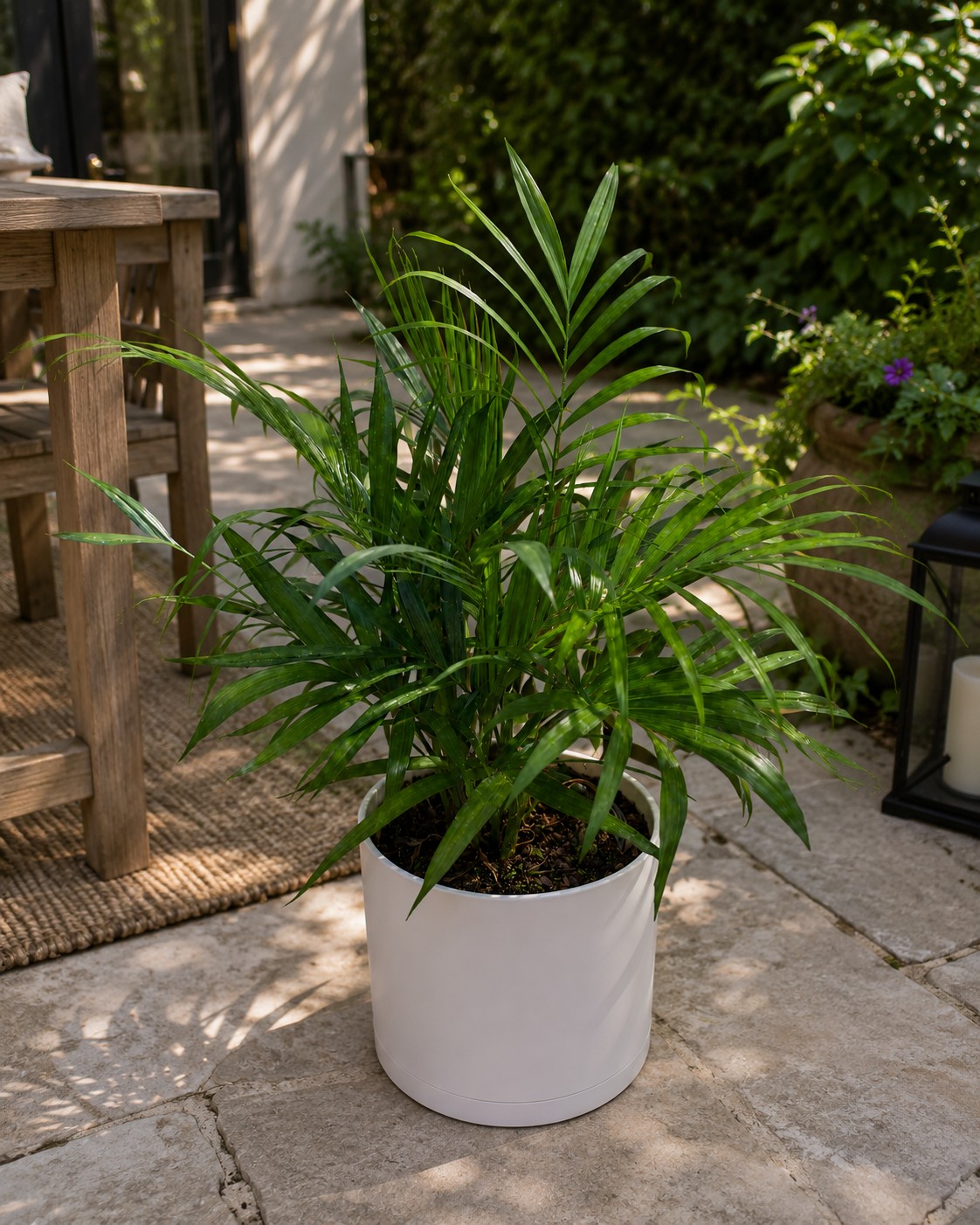
Cat Palm
How Cats Interact with Houseplants
Cats don't just admire plants from afar like we do. They treat them like toys, snacks, and sometimes even hiding spots. Young cats and kittens are especially prone to plant munching because they explore the world with their mouths.
Here's what makes cats and plants such a risky combo:
- Cats chew on leaves out of boredom or to help with digestion
- Dangling vines and moving fronds trigger their hunting instincts
- Some cats eat plants when they're feeling sick or stressed
- Kittens explore everything by tasting it first
Common Symptoms of Plant Poisoning
When a cat eats a toxic plant, the symptoms can show up within minutes or take several hours to appear. Some reactions are mild, while others require immediate veterinary care. Knowing the warning signs helps you act fast if your cat gets into something they shouldn't.
Watch for these symptoms if you suspect plant poisoning:
- Drooling, vomiting, or diarrhea
- Loss of appetite or difficulty swallowing
- Lethargy or unusual behavior
- Difficulty breathing or irregular heartbeat
- Swollen mouth or pawing at the face
Toxic Plants vs Safe Alternatives
Many popular houseplants that you'll find at big retailers like Bloomscape or The Sill are actually toxic to cats. The good news is that for every dangerous plant, there's usually a safe house plant for cats that looks just as beautiful. Choosing verified pet-safe options like the Cat Palm gives you peace of mind while still keeping your home green and gorgeous.
| Toxic Plants to Avoid | Safe Alternatives |
|---|---|
| Pothos | Cat Palm |
| Philodendron | Syngonium Mickey |
| Lilies | Spider Plant |
| Snake Plant | Boston Fern |
| Aloe Vera | Peperomia |
| Monstera | Parlor Palm |
The difference between a toxic plant and a safe one isn't always obvious just by looking at it. That's why it's important to research before you buy, especially if you're shopping from general plant retailers that don't specifically focus on pet safety.
Top Pet-Safe Plants That Actually Look Amazing
Most cat owners avoid houseplants because they worry about toxicity, but plenty of gorgeous options exist that won't harm your furry friend. The trick is knowing which plants are genuinely safe and which ones just look harmless. Some of the most popular houseplants like pothos and philodendrons can make cats sick, so finding truly pet-friendly alternatives matters more than most people realize. The good news is that safe plants don't have to be boring or hard to find.
The Cat Palm stands out as one of the best safe house plants for cats because it brings that lush tropical vibe without any risk to your pets. This palm grows in a naturally bushy clump instead of shooting up with a tall trunk, which means it fills space beautifully in apartments and home offices. The dense, arching fronds create movement and texture that makes any room feel more alive, and the soft feathery leaves won't cause problems if your cat decides to take a nibble.
| Plant | Care Level | Light Needs | Price |
|---|---|---|---|
| Cat Palm | Easy | Bright indirect | $53.68 |
| Syngonium Mickey | Beginner | Low to medium | $32.22 |
| Spider Plant | Very easy | Any light | Varies |
| Boston Fern | Moderate | Indirect light | Varies |
For smaller spaces or beginners who want something compact, the Syngonium Mickey offers unique leaf shapes that add sophistication without taking up much room. This plant tolerates lower light conditions better than most tropical varieties, which makes it perfect for apartments where bright windows are hard to come by. The compact size means it fits on desks, shelves, or side tables where you need a touch of green but don't have floor space for larger plants.
Spider plants and Boston ferns round out the list of popular safe options that actually look good in modern spaces. Spider plants produce cascading baby plantlets that create visual interest, while Boston ferns bring that soft, delicate texture that works well in bathrooms or kitchens. Prayer plants are another solid choice if you want something with colorful patterned leaves that fold up at night.
The Cat Palm works especially well in home offices because it grows tall enough to fill empty corners without overwhelming your workspace. At $53.68, it's priced reasonably for the size and impact you get, and it creates that calming atmosphere that makes video calls look more professional. The Syngonium Mickey at $32.22 gives you an affordable entry point if you're just starting to build your plant collection.
Simple Care Tips for Busy Cat Owners
Watering schedules stress people out more than they should, especially when you're juggling work deadlines and a cat who knocks things over. Most safe house plants for cats prefer to dry out slightly between waterings, which actually works in your favor if you forget for a few days. The Cat Palm likes consistent moisture but won't die if you miss a watering, while the Syngonium Mickey can handle some neglect without throwing a fit. A simple rule is to stick your finger in the soil up to your second knuckle, and if it feels dry, it's time to water.
Apartment dwellers without perfect south-facing windows can still grow these plants successfully. The Syngonium Mickey thrives in medium to low light, which means it'll do fine a few feet away from your window or in rooms that don't get direct sun. Cat Palms prefer bright indirect light but adapt to less-than-ideal conditions better than you'd expect.
- Water when the top 2 inches of soil feel dry
- Place plants near windows but not in direct harsh sunlight
- Cover soil with decorative rocks to discourage digging
- Wipe leaves monthly to remove dust and keep them healthy
- Check plants once a week, water every 7-10 days on average
Cats love to dig in fresh potting soil because the texture appeals to them. Covering the top layer with smooth river rocks or decorative pebbles solves this problem without harming your cat or your plant. The rocks make it less fun to dig while still allowing water to drain properly.
The biggest mistake first-time plant owners make is overwatering because they think more care equals better results. Plants actually do better with a consistent routine that errs on the side of slightly dry rather than constantly soggy. Another common issue is placing plants in spots that look good but don't provide enough light, then wondering why the plant looks sad after a month.
Weekly and Monthly Checklist
Weekly tasks: Check soil moisture, rotate plants for even growth, remove any dead leaves, and make sure your cat hasn't knocked anything over.
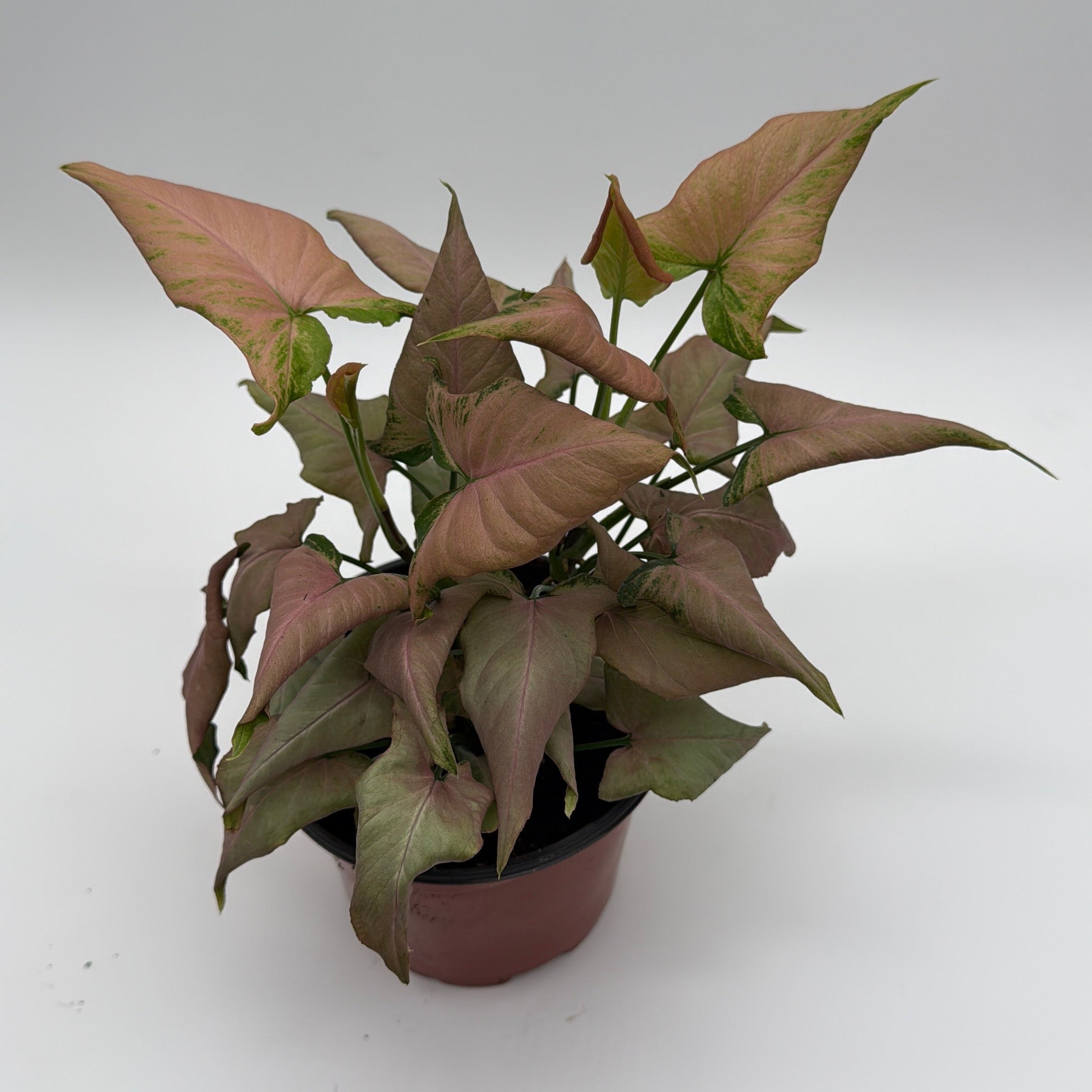
Syngonium Mickey
Monthly tasks: Wipe down leaves with a damp cloth, check for pests, consider if the plant needs a bigger pot, and assess whether the current location is working.
Creating a Cat-Friendly Green Space
The best locations for plants in apartments with curious cats are spots that give your plants light while keeping them somewhat out of paw's reach. High shelves work well for smaller plants like the Syngonium Mickey, while floor plants like the Cat Palm can go in corners where cats are less likely to use them as a jungle gym. Avoid placing plants on wobbly furniture or narrow ledges where one swipe of a tail sends everything crashing down. Window sills seem perfect but cats also love those spots for napping, so you'll need to decide who gets priority.
Using elevation strategically protects your plants while keeping them visible and healthy. Wall-mounted shelves at different heights create visual interest and give you multiple spots to display smaller safe plants. Plant stands raise floor plants just enough to make them less tempting as hiding spots while still allowing the foliage to drape naturally.
- Place larger plants in stable floor planters in room corners
- Use wall shelves for trailing or compact varieties
- Keep at least one plant at cat level with cat grass
- Choose heavy ceramic or concrete planters over lightweight plastic
- Group plants together for a styled look instead of scattering them randomly
Creating a designated cat-safe zone with cat grass gives your pet something green to chew on that's actually meant for them. This often reduces their interest in your other plants because they have their own approved option. Place the cat grass in an accessible spot where your cat naturally hangs out, and they'll usually leave your decorative plants alone.
Heavy planters make a huge difference when you have an active cat who likes to investigate everything. Ceramic, concrete, or thick terracotta pots stay put when bumped, unlike lightweight plastic containers that tip over easily. The extra weight costs more upfront but saves you from cleaning up soil spills and dealing with damaged plants.
Making your space look intentional instead of cluttered comes down to grouping plants by height and keeping the arrangement balanced. Three plants of varying heights in one corner looks styled, while single plants scattered everywhere looks messy. The Cat Palm works as an anchor piece that you can surround with smaller plants, or it can stand alone as a statement in an empty corner that needs filling.
What Makes a Plant Truly Cat-Safe
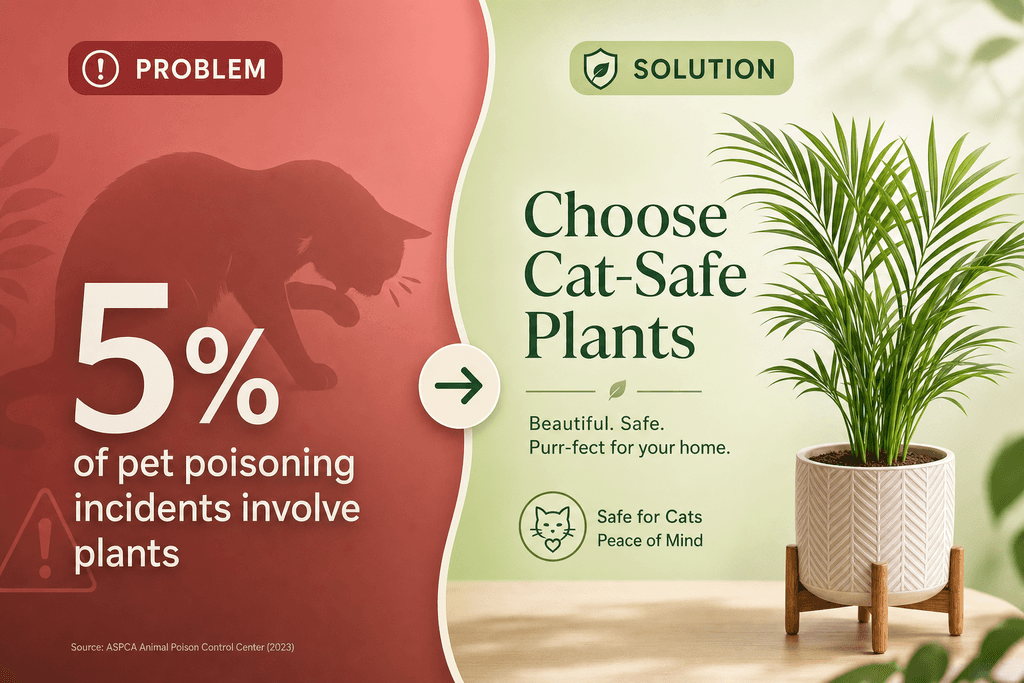
The ASPCA Animal Poison Control Center receives over 180,000 calls annually about pet poisonings, with plants accounting for roughly 5% of these incidents. Understanding how organizations classify plant toxicity helps you make smarter choices when bringing greenery into a home with cats. The ASPCA maintains the most comprehensive database of toxic and non-toxic plants, categorizing them based on documented cases of poisoning and chemical analysis of plant compounds. Their classification system looks at specific toxins like calcium oxalates, glycosides, and alkaloids that can harm pets when ingested.
Not all plant reactions are created equal. Mildly irritating plants might cause drooling or temporary stomach upset, while truly dangerous plants can lead to kidney failure, seizures, or cardiac arrest. This distinction matters because many cat owners panic over minor incidents that resolve on their own within hours.
| Plant-related calls | 9,000+ annually |
| Severe cases | Less than 10% |
| Most common symptom | Mild GI upset |
Verification Steps Before Purchase
Before adding any safe house plant for cats to your collection, you need a reliable verification process. Cross-referencing multiple sources prevents mistakes that could put your pet at risk.
- Check the ASPCA's online toxic and non-toxic plant database using both common and scientific names
- Verify the plant's botanical name with the seller since common names vary by region
- Read recent veterinary studies on the specific species rather than relying on general plant family information
- Contact your vet if you find conflicting information about a particular plant
The Cat Palm we offer comes verified as non-toxic through multiple veterinary databases. But even safe house plants for cats can cause minor issues if your cat decides to munch on large quantities of leaves.
Understanding Non-Toxic Labels
A non-toxic label doesn't give cats permission to treat your plants like a salad bar. Plants labeled safe won't poison your cat, but eating any plant material can still cause vomiting or diarrhea simply because cats are obligate carnivores. Their digestive systems aren't designed to process plant matter efficiently, even from completely harmless species like Syngonium Mickey.
- Non-toxic means the plant contains no known poisonous compounds
- Cats may still experience mechanical irritation from rough leaf textures
- Overeating any plant can trigger the gag reflex or upset stomach
The goal is choosing plants that won't cause serious harm if your curious cat takes an experimental bite. That's where verified safe options make all the difference in creating a worry-free indoor garden.
Your Green, Cat-Safe Home Starts Now
You don't have to choose between a beautiful plant collection and keeping your cat safe. The plants we covered in this guide prove that you can have both without compromise. Starting with just one or two easy options makes the whole process less overwhelming, especially if you're new to keeping plants indoors.
The Cat Palm and Syngonium Mickey are both verified safe house plants for cats that won't cause harm if your curious friend decides to take a nibble. These aren't just safe options either, they actually look good and fit into most living spaces without taking over your entire apartment.
Building a space that works for both your plants and your pets takes a bit of planning, but it's not complicated. Most cat-safe plants need similar care, which means you can group them together and water them on the same schedule. That makes life easier when you're already juggling work, home life, and everything else.
The real joy comes from watching your indoor jungle grow while your cat explores safely around it. You might catch them batting at a palm frond or sitting next to your Syngonium like they're part of the decor. Those little moments make the effort worth it, and you never have to worry about a late-night trip to the vet because someone ate the wrong leaf.
Common Questions About Cats and Houseplants
Cat owners often have similar worries when it comes to bringing plants into their homes. These questions come up again and again, whether you're buying your first safe house plant for cats or adding to an existing collection. Understanding the answers helps you create a space where both your plants and your furry friends can thrive together without constant worry.
What should I do if my cat eats a safe plant?
Even safe plants can cause mild stomach upset if your cat eats too much of them. Watch for signs like vomiting or diarrhea, which usually pass within 24 hours. If symptoms persist or your cat seems lethargic, contact your vet just to be safe.
How can I stop my cat from chewing on my houseplants?
Try placing plants on high shelves or in hanging planters where cats can't easily reach them. You can also provide cat grass as an alternative, which gives them something safe to munch on instead. Spraying diluted lemon juice on leaves works too since most cats dislike citrus smells.
Are all palm plants safe for cats?
Not all palms are created equal when it comes to cat safety. The Cat Palm from runoplants.com is completely non-toxic and safe for pets, but some palms like the Sago Palm are actually extremely dangerous. Always check the specific variety before bringing any palm home, and stick with verified safe options when you're unsure.
Can safe plants still cause allergies in cats?
Yes, just like humans, cats can develop allergies to certain plants even if they're non-toxic. Watch for excessive scratching, sneezing, or watery eyes after introducing a new plant. These reactions are rare but possible with any plant material.
Where should I buy pet-safe plants to ensure they're actually safe?
Purchase from retailers that clearly label their plants as pet-safe and provide specific care information. While places like bloomscape.com and thesill.com offer some options, runoplants.com specializes in verified safe house plant for cats with detailed safety information for each variety. Avoid unlabeled plants from general garden centers where staff might not know the toxicity details.
How do I introduce new plants to a home with cats?
Start by placing the new plant in a room your cat doesn't frequent, giving them time to get used to the smell. After a few days, move it to its permanent spot and monitor your cat's interest level closely. Some cats ignore plants completely while others need deterrents like double-sided tape around the pot base to keep them away.