

Monstera vs Alocasia Which Indoor Plant Fits Your Space
Aug 19, 2026
You've narrowed your next plant purchase down to two stunning tropical favorites, but monstera alocasia plants couldn't be more different when it comes to care needs and growth habits. While both deliver that lush jungle vibe you see all over Instagram, choosing the wrong one for your apartment or home office can mean watching your investment struggle instead of thrive. Understanding which plant matches your actual living space and daily routine makes the difference between a thriving green corner and a frustrating brown-leaf situation.
Which plant is easier to care for Monstera or Alocasia?
Monstera is significantly easier to care for than Alocasia, tolerating irregular watering and lower humidity levels while Alocasia requires consistent moisture, humidity above 60%, and is highly sensitive to environmental changes.
How much space does a Monstera need compared to an Alocasia?
Monstera plants require 4 to 6 feet of horizontal and vertical space as they grow outward with climbing vines, while Alocasia grows upright in a compact footprint of 2 to 3 feet, making it ideal for smaller spaces.
Do Monstera and Alocasia need the same amount of light?
Both Monstera and Alocasia thrive in bright, indirect light, but Monstera tolerates lower light conditions better while Alocasia will quickly lose leaves and decline without adequate brightness.
Table of Contents
Meet the Contenders
Both monstera and alocasia plants come from tropical rainforests, but they couldn't be more different in how they grow and look. Monstera plants are natural climbers that use aerial roots to grab onto trees and reach toward the canopy, while alocasia plants grow straight up from the ground with their leaves pointing toward the sky. These two plant families have been living in jungles for millions of years, but they only became popular houseplants in the last few decades. Understanding where they come from helps explain why they need different care and fit different spaces in your home.
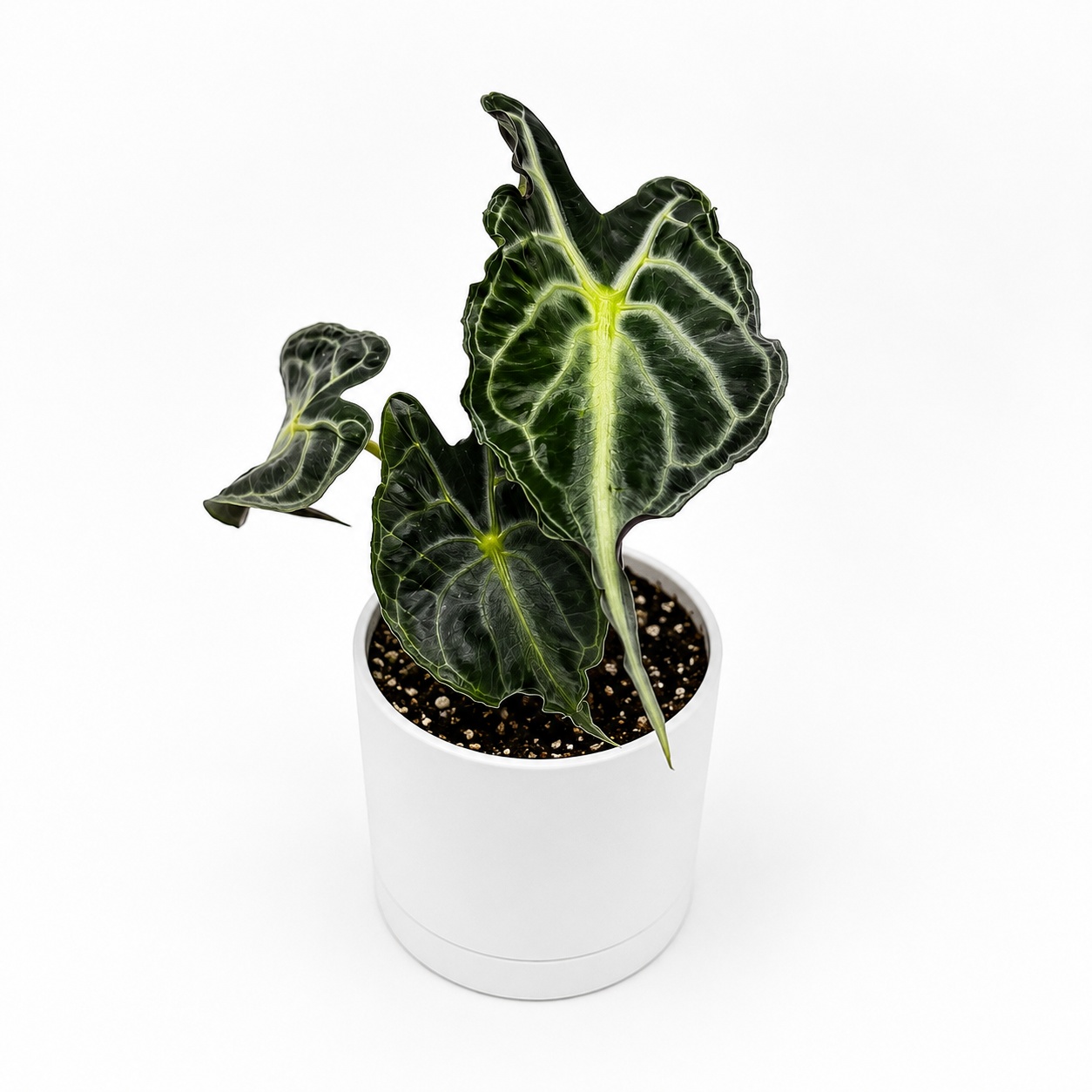
Alocasia 'Venom'
Monstera the Climbing Giant
Monstera plants belong to the Araceae family and naturally climb up trees in Central and South American rainforests. Their famous split leaves, called fenestrations, actually help them survive strong winds and let light reach lower leaves. The Large Monstera Thai Constellation shows off this classic leaf shape with stunning variegation that makes each leaf look like a work of art.
These plants became Instagram favorites because of their bold, tropical look and relatively easy care needs. Their vining nature means they can grow tall with support or trail down from hanging baskets.
- Native to tropical forests from Mexico to Panama
- Grows as an epiphyte, climbing trees with aerial roots
- Develops iconic split leaves as it matures
- Can grow over 10 feet tall indoors with proper support
Alocasia the Dramatic Showstopper
Alocasia plants also belong to the Araceae family but grow completely differently than their monstera cousins. These plants shoot up from underground rhizomes with bold, arrow-shaped leaves that stand upright on tall stems. The Alocasia 'Venom' takes this drama to another level with its dark, textured foliage that looks almost reptilian.
Originally from subtropical Asia and Eastern Australia, alocasia plants grow on forest floors where they get filtered light. They became trendy houseplants because of their striking appearance and compact growth habit.
- Native to tropical and subtropical Asia
- Grows upright from rhizomes in the soil
- Features bold, shield-shaped or arrow-shaped leaves
- Typically stays under 3 feet tall indoors
Quick Comparison at a Glance
| Feature | Monstera | Alocasia |
|---|---|---|
| Growth Pattern | Climbing vine | Upright clump |
| Leaf Shape | Split and fenestrated | Arrow or shield-shaped |
| Native Region | Central/South America | Asia/Australia |
| Typical Height | 6-10+ feet | 1-3 feet |
| Light Needs | Moderate to bright indirect | Bright indirect |
The main difference between monstera and alocasia comes down to their growth habits and space requirements. Monstera plants need room to climb or spread out, making them perfect for corners or empty walls. Alocasia plants grow in tight clumps, which makes them ideal for tabletops and smaller spaces where you want maximum visual impact without taking up floor space.
Space and Growth Patterns
Most people don't realize that monstera plants can spread up to 8 feet wide when they mature indoors, while alocasia varieties typically stay compact at 2-3 feet in diameter. This difference matters a lot when you're working with limited square footage in an apartment or trying to fill a corner in a larger home. Monstera plants are natural climbers that want to grow upward and outward, sending out aerial roots and reaching for anything they can grab onto. Alocasia plants grow in a tight clump with leaves shooting straight up from the soil, making them perfect for narrow spaces like hallway corners or beside furniture.
The way these plants grow changes how you need to think about your space. Monstera needs both vertical support and horizontal room for those big fenestrated leaves to unfold without hitting walls or furniture.
Planning for Mature Size
- Monstera: Needs a moss pole or trellis, plus 3-4 feet of clearance on all sides
- Alocasia: Grows upright in a 2-foot diameter footprint, no climbing support needed
- Small apartments: Alocasia fits better on plant stands and tight corners
- Larger homes: Monstera can fill empty vertical space and create dramatic focal points
The Large Monstera Thai Constellation we carry shows exactly what happens when these plants get the space they deserve. Those creamy-white variegated leaves can reach over a foot wide each, and the plant will keep pushing out new growth as long as it has room to climb.
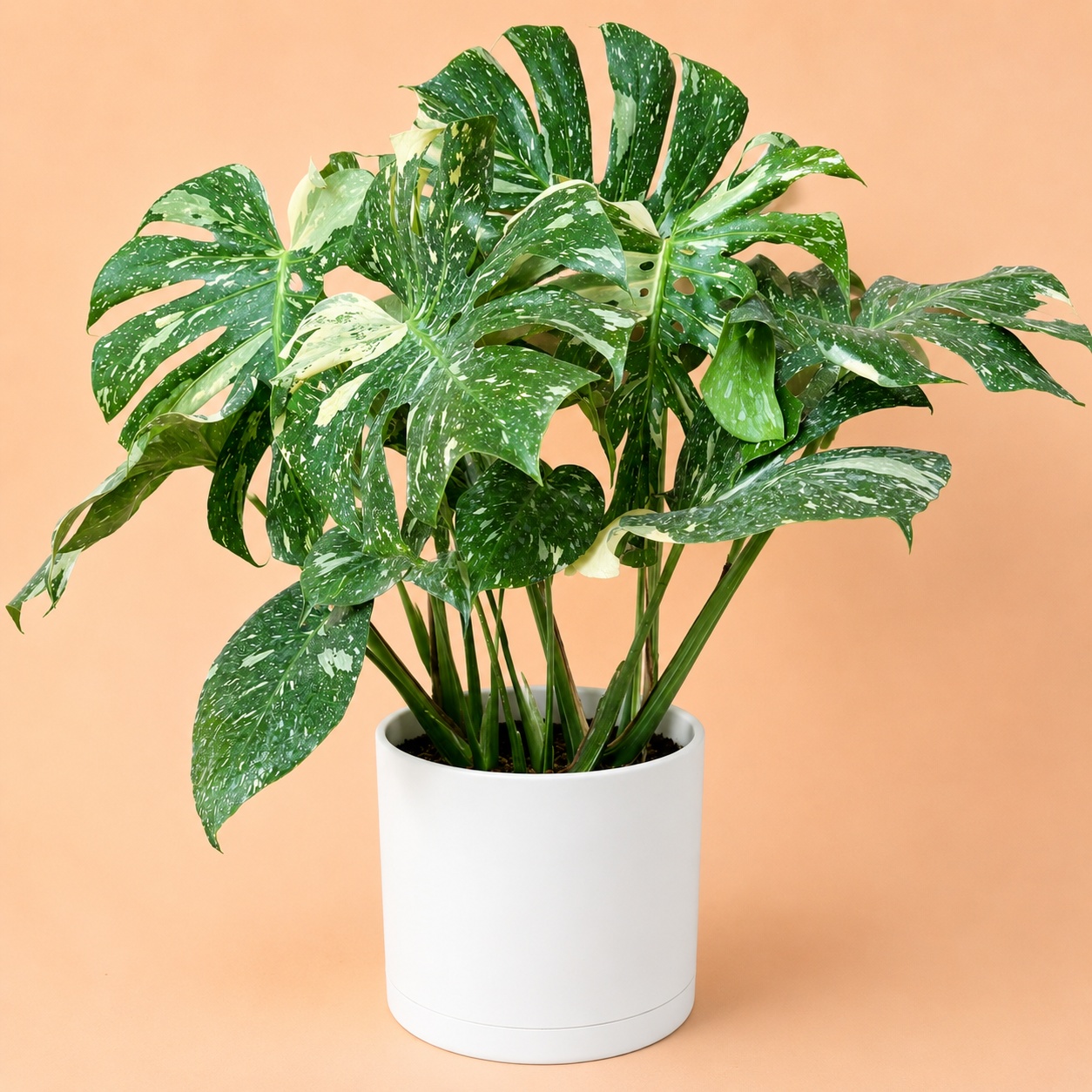
Large Monstera Thai Constellation
Alocasia plants work differently because they grow from underground rhizomes. They send up new leaves from the center, and old leaves die back naturally. This means your plant stays roughly the same size once it matures, which makes planning your space way easier.
Care Requirements and Maintenance
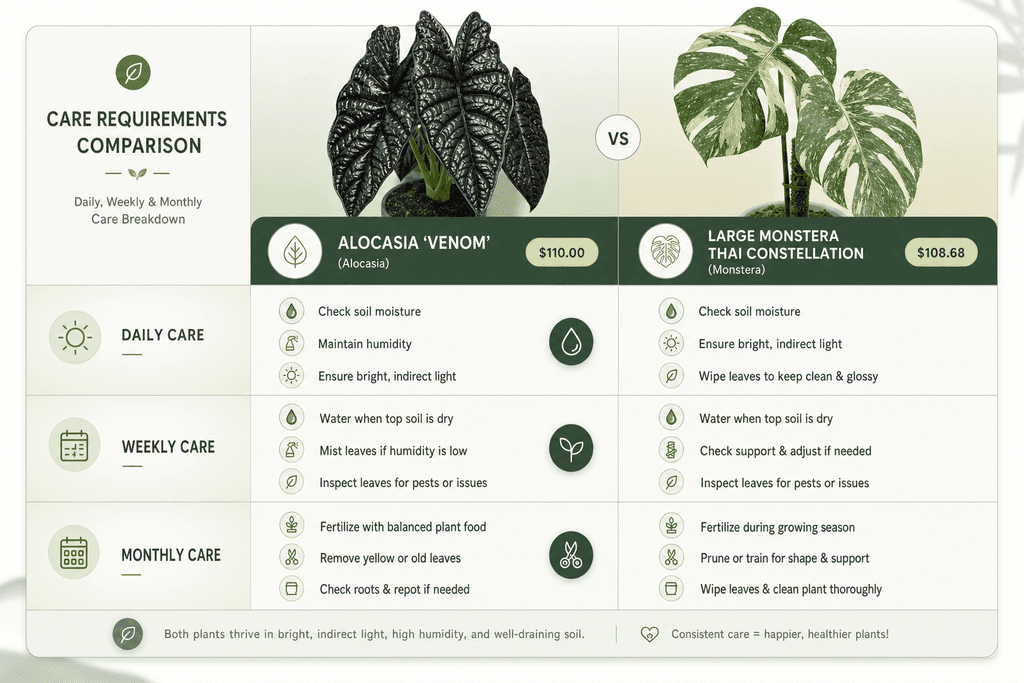
Monstera plants need watering about once a week during growing season, while alocasia varieties often need water every 3-5 days because they're more sensitive to dry soil. The humidity requirements tell a different story too. Both plants come from tropical environments, but alocasia will throw a fit if humidity drops below 60%, showing brown leaf edges and drooping stems. Monstera can handle average home humidity around 40-50% without major complaints, though they'll grow faster with more moisture in the air.
Light needs separate these two plants more than anything else. Monstera tolerates lower light conditions and can sit 6-8 feet from a window, while alocasia demands bright indirect light to maintain those dramatic leaves.
| Care Factor | Monstera | Alocasia |
|---|---|---|
| Watering | Weekly | Every 3-5 days |
| Humidity | 40-50% | 60%+ |
| Light | Low to bright indirect | Bright indirect |
| Difficulty | Beginner-friendly | Intermediate |
The biggest mistake new plant owners make with monstera is overwatering, which leads to yellow leaves and root rot. With alocasia, people usually underwater or forget about humidity, causing those gorgeous leaves to crisp up at the edges. Time commitment differs significantly between these two. Monstera might need 10 minutes of care per week, while alocasia demands daily misting or a humidifier running nearby.
Our Alocasia 'Venom' shows what happens when you get the care right. Those deep emerald to nearly black leaves with pronounced veins only look that good when humidity and light conditions match what the plant needs. It's not a plant you can ignore for two weeks and expect to thrive.
Aesthetic Impact and Design Flexibility
Monstera plants bring that relaxed, bohemian jungle vibe that works perfectly in spaces with natural wood, rattan furniture, and warm earth tones. The split leaves create interesting shadows on walls when light hits them right, and the overall look feels casual and approachable. Alocasia plants make a completely different statement with their sculptural, almost architectural presence that fits modern minimalist spaces, contemporary offices, and rooms with clean lines and bold contrasts. The leaf shapes range from arrow-like to shield-shaped, and many varieties have dramatic veining or color variations that catch your eye immediately.
Color options expand your design possibilities with both plants. Standard monstera comes in classic green, but variegated versions add cream, white, or yellow patterns to each leaf.
Matching Plants to Your Style
- Bohemian/Tropical: Monstera fits naturally with macrame, wicker, and layered textures
- Modern/Minimalist: Alocasia's clean lines complement sleek furniture and monochrome palettes
- Eclectic: Both plants work when you want to mix styles and create visual interest
- Home Office: Monstera adds softness without demanding attention, alocasia creates a focal point
The Monstera Thai Constellation takes the classic monstera look and adds those constellation-like cream patterns across each leaf. At $108.68, it's a statement piece that works in both traditional and contemporary spaces because the variegation adds visual complexity without feeling too busy.
Alocasia 'Venom' brings something completely different to your space. Those intensely textured, almost reptilian leaves in deep emerald to black create drama that works best when the plant has room to be a solo star. It's the kind of plant that makes visitors stop and ask questions, priced at $110.00 for that rare collector appeal.
You can explore more options in our full monstera collection or browse the alocasia collection to see how different varieties might work in your specific space. The choice really comes down to whether you want that easy-going tropical feel or a more dramatic, high-impact presence in your room.
Making the Right Choice for Your Lifestyle
Your daily routine and living situation matter more than aesthetics when choosing between monstera and alocasia. A busy professional who travels frequently should pick monstera because it tolerates neglect better and can go up to two weeks without water in the right conditions. Alocasia demands consistent moisture and humidity checks, which means daily attention during growing season. Pet owners face a tougher decision since both plants contain calcium oxalate crystals that cause mouth irritation in cats and dogs, though alocasia tends to sit higher on shelves due to its compact size.
Best Picks by Lifestyle
- Busy schedules - Monstera survives irregular watering and adapts to changing light conditions
- Small apartments - Alocasia stays compact and works well in corners or on plant stands
- Low-light spaces - Monstera tolerates shade better than most alocasia varieties
- High humidity homes - Alocasia thrives in bathrooms and kitchens with natural moisture
- Frequent travelers - Monstera handles two-week absences when properly watered beforehand
Budget plays a bigger role than most people expect. Standard monstera varieties cost between $20-40 at most retailers, while rare specimens like the Large Monstera Thai Constellation from runoplants.com run $108.68 due to their lab-grown variegation. Alocasia pricing varies wildly based on rarity, with the dramatic Alocasia 'Venom' priced at $110.00 for its nearly black, textured leaves that collectors chase.
Decision-Making Checklist
| Your Situation | Choose Monstera If | Choose Alocasia If |
|---|---|---|
| Time available | Less than 30 min/week | Daily check-ins possible |
| Light conditions | Medium to low light | Bright indirect light |
| Space available | Floor space for climbing | Tabletop or shelf |
| Budget range | $20-110 depending on variety | $30-110 for rare types |
Collector appeal separates these plants in unexpected ways. Monstera varieties like Thai Constellation hold value because their variegation stays stable through propagation, making them long-term investments. Alocasia collectors hunt specific cultivars like 'Venom' for their unique textures and colors, but these plants enter dormancy in winter and lose their leaves entirely, which frustrates beginners who think the plant died.
Your Perfect Plant Match Awaits
The choice between monstera alocasia really comes down to what kind of plant parent you want to be. Monsteras are the forgiving friends who don't mind if you forget to water them for a week, while Alocasias are the dramatic beauties that reward your attention with stunning foliage. Both plants can absolutely thrive in your home if you match their care needs to your lifestyle. The good news is that neither one requires a green thumb to succeed, just a bit of understanding about what makes each plant tick.
If you're working with limited space or want something that climbs, check out our Monstera collection for varieties that grow vertically. For those who prefer compact drama, our Alocasia collection offers plants like the Alocasia 'Venom' that pack serious visual punch without taking over your apartment.
The real difference isn't about which plant is better, it's about which one fits your daily routine. Busy professionals who travel often might lean toward a Large Monstera Deliciosa, while someone who enjoys daily plant check-ins might love the responsive nature of an Alocasia. Your space, your schedule, and your aesthetic preferences all matter more than any plant trend.
Starting your plant journey with quality specimens makes all the difference in your success rate. Both the Large Monstera Thai Constellation and Alocasia 'Venom' arrive ready to grow, which means you skip the guesswork that comes with struggling starter plants.
Common Questions About Monstera and Alocasia
Choosing between monstera alocasia varieties brings up a lot of questions, especially if you're new to indoor plants. Both plants have their quirks and care needs that can make or break your experience. Here are the answers to the most common questions people ask before bringing one of these tropical beauties home.
Which plant is easier for beginners?
Monstera plants are generally more forgiving for beginners because they tolerate a wider range of conditions and bounce back from mistakes more easily. Alocasia plants need more consistent care with humidity and watering, which can be tricky if you're still learning plant care basics. If you're just starting out, a standard Monstera deliciosa is your safest bet.
Can these plants survive in low light?
Both monstera alocasia plants prefer bright, indirect light, but Monstera can tolerate lower light conditions better than Alocasia. Your Alocasia will likely go dormant or lose leaves in low light, while Monstera just grows more slowly. Neither will thrive in a dark corner, so plan to place them near a window or supplement with a grow light.
Are Monstera and Alocasia toxic to pets?
Yes, both plants are toxic to cats and dogs due to calcium oxalate crystals in their leaves. If your pet chews on either plant, they'll experience mouth irritation, drooling, and digestive upset. Keep these plants on high shelves or in rooms your pets can't access to avoid any emergency vet visits.
How fast do these plants grow?
Monstera plants are faster growers and can put out a new leaf every few weeks during the growing season with proper care. Alocasia growth depends heavily on the variety, but most grow moderately and may go dormant in winter. The Large Monstera Thai Constellation from our collection grows steadily once established, though variegated varieties typically grow slower than all-green types.
What's the price difference between varieties?
Standard green Monstera and Alocasia varieties are usually affordable, but rare or variegated types command higher prices. Our Alocasia 'Venom' is priced at $110 due to its rare, dramatic foliage, while the Large Monstera Thai Constellation is $108.68 because of its sought-after variegation. Rare collector plants cost more upfront but hold their value well if you decide to propagate and share cuttings later.
Where can I buy quality Monstera and Alocasia plants?
You can find these plants at local nurseries, big box stores like Costa Farms suppliers, or online retailers like The Sill and Bloomscape. However, rare varieties like the Alocasia 'Venom' and Large Monstera Thai Constellation are harder to find in regular stores. We carry both of these collector-worthy plants at Runo Plants, shipped carefully to arrive healthy and ready to grow in your space.