

Air Filtering Plants That Help Freshen Indoor Rooms
Aug 31, 2026
Your furniture, cleaning products, and even that fresh paint on your walls are quietly releasing chemicals into the air you breathe every single day. Most people assume outdoor air is the problem, but indoor air can be two to five times more polluted than the air outside, especially in apartments and home offices where ventilation is limited. The good news is that certain air filtering plants naturally absorb these toxins while adding life to your space, and you don't need a green thumb to make it work.
What are the best air purifying plants for small spaces?
The best air purifying plants for small spaces include snake plants, pothos, spider plants, and peace lilies, which require minimal floor space while effectively filtering toxins like formaldehyde and benzene from indoor air. These compact varieties thrive in containers as small as 6-8 inches and can purify air in rooms up to 100 square feet.
Do air purifying plants actually work to clean indoor air?
Air purifying plants do remove toxins from indoor air, but NASA research indicates you would need approximately 10 plants per 100 square feet of space to achieve meaningful air quality improvements. While plants like snake plants and pothos can filter pollutants such as formaldehyde and benzene, they work far more slowly than mechanical HEPA air purifiers.
Where should I place air filtering plants in my home?
Air filtering plants should be placed in bedrooms, living rooms, and home offices where people spend the most time, positioned within 6-8 feet of seating areas for maximum benefit. Avoid placing plants in bathrooms with poor ventilation or dark corners, as most air-purifying varieties require indirect sunlight and proper air circulation to function effectively.
Table of Contents
Why Indoor Air Gets So Stuffy
Most people think the air inside their homes is cleaner than the air outside, but that's actually backwards. Indoor air can be two to five times more polluted than outdoor air, according to the Environmental Protection Agency. Your living room might look spotless, but invisible chemicals are floating around from everyday items like your couch, kitchen cleaner, and even that fresh coat of paint you just applied. These chemicals build up because modern homes are sealed tight to save energy, which means there's nowhere for the bad stuff to go.
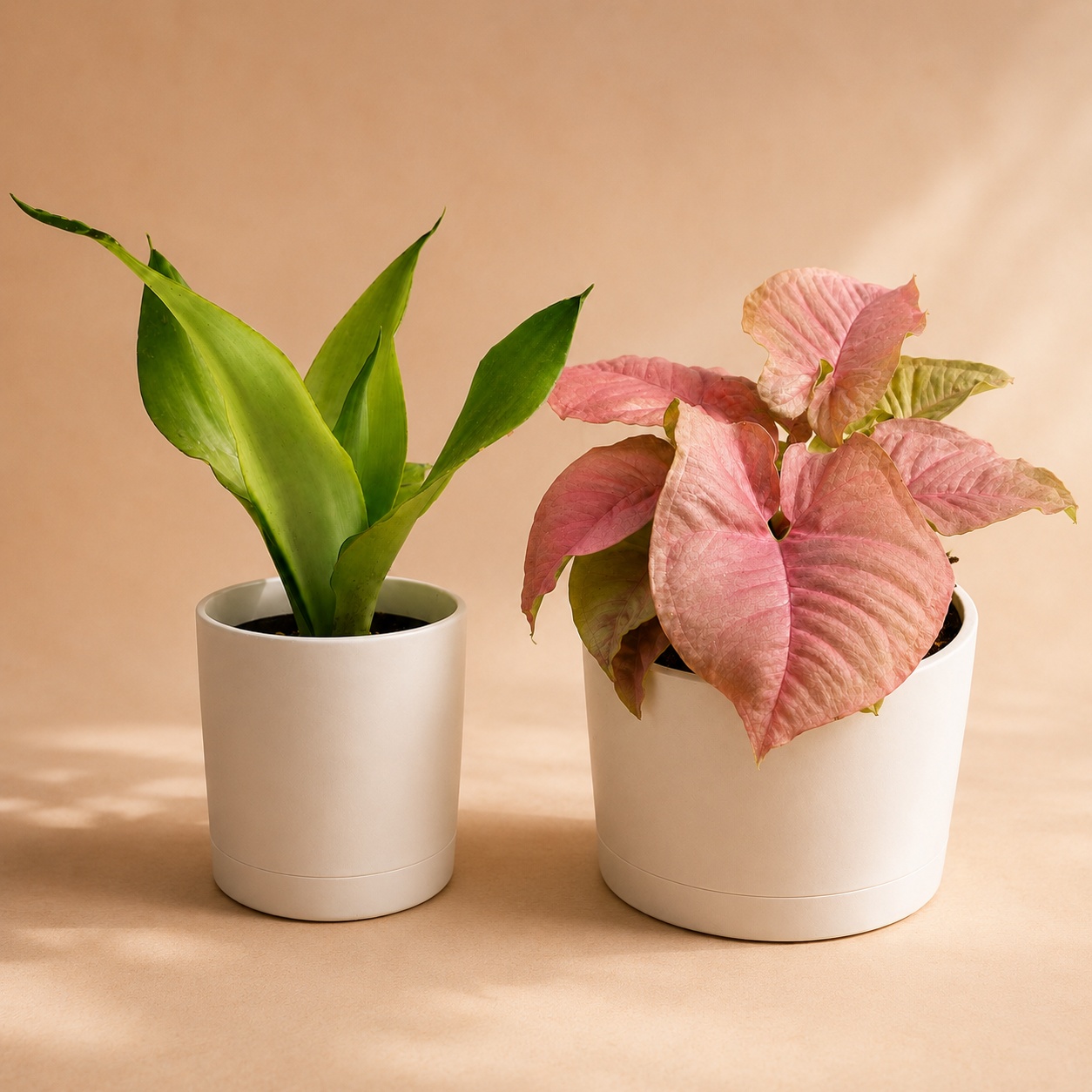
Syngonium Neon Pink & Sansevieria 'Moonshine' Bundle
Common Toxins Hiding in Your Home
The air inside your house contains a bunch of chemicals with weird names that you probably can't pronounce. The most common ones are formaldehyde, benzene, and something called VOCs (volatile organic compounds). These aren't just science words - they're real pollutants that come from stuff you use every single day.
Here's where these invisible troublemakers come from:
- Formaldehyde sneaks in through pressed wood furniture, cabinets, and permanent-press fabrics
- Benzene shows up in plastics, synthetic fibers, and certain cleaning products
- VOCs come from paints, varnishes, air fresheners, and even dry-cleaned clothes
- Trichloroethylene hides in adhesives, carpet cleaners, and paint removers
| Toxin | Common Sources | Health Effects |
|---|---|---|
| Formaldehyde | Furniture, flooring, fabrics | Headaches, throat irritation |
| Benzene | Plastics, detergents, tobacco | Dizziness, drowsiness |
| VOCs | Paint, cleaners, air fresheners | Eye irritation, fatigue |
| Trichloroethylene | Carpet cleaners, adhesives | Nausea, confusion |
How Plants Clean the Air Naturally
Plants aren't just pretty decorations sitting on your windowsill. They're actually working hard to clean your air through a process that happens in their leaves and roots. When air passes over a plant's leaves, tiny pores called stomata absorb the chemicals floating around. The plant then breaks down these toxins and either uses them as food or stores them safely in their tissues.
NASA figured this out back in the 1980s when they were trying to keep air clean in space stations. Their Clean Air Study tested different houseplants and found that certain plants could remove up to 87% of air toxins in just 24 hours. The roots and soil also play a big role - microorganisms living in the potting mix help break down pollutants even further.
The best part is that this process happens automatically. You don't need to do anything special - just keep your air purifying plants alive and they'll keep working. Plants like the Syngonium Neon Pink in our Syngonium & Sansevieria Bundle are especially good at this because they have lots of leaf surface area to absorb more chemicals.
The Science Made Simple
Think of air purification indoor plants as natural vacuum cleaners that never need to be plugged in. While regular air purifiers use filters and electricity, plants use photosynthesis and natural biological processes. The bigger the plant and the more leaves it has, the more air it can filter.
Here's what happens step by step:
- Polluted air touches the plant's leaves
- The plant absorbs chemicals through tiny pores
- Microbes in the soil break down toxins into harmless substances
- The plant releases clean oxygen back into your room
Different air filtering plants are better at removing different chemicals. Some plants excel at grabbing formaldehyde while others are benzene specialists. That's why having a variety of plants gives you better overall air quality than just having one type.
Best Air Purifying Plants for Small Spaces
NASA research shows that certain houseplants can remove up to 87% of air toxins in just 24 hours. If you're living in a small apartment or working from a cramped home office, you don't need a jungle to breathe cleaner air. The right air purifying plants can fit on a desk, shelf, or nightstand while quietly filtering out formaldehyde, benzene, and other chemicals that off-gas from furniture and cleaning products. The trick is choosing plants that actually thrive in tight quarters without demanding constant attention.
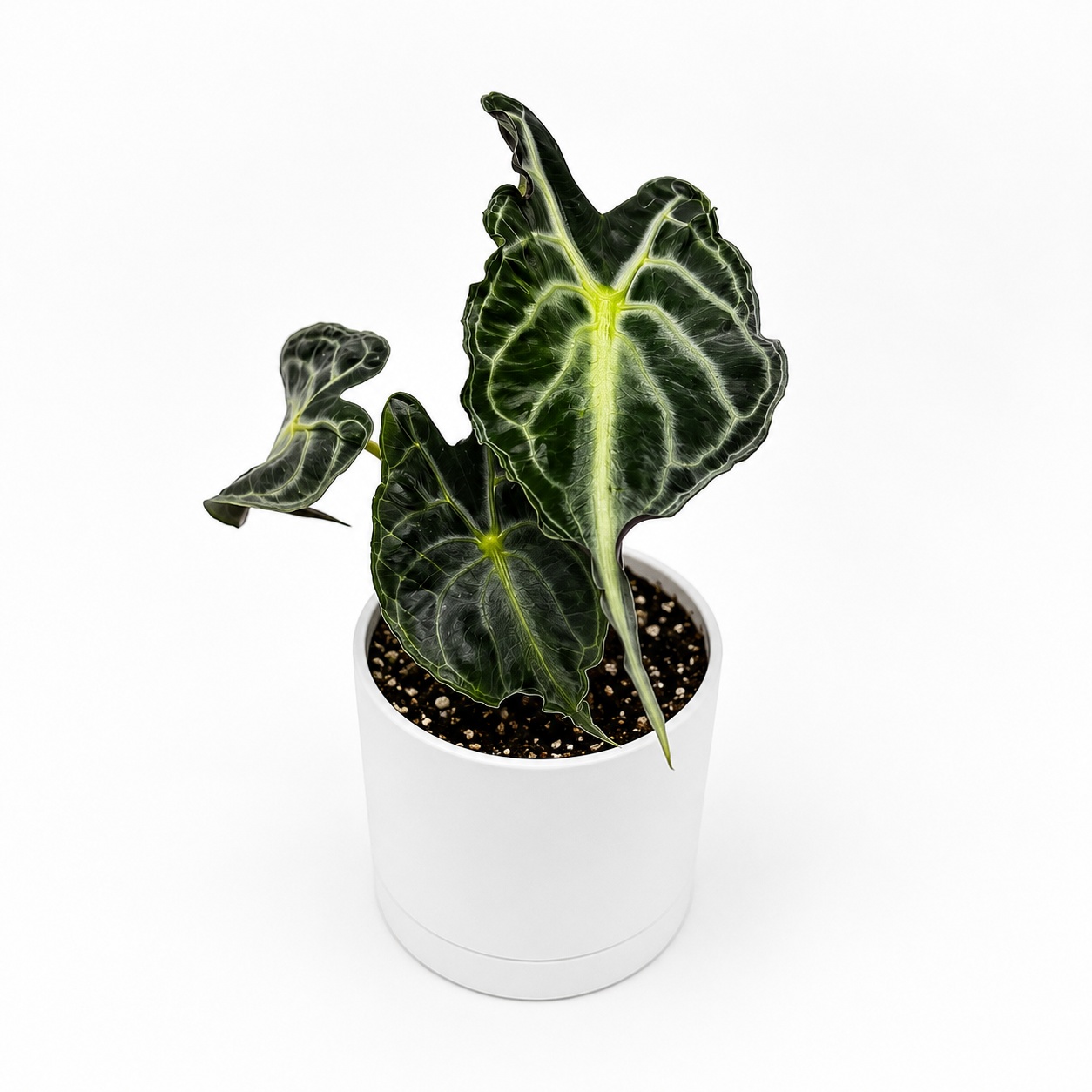
Alocasia 'Venom'
Sansevieria 'Moonshine' stands out as one of the most efficient air filtering plants for small spaces. Its silvery-green leaves convert CO2 to oxygen at night, which makes it perfect for bedrooms where most plants would do the opposite. This variety needs watering only every 2-3 weeks and tolerates low light better than most succulents.
- Grows slowly and stays compact in a 4-inch pot
- Survives in corners with minimal natural light
- Removes formaldehyde and benzene from indoor air
- Nearly impossible to kill with neglect
Syngonium varieties like Neon Pink and Snow White offer a softer look while still pulling their weight as air purification indoor plants. The Neon Pink brings vibrant blush-toned foliage that brightens dark apartments, while the Snow White features crisp white marbling mixed with emerald green. Both varieties start compact and can trail or climb as they mature, giving you flexibility in how you display them.
These arrowhead plants filter xylene and toluene from the air. They adapt well to the inconsistent light conditions most apartment dwellers deal with. A 6-inch pot fits easily on a bookshelf or desk without taking over your entire workspace.
The Syngonium Neon Pink & Sansevieria 'Moonshine' Bundle pairs these two workhorses together at $39.80 with free shipping. You get a 6-inch Syngonium and a 4-inch Sansevieria, which is enough to start filtering air in a bedroom or home office. It's a practical starting point if you're new to keeping plants alive.
| Plant | Size | Light Needs | Air Filtering Strength |
|---|---|---|---|
| Sansevieria 'Moonshine' | 4-inch pot | Low to bright | High |
| Syngonium 'Neon Pink' | 6-inch pot | Medium to bright indirect | Medium-High |
| Syngonium 'Snow White' | Standard pot | Medium to bright indirect | Medium-High |
| Alocasia 'Venom' | Compact | Bright indirect | Medium |
For collectors who want something more dramatic, the Alocasia 'Venom' brings sculptural, nearly black leaves with pronounced veins. It's compact but commands attention in any room. While it needs a bit more care than Sansevieria, it still qualifies as an air purification plant that works in smaller spaces.
Where to Place Your Air Filtering Plants
The bedroom is the single best location for air purifying plants because you spend 6-8 hours there breathing the same recycled air. Plants like Sansevieria release oxygen at night, unlike most houseplants that only photosynthesize during daylight. Placing one or two medium-sized plants on a nightstand or dresser can measurably improve air quality while you sleep. Just keep them away from heating vents that might dry out the soil too quickly.
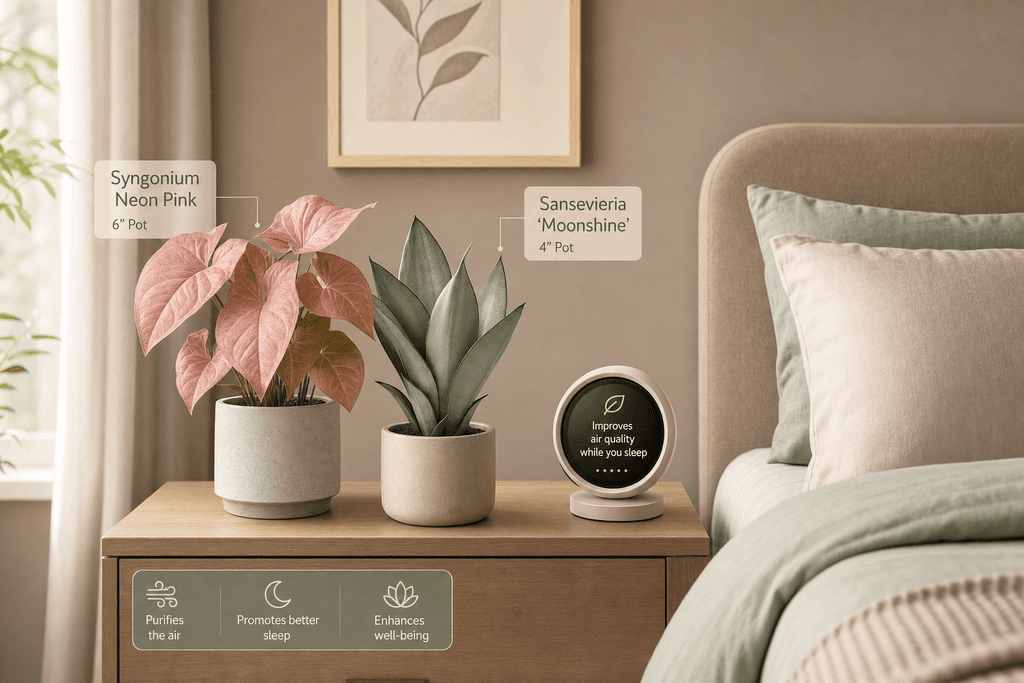
Home offices need at least two air filtering plants to counteract the off-gassing from electronics, printer ink, and particle board furniture. A desk-sized Syngonium fits next to your monitor without blocking your view, while a floor plant like Alocasia can anchor a corner. The key is positioning them within 6-10 feet of where you sit, since that's where you'll benefit most from cleaner air.
- Bedrooms: 1-2 plants per 100 square feet
- Living rooms: 2-3 plants for spaces under 200 square feet
- Home offices: 2 plants minimum near your workspace
- Bathrooms: 1 humidity-loving plant if you have a window
Light requirements matter more than most people realize. North-facing windows provide low, indirect light perfect for Sansevieria but might leave variegated Syngoniums looking washed out. East-facing windows offer gentle morning sun that works for nearly all air purification indoor plants. South and west windows can be too intense unless you place plants a few feet back from the glass.
The biggest placement mistake is putting plants where you'll forget about them. That decorative shelf above the fridge might look nice, but you won't water a plant you can't see. Keep your air filtering plants at eye level or below where you'll notice when the soil dries out or leaves start drooping.
If you have pets, check the pet-friendly collection before placing plants within reach. Sansevieria and Alocasia can cause stomach upset in cats and dogs, so they need to go on high shelves or in rooms your pets don't access. Syngoniums also contain calcium oxalate crystals that irritate mouths and throats.
Keeping Your Air Purifiers Alive and Thriving
Most air purifying plants die from overwatering, not neglect. Sansevieria needs water every 2-3 weeks during growing season and even less in winter. Syngoniums prefer slightly more moisture, about once a week when the top inch of soil feels dry. The simple finger test works better than any schedule because humidity, temperature, and pot size all affect how quickly soil dries out. Stick your finger knuckle-deep into the soil and only water if it feels completely dry.
Your plant will tell you when something's wrong if you know what to look for. Yellow leaves usually mean too much water, while brown crispy edges suggest underwatering or low humidity. Drooping stems often indicate thirst, but they can also mean root rot if the soil is soggy. Pale or washed-out variegation means your plant needs more light.
| Watering Method | Pros | Cons |
|---|---|---|
| Top watering | Simple, flushes salts | Can cause root rot |
| Bottom watering | Prevents overwatering | Salt buildup in soil |
| Self-watering pots | Consistent moisture | Expensive, less control |
A minimal maintenance routine beats elaborate care schedules every time. Check your plants once a week by touching the soil and looking at the leaves. Wipe dust off large leaves monthly with a damp cloth so they can photosynthesize properly. Rotate pots a quarter turn every few weeks so all sides get equal light. That's honestly all most air filtering plants need to thrive.
Repotting becomes necessary when roots start circling the drainage holes or poking out the top of the soil. Most plants need fresh soil every 18-24 months even if they don't need a bigger pot. Spring is the best time to repot because plants are actively growing and recover faster from the stress. Go up only one pot size at a time, since too much extra soil holds moisture that can rot roots.
If you're just starting out with low-light indoor plants, focus on mastering one or two varieties before expanding your collection. The skills you learn keeping a Sansevieria alive transfer directly to caring for more demanding species. You can explore more options in our air purifying plants collection once you've got the basics down.
Do Air Purifying Plants Actually Work
NASA's famous 1989 Clean Air Study found that certain houseplants removed up to 87% of air toxins in sealed chambers within 24 hours, but here's what most people don't know about that research. The study tested plants in small, sealed spaces with concentrated pollutants, which is nothing like your living room. Real homes have air circulation, open windows, and much larger volumes of air that need filtering. The truth is that air purifying plants do work, but you'd need between 10 to 1,000 plants per square meter to match the air cleaning power of a single HEPA filter, according to research published in the Journal of Exposure Science and Environmental Epidemiology.
| 10-1,000 plants | Needed per square meter for HEPA-level filtration |
| 87% | Toxin removal in NASA's sealed chamber tests |
| 0.9% | Estimated air quality improvement from typical home plant collection |
What Plants Can and Cannot Do
Plants absorb carbon dioxide and release oxygen through photosynthesis, and some do pull volatile organic compounds from the air through their leaves and roots. The problem is scale and speed. A typical houseplant processes air so slowly that normal ventilation from opening a door has a bigger impact on your indoor air quality.
- Plants remove formaldehyde, benzene, and other VOCs at measurable but minimal rates in home settings
- Soil microbes around plant roots contribute more to air cleaning than the leaves themselves
- One plant per 100 square feet provides negligible air purification benefits
- Opening windows for 15 minutes exchanges more air than plants do in 24 hours
Realistic Expectations for Your Plant Collection
Most retailers like bloomscape.com and thesill.com market plants as air purifiers without mentioning you'd need dozens to notice any difference. The real benefit of air purification indoor plants comes from having many of them together, not just one or two scattered around your home. Our Syngonium Neon Pink & Sansevieria 'Moonshine' Bundle gives you two proven air-filtering varieties in one package, which is a practical start to building a collection that might actually impact your air quality.
- Start with at least 2-3 plants per room for any measurable effect
- Combine plants with proper ventilation and air filters for best results
- Focus on varieties with larger leaf surface areas like Alocasia 'Venom' for maximum contact with air
Why Plants Are Still Worth It
Even though air filtering plants won't replace your HVAC system, they offer benefits that go way beyond air purification. Studies show that indoor plants reduce stress, improve focus, and increase humidity levels naturally. They also make spaces feel more alive and comfortable, which is why people keep buying them even after learning the air purification claims are overstated.
- Plants increase indoor humidity by 5-10% through transpiration, which helps with dry air
- Green spaces indoors reduce cortisol levels and improve mental well-being
- Caring for plants creates routine and purpose, especially for remote workers
- The aesthetic value alone justifies having air purification plants in your home
The bottom line is simple. Don't buy plants expecting them to clean your air like a machine, but do enjoy the small contributions they make alongside their other proven benefits.
Start Breathing Better Today
Air filtering plants improve indoor air quality by removing toxins like formaldehyde and benzene while adding oxygen to your space. They also make your home look better and can reduce stress levels, which matters when you spend most of your day indoors. The best part is you don't need to turn your apartment into a jungle to see benefits. Even one or two plants can make a difference in a small room.
Starting small beats waiting for the perfect moment that never comes. Most people who build impressive air purifying plant collections began with just one or two easy varieties. The Syngonium Neon Pink & Sansevieria 'Moonshine' Bundle gives you two proven air purifiers in one package, which takes the guesswork out of choosing your first plants.
The long-term benefits stack up faster than you'd think. Your first plant teaches you watering schedules and light requirements. Your second plant shows you how different species behave. By the time you have three or four, you've built real skills that make caring for common houseplants feel natural instead of stressful.
The air in your home won't fix itself, but adding a few air purification indoor plants is one of the easiest changes you can make. Whether you grab a bundle to start or pick individual plants that match your space, the important thing is actually putting something green on your shelf this week instead of next month.
Common Questions About Air Purifying Plants
Getting started with air filtering plants can feel overwhelming when you're not sure what to expect. Most people have the same worries about whether these plants will actually work, how hard they are to care for, and if they're safe to have around pets and kids. Here are the answers to the questions we hear most often from first-time plant buyers looking to freshen their indoor air.
How many plants do I need for my apartment?
The general rule is about two good-sized air purification plants per 100 square feet of space. For a typical bedroom or home office, that means 2-3 plants should do the job. A studio apartment might need 4-6 plants total, while larger spaces benefit from more. Our Syngonium Neon Pink & Sansevieria 'Moonshine' Bundle gives you two air purifying plants in one purchase, which is perfect for starting out in a smaller room.
Are these plants safe for pets?
Some air purification indoor plants are pet-friendly while others aren't. Sansevieria and Syngonium varieties can cause mild stomach upset if your pets chew on them, so they're best kept out of reach. If you have curious cats or dogs, look for pet-safe options or place plants on high shelves where animals can't access them.
Do I need a green thumb to keep these alive?
Not at all. Most air filtering plants are actually chosen because they're hard to kill. Sansevieria 'Moonshine' can go weeks without water and tolerates neglect better than most houseplants. The biggest mistake new plant owners make is overwatering, not underwatering. If you can remember to water once every week or two and find a spot with some indirect light, you'll be fine.
How long before I notice cleaner air?
Your air purification plant starts filtering right away, but you probably won't feel a dramatic difference overnight. Most people notice fresher air and fewer stuffy feelings after about 2-3 weeks once the plants are settled in. The effects build over time as your plants grow bigger and process more air through their leaves.
What if I don't have much natural light?
Low light isn't a dealbreaker for many air purifying plants. Sansevieria varieties actually prefer indirect light and can handle darker corners better than most plants. North-facing windows or rooms without direct sunlight work just fine for these hardy options. Just avoid putting them in completely windowless rooms or closets.
Can I keep these in my bedroom?
Yes, and your bedroom is actually one of the best places for air filtering plants. Unlike some plants that only produce oxygen during the day, Sansevieria releases oxygen at night, which makes it perfect next to your bed. Many people report sleeping better with plants in their bedroom because of the improved air quality and added humidity the plants provide.