

Why Plant Leaves Turn Brown and How to Fix It
Nov 04, 2026
Why are my plant leaves turning brown? Almost always it traces back to one of four things: water, air, salt buildup, or light. Brown spots or edges are your plant's way of flagging stress, not announcing it's done for. For apartment dwellers in Homestead running AC through the humid months, or home office workers keeping a pothos next to a sunny window, these four causes cover nearly every case you'll see.
The pattern on the leaf tells you which one you're dealing with. Crispy brown tips usually point to low humidity or inconsistent watering, while a white or yellowish crust on the soil surface signals salt buildup from tap water or fertilizer. Brown patches in the middle of a leaf, especially on the side facing a window, often mean sunburn, while soft brown mush at the edges points to too much water sitting around the roots. Reading where the brown shows up, and how it feels, is the fastest way to know what your plant actually needs next.
Table of Contents
What A Brown Patch On A Leaf Actually Means
Brown tissue is made of dead plant cells, and dead cells never turn green again. Once a section of a leaf browns out, trimming it off is cosmetic, not a fix; the real work is stopping the next leaf from going the same way. Think of the brown spot as a record of what already happened, not a live problem you can reverse on that leaf.
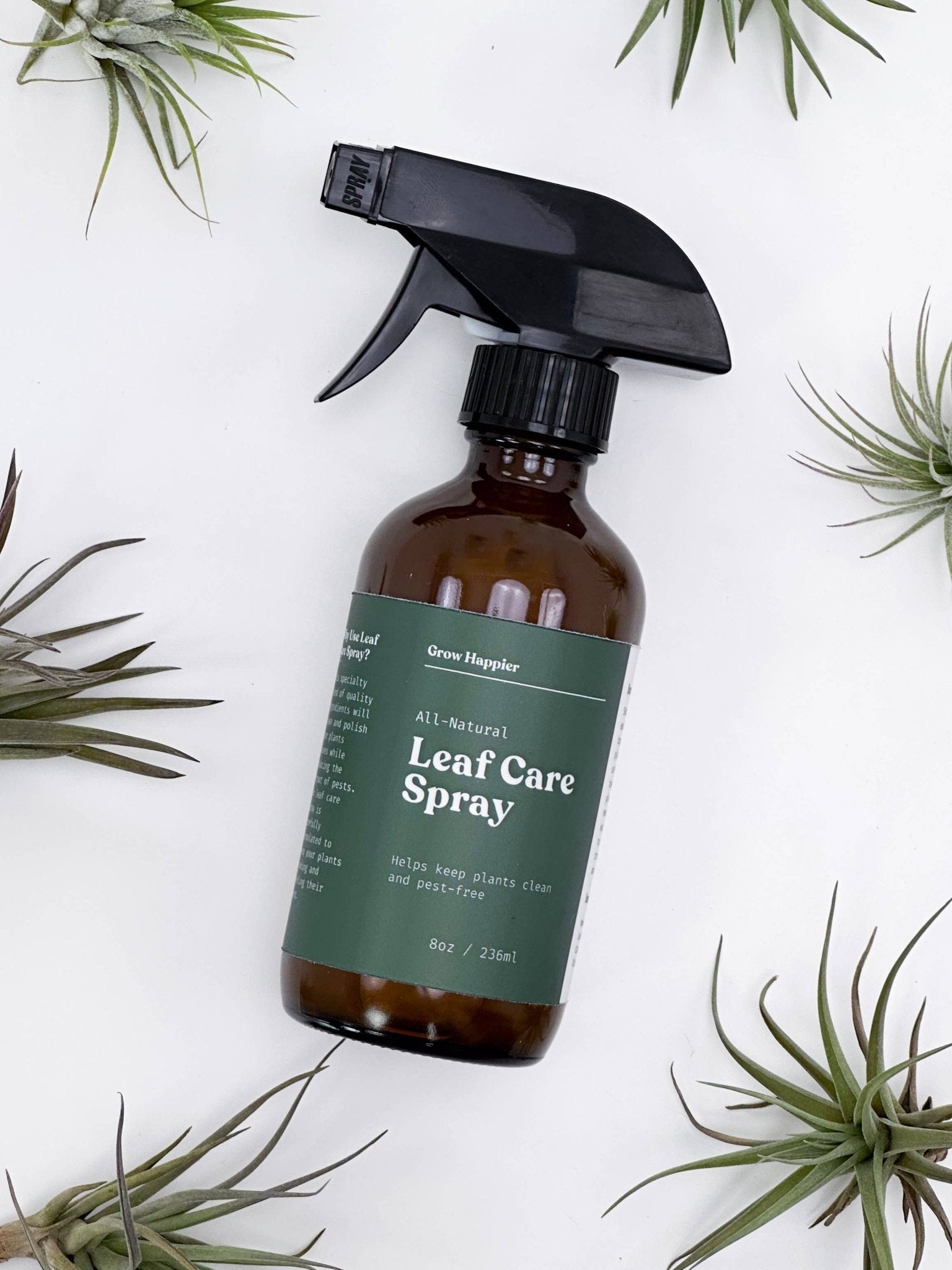
Plant Leaf Care Spray - 8oz
Where the brown shows up on the leaf narrows down the cause faster than color alone. A few common patterns, matched to what usually causes them, look like this:
| Location on leaf | Likely cause | What's happening at the cell level |
|---|---|---|
| Tips only | Low humidity or dry soil | Outermost cells dry out and die first |
| Edges, crispy | Inconsistent watering | Cells farthest from the stem lose water fastest |
| Edges, mushy | Overwatering, root rot | Waterlogged cells rupture and rot |
| Middle patch | Sunburn | Chlorophyll breaks down from heat and light |
| Whole leaf | Salt buildup or shock | Roots can't pull water, whole leaf starves |
Homestead's climate makes several of these common at once. Running AC through the humid months dries indoor air fast, and much of the local tap water carries enough dissolved minerals to leave salt residue in the soil over time, so apartment plants here often show tip browning and a crusty soil surface in the same season.
Your Watering Routine Is Probably The Culprit
Water problems cause more brown leaves than anything else, and they show up in two opposite ways. Underwatering leaves cells starved of moisture, so tips curl and turn crispy brown. Overwatering drowns the roots until they can't pull up water at all, and that shows up as soft, brown, mushy patches instead.
Switching between the two is worse than sticking with either extreme. A plant that gets soaked, dries out completely, then gets soaked again is under more stress than one that's consistently a little dry or a little wet. Roots can't adjust fast enough to keep up with the swings, and the leaves pay for it.
- Stick a finger two inches into the soil before you water again
- Water on a set schedule instead of "whenever it looks sad"
- Use the same amount each time, not a guess
- Check that the pot drains so water doesn't sit at the bottom
A measured pour every time takes the guesswork out of this. The HydraMate watering can holds 4.5 cups, so you're giving the same amount each session instead of eyeballing it, which keeps the roots from swinging between flood and drought.
Dry Indoor Air And Salt Buildup Add Up
Low humidity and mineral buildup both cause brown edges, but they work slower than a bad watering schedule. Air conditioning pulls moisture out of the room, and leaf edges, being the thinnest part of the leaf, dry out first. Over weeks, that shows up as a thin brown line tracing the outer edge of each leaf.
Tap water carries dissolved minerals that don't evaporate, so they build up in the soil every time you water. Fertilizing on top of that without ever flushing the soil adds more salt on top of what's already there, and the crust shows up as a white or brown ring right where the soil meets the pot.
- Flush the soil with plain water every few weeks to carry salts out the drainage hole
- Cut fertilizer to half strength if you feed more than once a month
- Wipe leaves with a damp cloth to clear dust that blocks the pores plants use to breathe
- Group plants together to raise humidity around the leaves naturally
Readers dealing with yellow instead of brown leaves are usually looking at a different issue, and the guide on yellow leaves walks through that separately.
Light, Heat, And Pests Stress Leaves Too
Direct afternoon sun through a window scorches leaves into brown, crispy patches, usually right in the center where the light hits hardest. A plant that was fine in spring can suddenly scorch once summer sun shifts angle and hits the same window at a harsher slant.
Heating vents and drafty windows do similar damage through heat and moving air instead of direct light, drying leaves out faster than the plant can replace the water. Pests cause a different pattern: spider mites and scale leave brown stippling or small spots, often with fine webbing or tiny raised bumps you can feel with a finger.
- Move plants a few feet back from south or west facing windows in peak sun hours
- Keep pots at least three feet from active heating vents
- Flip leaves over monthly and check the undersides for webs or bumps
- Isolate any plant with visible pests before it spreads to others nearby
Checking the underside of a leaf takes ten seconds and catches most pest problems before they spread to the rest of the plant.
Steps To Stop Browning From Spreading
Stopping brown from spreading takes a short sequence, not one fix. Start by checking the soil with a finger before adding any more water, since adding water to already-wet soil is the fastest way to rot more roots.
Trim off any tissue that's already brown using clean scissors, since dead cells won't turn green again no matter what you do next. Clean the remaining leaves to clear dust and discourage pests before they spread, which is the job the leaf care spray with neem oil and castile soap is built for.
- Check soil moisture with a finger before watering again
- Cut brown tissue with clean, sharp scissors
- Wipe and treat leaves to stop pests and dust buildup
- Group plants or add a humidity tray if the air feels dry
If the plant you're nursing back started out struggling for other reasons, the rehab plant guide covers how to bring a stressed plant back step by step.
Scissors Or A Routine, Not Both
Trimming a brown tip removes dead tissue, nothing more. It does not feed the roots, raise humidity, or flush salt out of the soil, so the next leaf browns the same way within weeks. A pair of scissors fixes how the plant looks today, not why it got there.
A plant recovering from stress needs more than water. Roots that have been underfed or sitting in salty soil need a balanced feed to push out new growth, and a dry stressed plant needs more than a splash from the tap to come back. Watering alone treats one of the four causes and ignores the other three.
A consistent routine costs less than replacing a plant that's gone past saving. A $14 bottle of leaf spray and a regular watering schedule run a few dollars a month. A dead monstera or philodendron, plus the time spent nursing it first, costs more than that in one trip to replace.
Each cause needs a different fix, and no single habit covers all four on its own.
| Cause | What fixes it | How often |
|---|---|---|
| Inconsistent watering | Measured pour on a set schedule | Every 7 to 10 days |
| Salt buildup | Flush soil with plain water | Every few weeks |
| Dust and pests on leaves | Wipe and treat leaf surface | Monthly |
| Nutrient gaps after stress | Balanced feed at half strength | Once a month |
Readers rebuilding a plant that's further along in decline, past a few brown tips, should look at the rescue and revive guide before deciding whether to keep trimming or start a full routine.
Pick One Habit To Change This Week
Look at where the brown shows up on your plant right now and match it to a single cause, then fix only that one before touching anything else. Tips going crispy means a watering or humidity fix, a soil crust means a flush is overdue, a center patch means the plant needs to move a few feet from the window. Pick the HydraMate watering can if your pour has been a guess instead of a measured amount, since that one change alone stops the flood-and-drought swing that causes most brown edges. Give it two to three weeks on the same schedule before judging results. Small, consistent habits are what keep brown tips from coming back, not a full overhaul done once and abandoned.
Brown Leaf Questions Homestead Plant Owners Ask
Will a brown leaf tip spread to the rest of the leaf if I leave it alone?
A brown tip can keep spreading inward if the cause behind it is still active, but the tip itself never heals back to green. If the plant is still sitting in dry air or an inconsistent watering routine, the brown line creeps further into the leaf over the next week or two. Fix the underlying cause and that leaf stops getting worse, even though the brown part stays brown.
Can tap water alone be enough to cause brown edges, or does it need other factors?
Tap water alone can cause brown edges if it carries a lot of dissolved minerals, even with a perfect watering schedule. Some areas have harder water than others, so two plants watered the exact same way can end up with different amounts of salt crust depending on what's coming out of the tap. Switching to filtered or distilled water cuts the mineral load at the source.
Is it safe to use a leaf spray on plants if I have cats or dogs at home?
Our Plant Leaf Care Spray is made with neem oil, lemon juice, castile soap, and distilled water, with no synthetic pesticides in the mix. That makes it a reasonable pick for households with cats or dogs that like to brush past the leaves. Let the spray dry on the leaf surface before a curious pet gets close enough to lick it.
Why do new leaves come in brown even after I fixed my watering?
New leaves coming in brown points to a cause other than water, since a fixed watering routine would show up as healthy new growth within a few weeks. Salt still sitting in the soil from before the fix, a pot that's still too close to a heat vent, or an undetected pest feeding on new growth are the usual suspects. Check the soil crust and the undersides of the newest leaves before assuming watering is still the issue.