

Why Houseplant Leaves Curl and How to Fix Them
Nov 11, 2026
Why are my plant leaves curling? It almost always means the plant is losing water faster than its roots can pull it back in, so the leaves roll or cup to shrink their surface area and slow down that loss. This is one of the first signals a houseplant sends when something is off, and it shows up well before you see any yellowing or brown, crispy edges. For plant parents in Homestead dealing with Florida heat and humidity swings, catching this early can save a plant that still has plenty of time to bounce back.
The shape of the curl actually points to the cause. Leaves curling downward and inward often mean the plant is thirsty or sitting in a spot that gets too much direct sun. Leaves curling upward along the edges can mean overwatering, root rot, or soggy soil that is choking the roots. Prayer plants like Maranta and Calathea have their own quirk on top of this, since their leaves naturally rise and fall a bit with light throughout the day, so a little movement on those varieties is not always a red flag.
Table of Contents
What Curled Leaves Are Actually Telling You
Curling is a water-saving reflex. When a leaf rolls or cups, it shrinks the surface area exposed to heat and light, which cuts down how fast moisture evaporates through the pores on its surface.
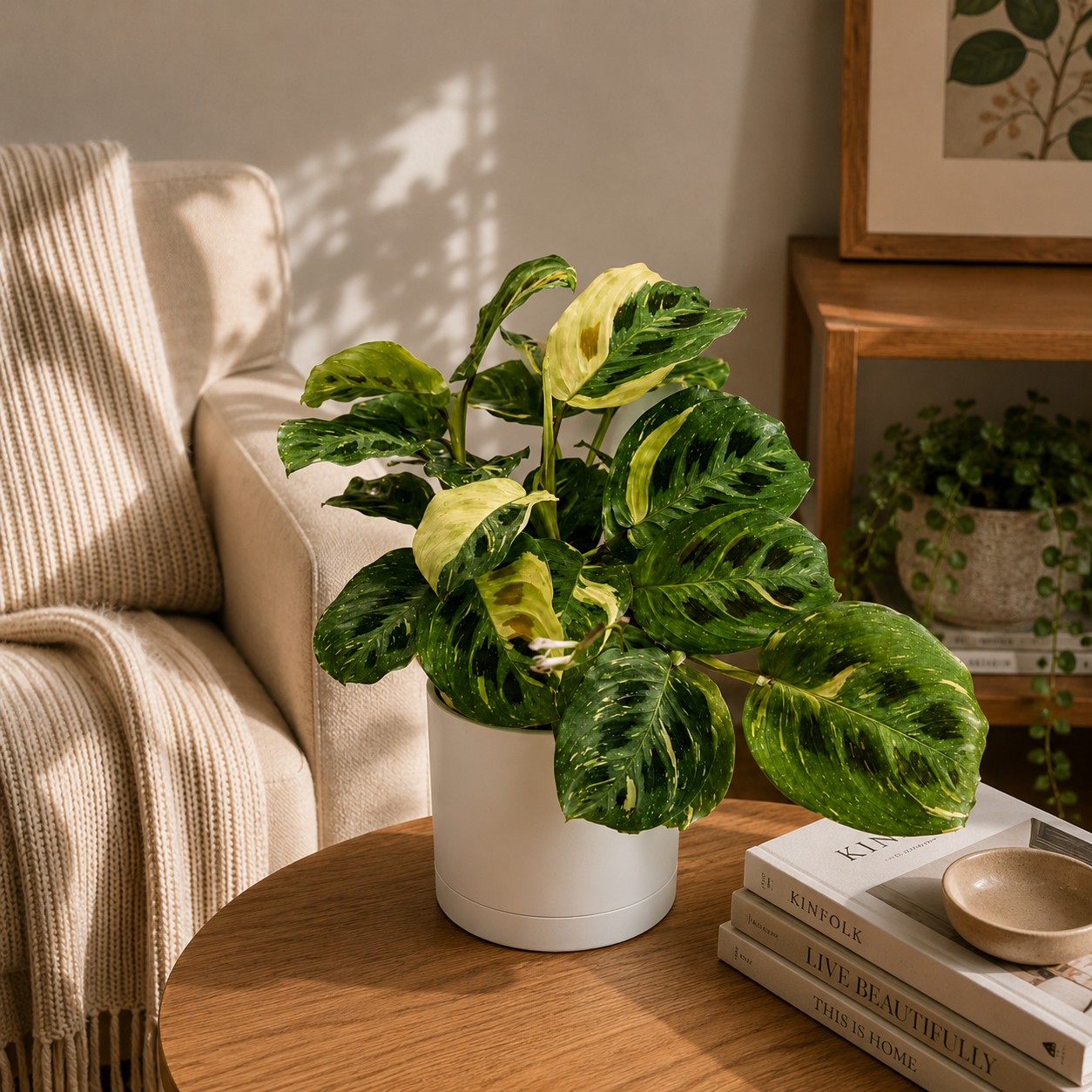
Variegated Maranta
Maranta and Calathea react to this faster than most houseplants because their leaf tissue is thin and built for steady, humid air. A few hours of dry indoor air from an AC unit can show up as curling on these two before a sturdier plant like a philodendron would react at all.
Matching the curl shape to a cause saves time, since treating the wrong problem can make things worse.
| Curl type | Likely cause | What to check first |
|---|---|---|
| Tight, inward rolling | Underwatering or dry air | Soil moisture and distance from vents |
| Loose, upward edges | Overwatering or root rot | Pot drainage and soil weight |
| One-sided curling | Light source too close or too strong | Distance from window or grow light |
| Slight daily rise and fall | Normal prayer plant movement | No action needed |
Root health plays into most of these patterns, so a plant that is overdue for fresh soil often curls no matter how carefully you water it. If a plant has been in the same pot for over a year, it's worth reviewing the steps for repotting houseplants before assuming the problem is watering alone.
Thirsty Roots Make Leaves Roll Inward
Underwatered leaves curl inward along their length and feel dry, thin, almost papery, because the plant shrinks its surface to hold onto whatever water is left in the tissue. Overwatered roots rot in soggy soil and lose the ability to pull up water at all, so the leaf curls in a softer, droopier way even while the pot still feels heavy and wet. The fastest way to tell them apart is with your finger, not a watering can.
- Underwatered leaf: thin, papery, rolls lengthwise, soil feels dry
- Overwatered leaf: soft, droopy, curls at the edges, soil feels soggy
- Soil dry at 2 inches down: water the plant now
- Soil still damp at 2 inches down: wait and check drainage holes
- Pot has no drainage: fix the pot before changing your watering
Push a finger into the soil 2 inches down before you decide anything. A dense, water-holding mix makes that soil check harder to trust, which is why a well-draining blend like CALATHEA Premium Potting Mix matters, it lets excess water run off instead of sitting around the roots and causing the exact curling you're trying to fix.
Dry Air And Heat Stress Curl Leaf Edges
Dry air pulls moisture out of a leaf's edges faster than the roots can replace it, and the edges curl upward or crisp to slow that loss. Central heat and AC strip humidity from indoor air well below what tropical plants like Maranta are built for. Apartment units near Homestead often run AC hard against outdoor heat, and that steady dry airflow is a common curling source plant parents overlook.
- Move plants at least a few feet from vents and radiators
- Group plants together so they share moisture from their own leaves
- Set a pebble tray with water under the pot, not touching the roots
- Run a small humidifier in rooms with multiple tropical plants
- Avoid placing plants directly above baseboard heaters
Once indoor humidity drops under 40%, thin-leaved plants like Maranta and Calathea start showing curled, crisping edges within days. A pebble tray or a grouped plant shelf raises the air moisture right around the leaves without changing anything else about your routine.
Light And Nutrient Problems Twist New Growth
Too much direct afternoon sun scorches leaf edges and curls them away from the light, while too little light slows down leaf unfurling so new growth stays stuck in a tight roll. Fertilizer salt buildup is a separate cause, and it curls leaf tips downward and makes them stiff instead of soft. The pattern to watch for is simple.
- Scorched, curled-away edges: plant sits in direct afternoon sun
- New leaves stuck rolled: plant isn't getting enough light to unfurl them
- Stiff, downward-curling tips: fertilizer salts have built up in the soil
- Curling shows up fastest on pale sections: variegated leaves like those on Variegated Maranta
The giveaway here is that the problem shows up mainly in new growth, not the whole plant at once, which separates it from the watering and humidity issues covered above. If you're unsure how much or how often to feed a plant, the guide on how to fertilize your houseplants breaks down a schedule that avoids salt buildup in the first place.
Pests Hiding Under Leaves Cause Tight Curls
Spider mites, aphids, and thrips suck sap out of leaf tissue, and the leaf responds by puckering into a tight, localized curl instead of rolling evenly like a watering problem would. A flashlight and a close look at the underside of the leaves and the stem joints will usually show webbing, sticky residue, or tiny moving specks. Isolating the plant the same day you spot pests stops them from spreading to a nearby Calathea or Maranta.
- Check leaf undersides and stem joints with a flashlight
- Look for webbing, sticky residue, or tiny moving insects
- Move the affected plant away from others immediately
- Wipe every leaf with diluted soap water once a week
- Repeat the soap wipe-down until no new curling appears
Stick to the once-a-week soap wipe routine rather than spraying heavier chemicals indoors, since a mild solution is gentler on leaves and safer around pets that brush past the plant. Keep isolating the plant until a full week passes with no fresh curling on new leaves.
Sensitive Prayer Plants Or Tougher Houseplants, Which Fits Your Shelf
Prayer plants react faster to stress because their leaf tissue is thin and their roots sit shallow in the pot, pulling moisture from a smaller zone of soil. Succulents and snake plants store water in thick leaves and deeper root systems, so they can go days or weeks without showing visible stress. That difference is why a Maranta curls while a snake plant two feet away looks untouched by the same dry spell.
That sensitivity is useful, not just annoying. A curling Maranta or Calathea often flags a humidity drop or watering gap days before it would show up on tougher plants nearby, giving you time to adjust the whole shelf before damage spreads.
| Plant type | Leaf tissue | Root depth | Time to show stress |
|---|---|---|---|
| Prayer plants (Maranta, Calathea) | Thin, soft | Shallow | 1 to 2 days |
| Philodendron | Medium, waxy | Medium | 4 to 7 days |
| Snake plant | Thick, fibrous | Deep | 2 to 3 weeks |
| Succulents | Very thick | Deep | 3 to 4 weeks |
A stable routine, steady watering, consistent light, and a soil mix that drains well, stops most repeat curling before it starts. Readers working through a feeding schedule should pair it with the steps in how to fertilize your houseplants to avoid the salt buildup that twists new growth. Yellowing on top of curling points to a separate issue, and the breakdown on why plant leaves turn yellow covers that pattern on its own.
Customers near Homestead who want a second opinion can bring a curled leaf sample to 19605 SW 334th Street for a quick in-person check rather than guessing from photos. That direct look settles whether the cause is root, water, or pest related faster than trial and error at home.
Pick One Change And Watch The Next Leaf
Choose the single cause that matches what you found when you checked the soil, the air, or the undersides of the leaves, and change only that one thing. Don't adjust watering, light, and humidity at the same time, since stacking fixes makes it impossible to tell which one worked. Leave that single change in place for a week and watch the next new leaf that opens. A new leaf unfurling flat and smooth is proof the fix worked; a curled old leaf will not uncurl, so don't judge success by it. If the new growth still rolls tight after a week, bring a sample to Runo Plants LLC at 19605 SW 334th Street, Homestead for a hands-on look rather than guessing again.
Curling Leaf Questions Plant Parents Still Ask
Can a curled leaf ever uncurl and go back to normal on its own?
No, a leaf that has already curled will stay that shape for the rest of its life. The curl happens because leaf cells on one side shrink or stiffen, and that change does not reverse. Once you fix the cause, the existing curled leaves stay as they are while new growth opens flat, so judge progress by what grows next, not by what already rolled.
Is it safe to mist a curling plant if I have cats or dogs in the house?
Yes, plain water misting is safe around pets. The risk comes from what you add to that water, not the mist itself, so skip leaf shine sprays, neem solutions, or essential oil mixes near pets that like to chew leaves or lick droplets off the floor. Plain water on a Maranta or Calathea carries no pet safety concern.
How soon after fixing the cause should I expect new leaves to grow flat again?
Most prayer plants push out a new leaf within one to two weeks of a fix, based on how fast they already show stress. Watch the next leaf that unfurls after your one-week check, not the current growth. A flat, smooth new leaf confirms the fix worked, while a tight roll means the real cause is still unaddressed.
Does repotting into fresh soil help a plant with curling leaves, or make it worse?
Fresh soil helps when the roots are rotted, compacted, or sitting in a dense mix that holds too much water, but repotting a plant that is simply underwatered or stressed by dry air adds unnecessary shock on top of what it is already dealing with. A mix built for Calathea and Maranta, like the CALATHEA Premium Potting Mix, drains well enough to prevent the soggy roots that cause curling in the first place.