

Watering Indoor Plants How Often and Signs They Need More
Nov 16, 2026
How often should I water indoor plants? Most houseplants want water every 1 to 3 weeks, not on a set daily or weekly schedule like a chore chart. Light, pot size, and the season you're in change that math more than any generic rule ever will. A snake plant on a sunny windowsill in Homestead in July can dry out faster than the same plant in a low-light corner during a mild January.
The real answer sits in the soil, not on a reminder app notification. Stick a finger about two inches into the pot, and if it feels dry, it's time to water; if it's still damp, wait a few more days and check again. Plants in small pots or unglazed terracotta dry out faster than ones in large plastic or glazed containers. Growth slows in fall and winter, so most indoor plants need less water during those months than they did over summer.
Table of Contents
Why a Fixed Watering Schedule Fails Every Plant Owner
A calendar can't account for pot material, room humidity, or how much light a plant gets, and those three factors change how fast soil dries out far more than the day of the week does. A terracotta pot wicks moisture through its walls, so soil dries quicker than it would in a glazed ceramic or plastic pot. A room with a humidifier or a bathroom with steady steam keeps soil damp longer than a dry living room near an air vent.
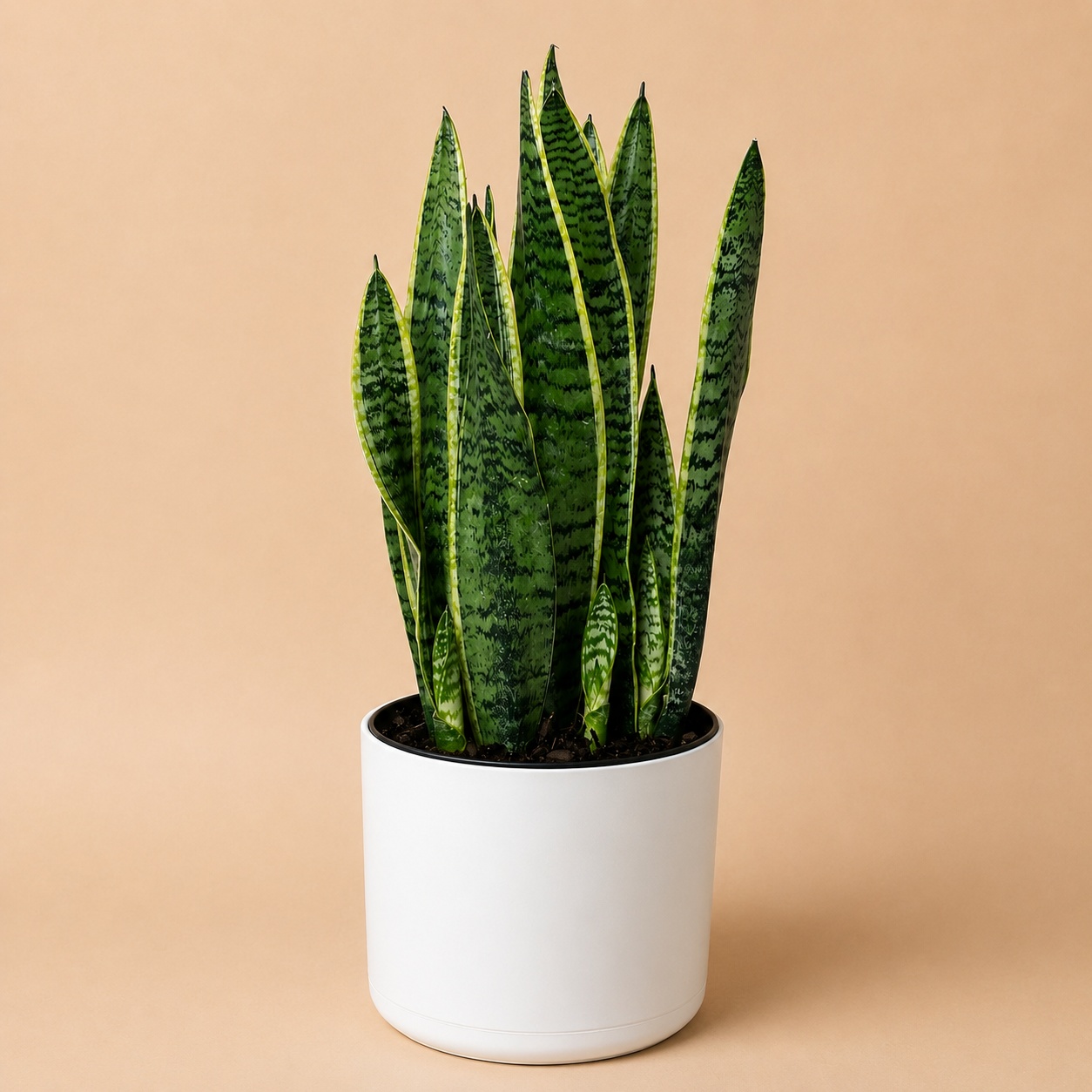
Sansevieria 'Laurentii'
Homestead's warm, humid climate adds another layer most watering charts never mention. Indoor plants here hold onto moisture longer than the same plants would in a drier state like Arizona or Colorado, even with air conditioning running. That means a watering interval printed on a plant tag from a national retailer often runs too aggressive for a home in this area.
Light exposure is the other piece that shifts the math, since brighter rooms push photosynthesis and water use faster than dim corners do.
| Room Type | Typical Watering Frequency | Example Plant |
|---|---|---|
| Low-light room | Every 2 to 3 weeks | Sansevieria |
| Bright, indirect light | Every 10 to 14 days | Calathea |
| Direct sun window | Every 7 to 10 days | Succulents |
Readers furnishing a dim apartment corner can browse low light indoor plants built to handle longer stretches between waterings without stress.
The Two-Finger Soil Check Before Anything Else
Push one finger straight down into the soil until it hits your second knuckle, about two inches deep. If the soil feels dry at that depth, water the plant. If it feels damp or cool, wait and check again in a couple of days instead of guessing.
Pots deeper than six inches hide moisture that your finger can't reach, so a wooden skewer works better there. Push it in, pull it out, and look for soil clinging to the wood. Clean skewer means dry soil below the surface, even if the top inch feels damp.
A narrow spout matters here too, since a wide-mouth can dumps water over leaves and soil at once, making it hard to judge how much actually reached the roots. The HydraMate Modern Watering Can's narrow spout lets you aim straight at the soil line so the check you just did actually means something.
- Finger test: push two inches deep, feel for dry or damp
- Skewer test: insert, pull out, check for clinging soil
- Pot weight: lift before and after watering to learn the difference
- Drainage holes: confirm water actually exits the bottom
Watering Needs for 7 Common Houseplants
Watering frequency depends on the plant, not a universal rule, and the range runs from every 5 days to once a month depending on species. Pothos wants water every 1 to 2 weeks, while succulents can stretch to every 2 to 3 weeks between drinks. Ferns dry out fastest of the common houseplants, needing water every 5 to 7 days.
A peace lily tells you exactly when it's thirsty because its leaves droop visibly, then perk back up within hours of watering. ZZ plants store water in underground rhizomes and can go 3 to 4 weeks without trouble, and spider plants land in the middle at every 1 to 2 weeks.
Sansevieria 'Laurentii' only needs water every 3 to 4 weeks because its thick leaves store water the way a succulent does. Calathea 'Exotica' runs the opposite direction, wanting consistently moist soil roughly every 5 to 7 days and never drying out completely.
| Plant | Watering Frequency | Key Thirst Sign |
|---|---|---|
| Pothos | Every 1-2 weeks | Leaves go limp |
| Succulents | Every 2-3 weeks | Leaves wrinkle |
| Ferns | Every 5-7 days | Fronds turn crispy |
| Peace lily | When it droops | Visible leaf droop |
| ZZ plant | Every 3-4 weeks | Stems feel soft |
| Spider plant | Every 1-2 weeks | Tips brown |
| Calathea 'Exotica' | Every 5-7 days | Leaves curl inward |
Signs a Plant Is Begging for Water
A thirsty plant shows itself through touch and weight before the leaves ever turn brown. Leaves that should feel firm start feeling thin, curling at the tips, or going crispy along the edges instead of holding their normal shape.
Lift the pot. A dry plant feels noticeably lighter than it did right after watering, since dry soil weighs far less than soil holding moisture, and this trick needs no tools at all. Over time you'll learn the weight of your own pots wet versus dry, the same way you'd gauge a water bottle by shaking it.
Look at where the soil meets the pot wall, since dry soil shrinks and pulls away, leaving a visible gap you can see without digging. Watering into that gap wastes water, since it runs down the sides instead of soaking the root ball, so you may need to water slowly in two passes. These three checks together give a clearer answer than a calendar reminder ever could.
- Touch the leaves for thinness or crisping at the edges
- Lift the pot and compare the weight to your memory of it wet
- Look for a gap between the soil and the pot wall
When Too Much Water Is the Real Problem
Overwatering causes more houseplant deaths than underwatering, and the symptoms get mistaken for thirst more often than you'd expect. Lower leaves that turn yellow and feel mushy rather than crispy are a root rot warning, not a sign to add more water.
A musty smell rising from the pot, or small flies hovering near the soil surface, both point to soil that's stayed wet too long. Fungus gnats lay eggs in damp soil, so their presence is a direct clue the roots are sitting in moisture they can't use.
Standing water in the saucer after an hour means the problem is drainage, not thirst, and more water only makes it worse. Dump the saucer, check that the pot has real drainage holes, and let the top inch of soil dry fully before watering again. Readers who want the fuller breakdown of these symptoms can read our piece on signs you are overwatering your plant for the full list of fixes.
- Mushy yellow lower leaves, not crispy or curled
- Musty soil smell or gnats near the surface
- Water sitting in the saucer an hour after watering
Matching Your Check-In Rhythm to Your Room
Three factors decide how often you need to check soil: light, season, and pot size. Combine them and you get a rhythm that fits your actual apartment, not a generic chart.
A bright room with a small pot dries out fastest, so check every 4 to 5 days during spring and summer. Low light stretches that window, and winter stretches it further, sometimes adding a week or more to the gap between checks. A home office with a north-facing window and a 6-inch pot might only need a look every 10 to 12 days once the heat kicks on.
| Condition | Check-In Rhythm | Why |
|---|---|---|
| Bright room, small pot | Every 4-5 days | Fast evaporation, limited soil volume |
| Low light, any season | Every 2-3 weeks | Slower growth, less water use |
| Bright room, winter months | Add 1+ week to summer rhythm | Reduced light hours slow uptake |
| Large pot, any light | Every 2+ weeks | More soil holds moisture longer |
A consistent pour matters as much as timing. Using a measured tool like the HydraMate Modern Watering Can removes the guesswork on amount, since 4.5 cups poured the same way each time builds a pattern you can actually track.
Set a weekly reminder to check the soil, not to water. That single swap keeps you from pouring on autopilot and lets the plant, not the calendar, make the final call.
Pick One Plant and Start This Week
Choose one plant in your Homestead apartment or office and commit to the finger test before you water it again, nothing more. A Sansevieria 'Laurentii' makes the easiest starting point, since its thick leaves forgive a missed check and its 3 to 4 week stretch gives you room to practice without risk. Pair it with a measured pour, like the 4.5 cups from the HydraMate can, so you know exactly how much water went in each time. Runo Plants grows these snake plants specifically for that kind of low-stress routine. Skip the reminder app and just check the soil every few days. Small, consistent checks beat any fixed schedule, because the plant tells you what it needs and the calendar never does.
Watering Indoor Plants Questions
Does Homestead tap water need to sit out before I water houseplants?
No, letting tap water sit out is not required for most houseplants. Homestead's municipal water is safe for Sansevieria, Calathea, and other common indoor plants straight from the tap. If you notice brown leaf tips on a sensitive plant like Calathea, try filtered water, but this is a plant-specific quirk, not a rule for every pot in your home.
Can I still keep a plant alive if I travel often for work?
Yes, plants that store water in their leaves handle travel schedules better than thirsty species. A Sansevieria 'Laurentii' goes 3 to 4 weeks between waterings, so a week-long trip rarely causes stress. A Calathea 'Exotica', which wants moist soil every 5 to 7 days, needs a neighbor or a self-watering setup if your trips run longer than a week.
Should I water a plant right after repotting it?
Yes, water a plant right after repotting to help the roots settle into the new soil. Pour slowly until water runs out the drainage holes, then let the top inch dry before the next watering check. Skip fertilizer for about two weeks after repotting, since fresh potting mix already holds nutrients the roots need time to use.
Why does my plant drink more water in summer even with the AC on?
Air conditioning lowers room temperature but not light intensity, and longer summer daylight hours still drive faster photosynthesis and water use. AC also dries indoor air, which pulls moisture from soil faster than a humid room would. A plant sitting near a vent dries out quicker than one across the room, so check soil more often for pots in a direct AC path.