

Best Potting Mixes for Indoor Plants and When to Use Each
Nov 14, 2026
The best soil for indoor plants is not one bag you buy and use on everything; it is a mix chosen for how that plant's roots actually grow. Most indoor plant deaths trace back to the wrong soil texture, not bad luck or a missed watering day. Thick, moisture-storing roots like those on a Monstera need chunky material that lets air reach the roots between waterings. Thin, fast-drying roots and rhizomes, like a Snake Plant's, need a leaner mix that dries out fast so the roots never sit wet.
Matching drainage and aeration to root type is the whole decision, and it takes seconds to check. Look at the plant you are repotting: is it a leafy tropical with thick roots, a rhizome plant that stores water in its base, or something in between. That answer tells you how much bark, perlite, or coir the mix should have, and how fast it needs to drain. Get that one match right and the rest of plant care gets a lot easier, whether you are growing on a windowsill in an apartment or on a desk in a home office in Homestead.
Table of Contents
Why Regular Potting Soil Fails Houseplants
Bagged garden soil is built for the ground, where roots spread sideways and water keeps moving down into the earth below. Put that same soil in a pot and it has nowhere to drain into, so it packs down hard within a few weeks. Once it compacts, water pools at the bottom instead of passing through.
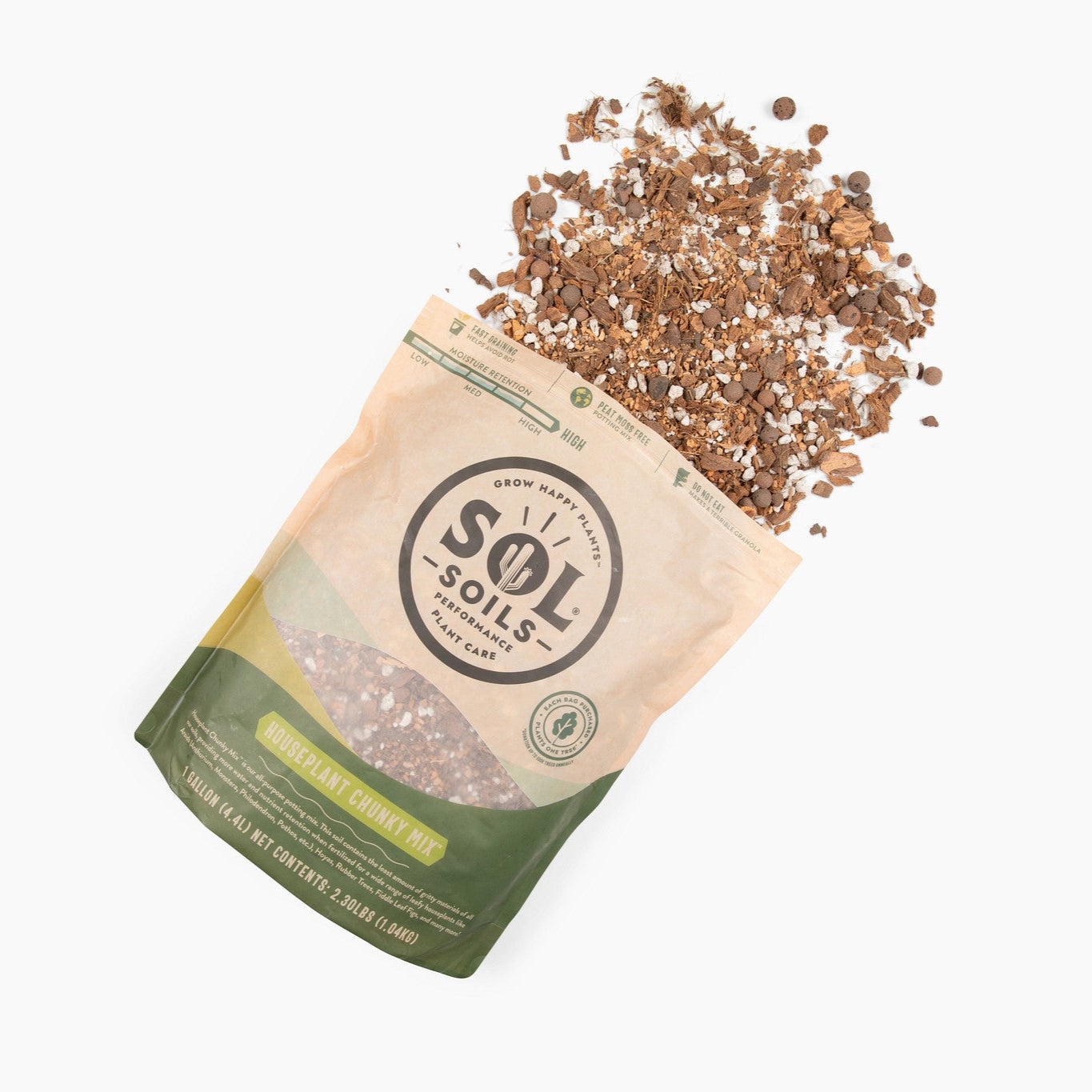
Houseplant Chunky Mix
Dense, compacted soil blocks oxygen from reaching the roots, and roots need air as much as they need water. This is why a plant can rot even when you are watering it on schedule and doing everything else right. The soil itself is suffocating the roots, not the watering can.
| Factor | Garden Soil | Houseplant Mix |
|---|---|---|
| Drainage | Slow, holds water | Fast, water passes through |
| Weight | Heavy, dense clay or loam | Light, bark and perlite base |
| Aeration | Low, few air pockets | High, built-in air gaps |
Homestead's humid air makes this worse, since compacted soil dries slower here than in a dry climate, and wet soil that stays wet longer gives root rot more time to set in. A lighter, chunkier mix like the Houseplant Chunky Mix dries at a pace that matches the moisture already in the air, so the roots get a break between waterings instead of sitting in a swamp.
What Each Soil Amendment Actually Does
Each ingredient in a potting mix has one job: control how fast water moves through the pot and how much air the roots get. Perlite and pumice are porous volcanic rock that create air pockets and speed up drainage, so water runs through instead of pooling. Orchid bark and horticultural charcoal add chunky structure, keeping the mix from compacting into a sour, airless mass over time. Coco coir and worm castings work the opposite way, holding onto moisture and slowly feeding nutrients back to the roots.
| Amendment | Main Job |
|---|---|
| Perlite | Drainage and aeration |
| Pumice | Drainage and aeration |
| Orchid bark | Structure, prevents compaction |
| Coco coir | Moisture retention |
| Worm castings | Moisture retention, slow feed |
No single amendment does both jobs well, so balance only comes from mixing fast-draining materials with moisture-holding ones in the same pot. A mix that's all bark dries too fast for a thirsty plant, and one that's all coir stays wet too long for a dry-root plant. The right ratio depends on the plant in front of you, not a generic bag label.
Finding the Right Balance for Your Space
Your home's light and humidity decide how fast any mix dries out, so that has to factor into which blend you buy. A low-light apartment keeps soil wet far longer than a bright south-facing window, even with the same mix, since less light means less water pulled out through the leaves. Pot material matters too: terracotta is porous and dries faster than plastic, which seals moisture in.
- Bright room with terracotta pots: a mix with more coir can work without staying soggy.
- Low-light room with plastic pots: lean toward more bark and perlite, less coir.
- Water once a week or less: pick a chunkier, faster-draining mix.
- Water every few days: a mix with more moisture-holding material fits your habits better.
Think about your watering habits before buying a mix, not after. Runo Plants' full range of potting mix options is split by plant type for exactly this reason, so you're matching the blend to real conditions in your home.
Why Snake Plants Need a Gritty, Fast-Draining Mix
Sansevieria stores water in thick underground rhizomes, which rot fast if they sit in dense, wet soil. A gritty blend with extra sand, perlite, or pumice mimics the dry, rocky soil this plant grows in natively, letting water pass through in seconds instead of hours. Standard chunky tropical mixes hold too much moisture for this root type, even though they're perfect for leafier plants.
- Soil stays wet two or more days after watering: too heavy for this plant.
- Base of the plant feels soft or mushy: rhizome rot has likely started.
- Water sits on top of the soil instead of soaking in fast: drainage is too slow.
If the pot still feels damp a full week after watering, the mix is holding too much water for a snake plant's roots. Runo Plants hand mixes its Snake Plant Premium Potting Mix at the Eugene, Oregon nursery for exactly this root type, priced at $19.99.
Why Monstera and Aroids Need Chunky Airy Mix
Monstera and other aroids grow wide, fleshy roots that spread sideways through the pot looking for air gaps, not just moisture. A soil-less blend with bark chunks and pumice keeps those gaps open, which is what prevents the airless, soggy soil that causes root rot in this plant family. Dense, compacted mixes choke these roots even when watering is done correctly.
- Monstera, pothos, and philodendron: chunky bark-and-pumice blend for airflow.
- Anthurium and other jungle aroids: a mix with higher organic content for steady moisture.
- Any leafy tropical that dries out in under three days: add more moisture-holding material.
The Monstera Premium Potting Mix runs $19.99 and is built soil-less for this exact root spread, while the Houseplant Chunky Mix at $12.99 carries the most organic matter of any Runo Plants blend, which is why it works across jungle plants and aroids like anthurium. More organic matter means more moisture held between waterings, which is exactly what leafy tropicals need.
Check the Roots or Trust the Soil
Pull the plant out of its pot before you decide the soil is at fault. Roots tell you what actually happened, and a two-minute look saves you from buying a new mix for a problem a new mix cannot fix.
Mushy, dark, or slimy roots mean rot has already set in, and no amount of fresh mix reverses that on its own. You have to trim the dead roots back to firm tissue first, then repot into dry mix, or the rot just spreads into the new soil.
Firm roots that look white or tan are healthy roots sitting in soil that stopped doing its job. That plant does not need surgery, it needs a repot into a mix built for its root type, like the Philodendron Premium Potting Mix for thick aroid roots or a leaner blend for rhizome plants.
Timing changes the trade-off once you know which case you have. Repotting into fresh mix right now gets ahead of rot before it spreads, but the plant has less active growth through late fall and winter to recover from root disturbance. Waiting until spring growth season means the plant heals faster, but a rotting root system does not wait for better weather.
| Situation | Repot Now | Wait for Spring |
|---|---|---|
| Mushy, rotting roots | Required, trim and repot immediately | Not an option, rot spreads |
| Firm roots, compacted soil | Safe, mild stress only | Fine, plant is stable either way |
| Recovery speed | Slower healing in low light months | Faster healing with active growth |
Skipping this check is how people repot a plant that never had a soil problem at all, or leave a rotting one in the same pot for another month. Two minutes with your hands in the pot tells you which one you are dealing with.
Picking the Mix That Matches the Roots in Your Pot
Before you grab a bag, look at the roots you are working with, not what the plant looks like on top. Thick rhizomes and succulent-style roots want a gritty, fast-draining mix, while wide, fleshy aroid roots want a chunky blend that holds a little more air and moisture. Pull your plant and check its current soil first: if it is still loose and chunky, you may not need a new bag at all. If it is packed down or soggy, that tells you the mix has failed, not the plant. The Snake Plant, Monstera, and Houseplant Chunky mixes from Runo Plants are a starting point for matching root type to texture, not a one-size answer for every pot on your shelf.
Potting Mix Questions Homestead Growers Ask
Can I mix two different potting mixes together for one pot?
Yes, blending two mixes is fine as long as you know what each one adds. Combine a moisture-holding blend with a fast-draining one if your plant's roots fall between two types, like a pothos that wants more air than a Chunky Mix gives but less grit than a Snake Plant blend. Start with a small test batch in one pot before mixing a whole bag.
How long does a bag of potting mix stay good once opened?
An opened bag stays usable for about six to twelve months if you seal it tight and keep it dry. Humid storage, like a garage or shed in Homestead, speeds up mold growth in the organic parts of the mix, such as coco coir or bark. If you see a sour smell or white fuzzy mold on top, scoop that layer out before using the rest.
Is it safe to use houseplant potting mix around cats and dogs?
The ingredients in standard potting mixes, like bark, pumice, perlite, and coir, are not toxic to cats and dogs on their own. The real risk is pets digging in the pot and swallowing chunks of bark or perlite, which can cause stomach upset. Keep pots out of reach of a curious pet, or top the soil with decorative stones to stop digging.
Do I need to replace all the soil or just add new mix on top?
Add new mix on top only if the existing soil is still loose and the plant isn't rootbound. Top off a thinning soil line with fresh mix once or twice a year between full repots. If the old soil is compacted or soggy, scoop it all out and repot fresh, since adding new mix on top of bad soil underneath does not fix the drainage problem below it.