

Statement Indoor Plants to Compare by Size, Style, and Care
Oct 21, 2026
Large indoor plants can fill an empty corner that three small pots never quite manage to cover. One tall plant gives a room a finished look fast, without the clutter of grouping several little ones on a shelf and hoping they read as a collection. For homestead renters and first-time plant owners working with one bright corner and a few hours a month for care, the real question is not whether to go big, but which big plant fits the space, the light, and the pets or kids moving through the room.
Twelve large indoor plants make up this comparison, including three Dieffenbachia varieties that show how much size and pattern can vary within a single plant family. The Dieffenbachia Reflecta Cheetah runs 38.77 USD and carries dense lime and emerald mottling on every leaf, no two plants marked the same way. The Dieffenbachia Panther costs 68.80 USD and leans into deeper green with creamy variegation for a bolder jungle look. The Dieffenbachia Puerto Rico sits at 40.99 USD and offers broader, creamy-white splashed leaves that fill a floor spot or tabletop with less fuss. Lining these three up side by side, along with nine other large varieties, makes it easier to match leaf size, color, and upkeep to the actual room instead of guessing from one product photo at a time.
Table of Contents
Big Plants at a Glance
Mature size among these twelve large indoor plants ranges from about 2 feet to more than 8 feet tall, so a reader with a low ceiling or a tight corner can rule out options fast. Light needs split into three groups: low light tolerant, medium indirect light, and bright indirect light, which matters most for apartments with a single north-facing window. Care level is rated easy, moderate, or needs attention, based on how often a plant needs watering, feeding, or pruning to stay full.
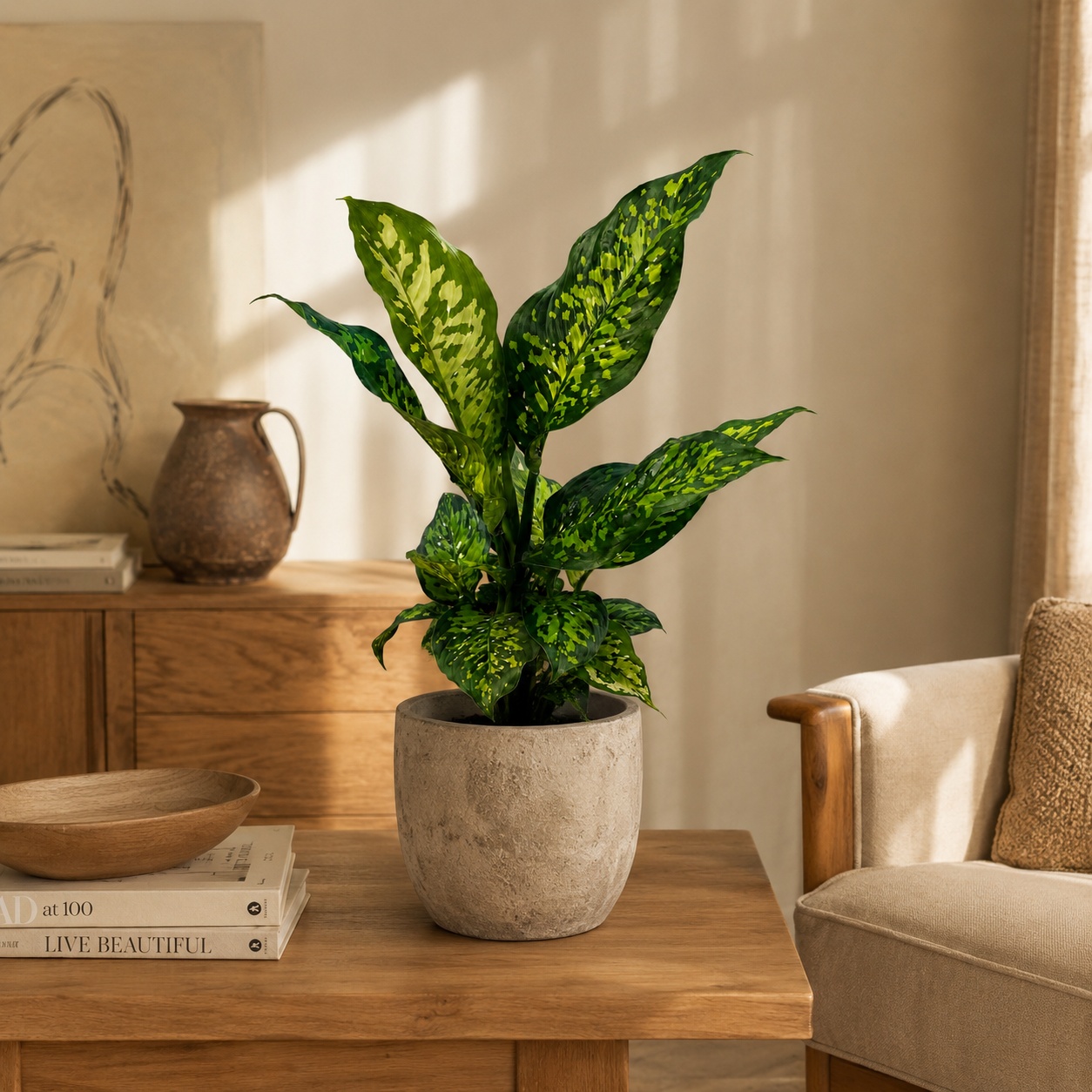
Large Dieffenbachia Reflecta 'Cheetah'
| Plant type | Mature height | Light need | Care level | Price range (USD) |
|---|---|---|---|---|
| Dieffenbachia (3 varieties) | 3 to 5 feet | Medium to bright indirect | Easy | 38.77 to 68.80 |
| Bird of Paradise type | 5 to 8 feet | Bright indirect | Moderate | Varies by pot size |
| Sansevieria type | 2 to 4 feet | Low to bright | Easy | Lower end overall |
| Fiddle Leaf Fig type | 5 to 8 feet | Bright indirect | Needs attention | Higher end overall |
Price generally tracks pot size and leaf density rather than species alone, which is why two plants in the same family can land far apart on the shelf. A reader who wants the full breakdown of what each care rating actually means day to day can look at the tall plants grouped together in one place.
Bold Patterned Plants That Steal the Room
The three Dieffenbachia varieties on this list all reach floor-plant height with large, glossy leaves, and the real difference between them comes down to pattern and price, not difficulty. The Reflecta Cheetah grows dense lime and emerald mottling on every leaf and sells for $38.77, making it the lowest-priced of the three. The Panther variety leans darker, with deep emerald leaves marked by cream and lime variegation, and runs $68.80, the highest price in this group. The Puerto Rico variety splits the difference at $40.99, with broader leaves splashed in creamy white that fill a corner fast.
- Dieffenbachia Reflecta Cheetah: cheetah-spot mottling, easy care, $38.77
- Dieffenbachia Panther: emerald and cream jungle pattern, easy care, $68.80
- Dieffenbachia Puerto Rico: creamy-white and green broad leaves, easy care, $40.99
All three stay upright and work as a tabletop centerpiece while young, then shift into a floor plant as they mature, so a single pot can serve two spots in the same room over time. None of them need special lighting setups, just the medium to bright indirect light already covered above.
Tall Classics for Floor Space and Height
Three plants dominate the tall-plant category for a reason: Fiddle Leaf Fig, Rubber Plant, and Dracaena cover almost every height and budget a reader with an empty corner might need. Fiddle Leaf Fig reaches 6 to 8 feet with large, violin-shaped leaves, needs moderate care, and runs $40 to $120 depending on pot size. Rubber Plant grows to the same 6 to 8 foot range with thick, glossy leaves in burgundy or green, takes easy care, and costs $30 to $90.
- Fiddle Leaf Fig: 6-8 feet, moderate care, $40-$120
- Rubber Plant: 6-8 feet, easy care, $30-$90
- Dracaena: 4-8 feet, very easy care, $25-$80
Dracaena covers the widest height range at 4 to 8 feet, with spiky or striped foliage, and takes the least upkeep of the three, which makes it a common pick for renters who travel. Anyone leaning toward the Fiddle Leaf Fig should know it is the one plant here that punishes missed waterings fast, so the Fiddle Leaf Fig care routine is worth reading before buying one for a busy household. For apartment dwellers who want height without constant fuss, Rubber Plant or Dracaena beats the Fiddle Leaf Fig on forgiveness.
Tropical Jungle Plants With Dramatic Leaves
A rainforest look indoors usually comes down to three plants: Monstera Deliciosa, Bird of Paradise, and Philodendron, each bringing a different leaf shape to the room. Monstera Deliciosa grows 5 to 8 feet with its signature split leaves, needs moderate care, and costs $35 to $100. Bird of Paradise reaches 6 to 8 feet with banana-like leaves and needs bright light to keep its color, pricing between $50 and $150.
- Monstera Deliciosa: 5-8 feet, split leaves, moderate care, $35-$100
- Bird of Paradise: 6-8 feet, banana-like leaves, bright light, $50-$150
- Philodendron: 3-6 feet, heart-shaped leaves, easy care, $25-$70
Philodendron tops out shorter at 3 to 6 feet, with heart-shaped leaves and easy care, which makes it the better choice for a home office desk instead of a floor corner. Bird of Paradise is the strictest about light of the three, and the Bird of Paradise care guide lays out exactly how much sun it needs to avoid pale, curling leaves. Sunny living rooms and south-facing home offices suit all three, but north-facing rooms should lean toward Philodendron.
Low-Fuss Plants for Busy Households
Snake Plant, Areca Palm, and ZZ Plant are the three most forgiving large indoor plants on this list, built for people who forget to water on schedule. Snake Plant grows 2 to 4 feet with stiff, upright leaves, takes very easy care, and costs $20 to $60. Areca Palm reaches 6 to 7 feet with feathery fronds, lands between easy and moderate care, and runs $40 to $100.
- Snake Plant: 2-4 feet, very easy care, $20-$60
- Areca Palm: 6-7 feet, easy to moderate care, $40-$100
- ZZ Plant: 2-3 feet, nearly no-maintenance, $20-$50
ZZ Plant stays smallest at 2 to 3 feet with waxy, dark leaves, and tolerates missed waterings better than any other plant in this comparison, which makes it the top pick for frequent travelers. Snake Plant and ZZ Plant both handle low light, while Areca Palm wants brighter conditions to keep its fronds full. Renters who need a tall plant but cannot commit to a weekly watering routine should start with Areca Palm or ZZ Plant over the other options covered here.
Pet Safety or Pattern, Which Wins
Pet owners need to check toxicity before falling for a leaf pattern. Dieffenbachia and Philodendron both cause mouth and throat irritation in cats and dogs if chewed, so a household with a curious puppy or a cat that nibbles leaves should skip all three Dieffenbachia varieties covered above. Snake Plant and Areca Palm are the safer picks for homes with pets, since neither carries that risk.
Light is the second filter, and it rules out options fast for apartment living. A home office or living room with one north-facing window cannot keep a Bird of Paradise happy no matter how often it gets watered, so Dracaena or ZZ Plant make more sense for low-light corners. Both tolerate missed light and missed waterings, which matters more than leaf size for a first-time plant owner.
| Plant | Pet safe | Light need | Trade-off |
|---|---|---|---|
| Dieffenbachia (3 types) | No | Medium to bright indirect | Bold pattern, toxic if chewed |
| Philodendron | No | Medium to bright indirect | Easy care, toxic if chewed |
| Snake Plant | Yes | Low to bright | Safe, slower-growing look |
| Areca Palm | Yes | Bright indirect | Safe, needs more light than Snake Plant |
| Dracaena | No | Low to bright | Low-light tolerant, not pet safe |
Looks against upkeep is the trade-off most buyers actually face once pets and light are sorted. A Fiddle Leaf Fig or Bird of Paradise gives the biggest visual payoff but demands steady attention, while a Snake Plant or ZZ Plant asks almost nothing but reads as plainer in a photo. Anyone starting out can see how these trade-offs play out across more varieties in the good indoor plants for beginners guide, or browse full-grown options in the tropical indoor plants collection.
Pick One Plant and Check the Room Before You Buy
Match one plant to one spot: measure the ceiling height, note which way the window faces, and decide whether pets or toddlers will be nearby. That single check rules out most of the wrong choices faster than reading another review. If a Dieffenbachia pattern caught your eye and the room is pet-free with medium to bright light, place the order and plan on easy upkeep. Homestead shoppers who want to see leaf color and pot size in person before committing can visit Runo Plants LLC at 19605 SW 334th Street, or call 718-844-0045 with questions about a specific variety. Once the room and the plant match, the only thing left is a saucer under the pot and a watering day marked on the calendar.
Big Statement Plant Questions
Will shipping damage a large plant on the way to my door?
Runo Plants LLC packs large plants with stakes and padding inside the box so the stem and leaves stay still during transit, which is the main cause of snapped foliage. Soil stays slightly dry before shipping to cut weight and shifting. If a leaf arrives bent or torn, contact support@runoplants.com with a photo so the issue gets sorted quickly.
Do these Dieffenbachia plants need a humidifier in my apartment?
No humidifier is required for the Cheetah, Panther, or Puerto Rico varieties, since all three tolerate normal indoor humidity. A light misting once or twice a week keeps leaf edges from going crispy in a heated or air-conditioned apartment. Bathrooms or kitchens with steam from cooking and showers naturally give these plants a boost without extra equipment.
What pot size should I buy when I bring one of these home?
Move up one pot size from the nursery pot, usually two inches wider in diameter, rather than jumping straight to a large floor planter. A pot too big holds excess water around the roots and can cause rot in a Dieffenbachia. Repotting again in twelve to eighteen months, once roots show through the drainage holes, keeps growth steady without stressing the plant.
Can I keep sap from these plants off my skin while handling them?
Wearing gloves while repotting or trimming a Dieffenbachia keeps the sap off bare skin, since it can cause itching or a rash on contact. Washing hands right after handling cut leaves or stems removes any residue before it irritates skin or eyes. Keep pruning shears and gloves set aside just for this plant if anyone in the house has sensitive skin.