

Beginner Houseplants That Are Easy to Grow and Hard to Kill
Oct 19, 2026
About 1 in 5 new plant owners kill their first plant within a few months, usually from overwatering, and easy houseplants fix that problem by forgiving mistakes instead of punishing them. Homestead apartments often mean low light, tight counter space, and a schedule that does not leave room for daily plant checks. The plants on this list survive all of that. Seven of them, ranked by how hard you'd have to try to kill them.
Each one on this list gets compared side by side, so you can see light needs, watering schedule, and whether it is safe around cats and dogs before you buy anything. Pet owners get a clear answer on toxicity for every plant, not a maybe. Home office workers get picks that handle low light near a desk. By the end you'll know which plant fits your space and your habits, not just which one looks nice in a photo.
Table of Contents
What Makes a Houseplant Actually Beginner Friendly
A beginner friendly houseplant forgives four kinds of neglect: missed waterings, dim rooms, pests, and slow growth that outpaces your attention. Drought tolerant plants store water in thick leaves or roots, so a skipped week does not kill them. Low light tolerance matters because most Homestead apartments get filtered sun through blinds or a north-facing window, not direct rays.
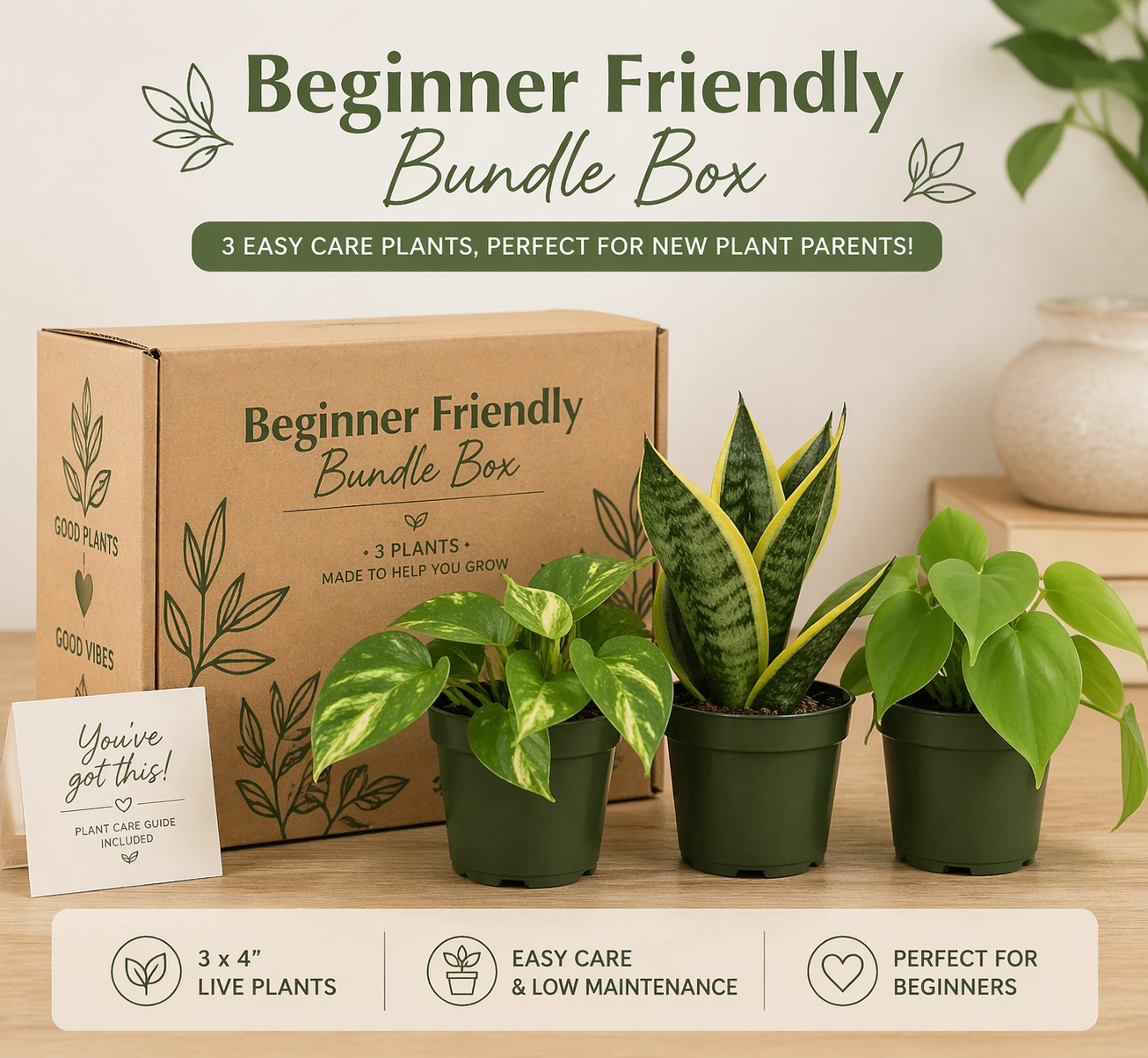
Beginner Friendly Mystery Bundle Box - 3 Easy-Care Plants
Pest resistance keeps bugs off plants that already get inconsistent care, since stressed plants attract spider mites and mealybugs faster. Slow growth rate means less frequent repotting and pruning, which suits anyone short on time or counter space. These four traits together separate a plant you can ignore for a week from one that needs daily attention.
| Trait | Why it helps beginners |
|---|---|
| Drought tolerance | Survives missed waterings without wilting |
| Low light tolerance | Grows fine near a blind-covered window |
| Pest resistance | Stays healthy with inconsistent care |
| Slow growth rate | Needs repotting and pruning less often |
If you want plants that already check all four boxes, the easy care beginner collection groups them so you are not guessing from a tag on a pot.
7 Easy Houseplants That Forgive Beginner Mistakes
Seven plants make up this list because each one handles a missed watering or a dim corner without dropping leaves. Pothos grows in low to bright indirect light and only needs water when the top two inches of soil go dry, so it tolerates a forgotten Tuesday. Snake Plant (Sansevieria) stores water in its stiff leaves and can go three to four weeks between waterings, which makes it the hardest plant on this list to kill.
Aglaonema handles low light near an interior wall and prefers to dry out between waterings, making root rot rare even for heavy-handed waterers. ZZ Plant grows from a rhizome that stores water like a potato, so skipping a watering by a week or two causes no damage. Spider Plant likes bright indirect light and weekly watering, and it signals thirst with curling leaves before any real harm is done.
Pothos N'Joy is a smaller-leafed, slower-growing cousin of regular Pothos that fits on a narrow windowsill or desk corner. Philodendron Heartleaf shares Pothos's drought tolerance and trails well from a shelf or hanging pot. Pothos, Sansevieria, and Aglaonema are the three plants that show up in Runo Plants' mystery bundles, so buying a bundle means a strong chance of getting at least one plant from this list.
| Plant | Light | Watering | Difficulty | Price Range |
|---|---|---|---|---|
| Pothos | Low to bright indirect | Every 7-10 days | Very easy | $10-$20 |
| Snake Plant | Low to bright indirect | Every 3-4 weeks | Easiest | $12-$25 |
| Aglaonema | Low to medium | Every 7-10 days | Very easy | $15-$30 |
| ZZ Plant | Low to bright indirect | Every 2-3 weeks | Very easy | $15-$28 |
| Spider Plant | Bright indirect | Weekly | Easy | $10-$18 |
Snake Plant can survive three to four weeks without water, which makes it the top pick for anyone who travels often or forgets watering day entirely.
Best Plant for Your Specific Living Situation
The right plant depends on your room, not your taste in leaf shape. A Homestead apartment with north-facing windows and blinds half-closed most of the day calls for a different plant than a sunny home office desk. Matching the plant to the actual conditions in your space beats picking one because it looked good in a photo.
- Dark apartments with filtered or no direct sun: Pothos or ZZ Plant, both tolerant of low light for months
- Homes with cats or dogs: Spider Plant, which is non-toxic to pets according to ASPCA listings
- Busy travelers and home office desks: Snake Plant or Aglaonema, since both tolerate skipped waterings during a work trip
- Small apartments, shelves, or desks with limited footprint: Pothos N'Joy, which stays compact compared to standard Pothos
Picking by situation first means checking light direction, pet access, and your actual watering habits before picking a species. Spider Plant is the one plant on this list confirmed non-toxic for both cats and dogs, which matters more than leaf color if pets roam the apartment. Pet owners can find a full rundown on pet-friendly plant care before bringing anything new into the house.
Where to Buy Beginner Plants and What to Check
Single 4-inch beginner plants typically run $10 to $30 depending on species, while bundle boxes with three plants run closer to $47 to $51 total. That bundle pricing works out to roughly $16 to $17 per plant, often cheaper than buying three single pots at retail. Price alone does not tell you about plant health, so inspection matters just as much as cost.
- Check roots through the drainage hole or by gently lifting the pot; they should be white or tan, not black or mushy
- Look at leaves for brown spots, yellow edges, or sticky residue, which signal pest or watering problems
- Confirm the pot has a drainage hole, since pots without one cause root rot even with correct watering
- Check soil moisture at purchase; soggy soil in a nursery pot often means root damage already started
Runo Plants LLC operates out of 19605 sw 334th street in Homestead, ST 33034, and can be reached at 7188440045 for questions before ordering. Pots must have a drainage hole, since that single feature determines whether normal watering habits lead to healthy roots or rot. Buying online ships the plant ready to pot, already potted in a nursery container suited for a 4-inch to 6-inch decorative pot at home, and the common houseplants collection is a good starting point for browsing single pots.
Why a Mystery Bundle Beats Picking Just One Plant
A bundle spreads risk across three plants instead of betting everything on one pot. The Easy-Care Mystery Bundle Box costs $50.80 and includes a surprise mix of Pothos, Sansevieria, and Aglaonema, all three species covered earlier in this list. The Beginner Friendly Mystery Bundle Box costs $47.85 and is built specifically for someone who has never kept a houseplant before.
- Three plants instead of one means a single wilting leaf or skipped watering does not end the whole experiment
- Both bundles pull from species already proven forgiving: Pothos, Sansevieria, Aglaonema, and similar easy-care stock
- Order notes let you request a preference, though exact plants depend on greenhouse stock at the time of shipping
- Per-plant cost on either bundle runs lower than buying three single 4-inch pots separately
Three plants in one box means one struggling pot still leaves two others thriving, which beats the all-or-nothing risk of a single purchase. Stock availability decides the exact mix in both boxes, so a flexible shopper gets the most value from either option.
One Trendy Plant or a Small Mix
Chasing one Instagram-famous plant usually ends with overwatering, because a beginner studies that single species and applies the same care to everything else they own later. A small mix of plant types forces you to learn different watering rhythms right away instead of assuming every pot wants the same schedule.
A fern, a succulent, and a trailing vine each dry out at different speeds, so your hand learns to check soil instead of watering on a fixed calendar. That habit carries forward to every plant you buy after, which is the real skill, not the species itself.
- One trendy plant: teaches one watering pattern, fails if that plant is wrong for your light
- Three matched plants from a bundle: teaches three patterns at once, spreads the learning curve
- Three random single pots bought separately: teaches patterns too, but costs more per plant and ships from wherever stock sits that week
Buying from local greenhouse stock in Homestead cuts shipping distance and the stress that comes with a box sitting in transit for days. An eco-conscious shopper gets a fresher plant and less packaging waste than a mystery order shipped across the country.
Homestead's climate is warm and humid most of the year, and that actually suits Pothos, Snake Plant, and Aglaonema on a covered porch, not just on an indoor shelf. A reader with outdoor space can split a bundle between a desk and a porch rail and compare how the same species behaves in each spot, which teaches more than keeping all three indoors ever would.
Pick Your Plant and Order It This Week
Waiting for the perfect window, the perfect shelf, or the perfect free weekend only delays the one thing that actually builds plant skill: owning a plant and watching it for a few weeks. Pick one of the seven from this list that matches your light and your pets, or skip the guesswork and order the Easy-Care Mystery Bundle Box from Runo Plants, which lands a Pothos, Sansevieria, or Aglaonema on your counter without you having to compare specs first. A $10 pot or a $50 bundle both teach the same lesson: check the soil, watch the leaves, adjust next week. That small loop, repeated a few times, is what makes someone a plant parent instead of someone who once bought a plant.
Beginner Plant Questions Answered
What should I do if my new plant arrives with droopy leaves?
Give it water, set it in indirect light, and wait 24 to 48 hours before judging it. Most droop after shipping comes from dry roots or a few days in a dark box, not permanent damage. Trim any leaves that stay mushy or black after two days. If the whole plant feels soft at the base instead of just the leaves, call Runo Plants at 7188440045 before doing anything else.
Can I keep beginner plants outside on a patio in Homestead's heat?
Yes, as long as the spot stays shaded or filtered, not in direct afternoon sun. Pothos, Snake Plant, and Aglaonema handle Homestead's humidity fine, but direct midday sun on a concrete patio can scorch leaves faster than the same plant would burn indoors. A covered porch or an east-facing spot with morning sun only works better than open patio sun.
How long does it take before a beginner plant actually needs repotting?
Most 4-inch pots need a size-up after 12 to 18 months, not sooner. Roots poking out the drainage hole or circling the surface of the soil are the signal to size up, not a date on a calendar. Slow growers like Snake Plant and ZZ Plant can stay in the same pot even longer, sometimes two years, before they outgrow it.
Will a mystery bundle box send me duplicate plants I already own?
It can, since the mix depends on what the greenhouse has in stock that week. Leaving a note in your order about plants you already own helps, but the final selection is still up to stock on hand at the time of shipping. If a duplicate shows up, it still gives you a second plant to compare care habits against the one you already have.