

Best Low-Light Houseplants for Every Room and Care Level
Oct 17, 2026
Most houseplants for low light actually need less sun than people think, because the species we grow indoors evolved on jungle floors, under a thick canopy that blocked most direct rays. A philodendron or pothos in its native habitat spends its whole life catching scraps of filtered light that make it through layers of leaves above it. That means a dim hallway, a north-facing apartment, or a desk tucked away from the window can still grow something lush and green. You do not need a skylight or a south-facing wall to keep plants alive.
Low-light tolerant does not mean no light at all, but it does open up rooms most people write off as dead zones. Home offices lit by overhead fixtures, bathrooms with a small frosted window, bedrooms that only get morning glow for an hour, all of these can support real greenery. The options range from forgiving beginner plants that survive missed waterings to rarer statement pieces like Alocasia 'Venom', with its near-black, deeply veined leaves, for collectors who want something bolder once they've got the basics down.
Table of Contents
What Counts as Low Light in Your Home
Low light usually means a spot a few feet back from a window, or any space with a north-facing view. Direct sun never reaches these areas, but enough brightness bounces around the room to read shapes and colors clearly.
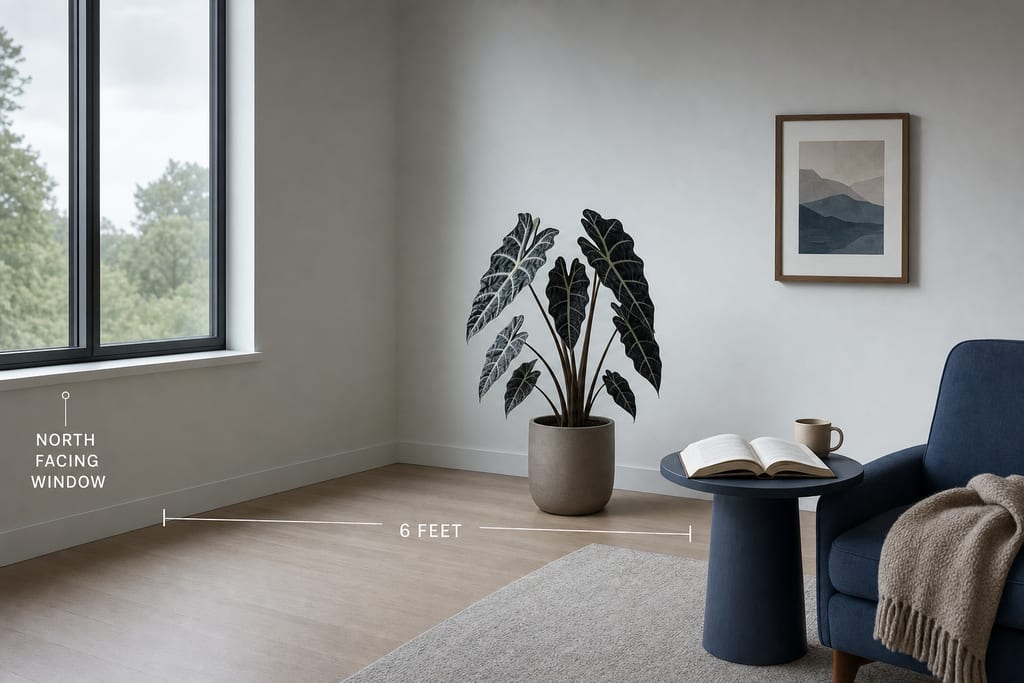
A simple gut-check works better than any light meter app: stand in the spot at midday and try reading a book without turning on a lamp. If the page is easy to read, the spot counts as low light. If you need a lamp to see the words, the corner is too dark for most houseplants, including the ones built for shade.
Low light is still light. A windowless closet, an interior storage room, or a basement with no window at all will not grow any plant, no matter what the tag promises.
| Light Level | Example Room |
|---|---|
| Bright direct | South-facing windowsill, full sun hits leaves |
| Bright indirect | A few feet from an east or west window |
| Medium | Open living room, 6-8 feet from a window |
| Low | North-facing room or hallway, no direct sun |
If your space falls into the low or medium rows, the low light indoor plants collection matches each option to a light level before you buy.
Low-Light Plants You Can Shop Right Now
Eight houseplants for low light cover almost every taste and budget, from forgiving starter plants to rare statement pieces. The ZZ Plant tops the list for toughness: it tolerates deep shade, sporadic watering, and gets left alone for weeks without complaint. Pothos trails fast from a shelf or hanging basket and roots easily if you want more plants for free.
Snake Plant holds water in thick, upright leaves, so it skips a watering or two without wilting. Cast Iron Plant grows slowly but survives dark corners that kill most other greenery. Peace Lily is the one plant here that blooms in lower light, and it droops visibly when thirsty, which takes the guesswork out of watering.
For collectors ready to spend more, three Alocasia varieties bring color and texture the budget options cannot match. Alocasia 'Venom' ($49.80) has near-black, reptilian-textured leaves built for a bold centerpiece. Alocasia Sinuata 'Quilted Dreams' ($39.00) stays compact with deeply ridged, metallic-looking foliage, and Alocasia White Dragon ($54.68) pairs dark green leaves with bright white veins for a hand-drawn look. All three Alocasias need more humidity and steadier watering than the beginner picks on this list.
| Plant | Light Tolerance | Price | Best Room Fit |
|---|---|---|---|
| ZZ Plant | Deep shade | Budget | Dark hallway |
| Pothos | Low to medium | Budget | Shelf or bathroom |
| Cast Iron Plant | Low, slow grower | Budget | Stairwell |
| Alocasia Sinuata 'Quilted Dreams' | Medium, steady | $39.00 | Desk or office |
| Alocasia White Dragon | Medium, bright shade | $54.68 | Living room |
Matching Each Plant to the Right Room
The right room for each plant comes down to humidity, foot traffic, and how much light actually reaches the spot. Bathrooms with a small window suit Pothos and Snake Plant, since both handle the steam and swings in humidity that come with daily showers. A home office desk is a good match for the compact Alocasia Sinuata 'Quilted Dreams,' which stays small enough to sit near a monitor without crowding the workspace.
Dim hallways and stairwells favor the Cast Iron Plant, since its slow growth means it will not outgrow a tight corner for years. Living rooms with north-facing windows have enough bright shade to support a bolder piece, so Alocasia 'Venom' or White Dragon can work as a centerpiece on a stand or low table. Bedrooms do best with a Peace Lily, which has a softer look and a reputation for cleaning indoor air.
- Bathroom: Pothos or Snake Plant for humidity tolerance
- Home office: Alocasia Sinuata 'Quilted Dreams' as a desk focal point
- Hallway or stairwell: Cast Iron Plant for slow, steady growth
- Living room: Alocasia 'Venom' or White Dragon as a centerpiece
- Bedroom: Peace Lily for air-cleaning reputation and soft form
Match the plant to the room's actual humidity and traffic, not just its light level, or even a low-light plant will struggle.
Picking a Plant for Your Care Level
Care level, not light tolerance, is usually what decides whether a plant survives its first year in a new home. ZZ Plant and Snake Plant forgive missed waterings and sit comfortably in the beginner-friendly tier, which makes them a safe first purchase for anyone building confidence. Pothos, Peace Lily, and Cast Iron Plant need a bit more attention since drooping leaves or yellowing tips are the early signs something is off.
The three Alocasia varieties sit at the experienced or collector level, since they want steadier humidity and more consistent watering than the plants above them. Matching effort to lifestyle matters more than matching looks, because a gorgeous plant that gets ignored on a busy week turns into the common 'bought it, killed it' cycle. Runoplants customers most often name the ZZ Plant as the easiest low-light plant to keep alive, based on repeat feedback tied to its tolerance for missed watering.
- Beginner: ZZ Plant, Snake Plant
- Moderate: Pothos, Peace Lily, Cast Iron Plant
- Collector-level: Alocasia 'Venom,' 'Quilted Dreams,' White Dragon
Readers still building their first routine can start with the guide to beginner-friendly plants before moving up to anything in the collector tier.
Finding Pet-Safe Options on the Shortlist
None of the eight plants on this shortlist are fully pet-safe, so placement matters more than plant choice for households with cats or dogs. Peace Lily, Pothos, and Snake Plant are mildly toxic and should stay away from curious chewing. Alocasia 'Venom,' 'Quilted Dreams,' and White Dragon are toxic to cats and dogs if chewed, and the Alocasia family tends to cause more irritation than the milder plants on this list.
High shelves, hanging planters, or a pet-free room solve the problem for most of these varieties without giving up the plant entirely. Every plant on this shortlist needs some form of placement control in a pet household, since there is no fully safe option here. A reader set on a non-toxic collection should check the guide to pet-friendly plants instead.
- Confirm which rooms pets can access before placing any plant
- Pick hanging baskets or high shelves for Alocasia varieties
- Keep Peace Lily, Pothos, and Snake Plant out of chewing range
- Watch for drooling, vomiting, or mouth irritation after exposure
- Call a vet right away if a pet chews any aroid leaf
Trendy Plant or Right Plant for Your Space
A trendy Alocasia dropped into a pitch-dark corner will struggle no matter how well you water it, because no amount of attention replaces light the plant simply does not get. The reverse problem happens just as often: a ZZ Plant left in a bright, sunny spot stretches out, gets leggy, and loses the tight, compact shape that made it appealing in the first place. Both outcomes come from matching the plant to the wrong environment, not from bad care.
Real success means lining up three things at once: how much light a room actually gets, how much attention you can realistically give, and whether pets or kids will be around the plant. A plant that wins on looks but loses on any of those three points will underperform in your home no matter its reputation.
- Light mismatch: sun-lovers in dark corners stall, shade-lovers in bright spots stretch
- Care mismatch: low-attention plants in high-maintenance routines get neglected
- Household mismatch: toxic plants in pet-accessible rooms create daily risk
Plants that ship already adjusted to indoor conditions settle in faster once they reach your home, since they skip the shock of moving from greenhouse light levels to a living room window. That shorter adjustment period matters most for the pickier Alocasia varieties, where early stress shows up fast as curling or dropped leaves.
Pick the One Plant Your Room Can Actually Support
Walk through your own space before you add anything to cart. Check the light with the reading test, decide how much attention you can give on a busy week, and confirm whether pets can reach the spot you have in mind. One plant that matches all three beats three plants that each fail on a different point. A single ZZ Plant in the right hallway will outlast a cart full of mismatched picks within a month. Once you know your light level, your care tier, and your household risk, go order that one plant. Runo Plants LLC ships its low-light varieties already adjusted to indoor conditions, so the one you choose can start settling into its new spot right away instead of struggling through a transition first.
Low-Light Plant Care Questions
How do I know if my plant is getting too little light versus too much water?
Too little light shows up first as small, pale new leaves and long gaps between them as the plant stretches toward any brightness it can find. Overwatering shows up as yellow leaves that feel soft or mushy, plus soil that stays wet for more than a week after watering. Check the soil with a finger two inches deep. Wet soil and droopy leaves point to water. Dry soil and stretched growth point to light.
Can I move a low-light plant to a brighter spot later without shocking it?
Yes, but move it in stages over two to three weeks rather than all at once. Shift the pot a few feet closer to the window every few days instead of placing it directly in bright light on day one. A sudden jump from a dim hallway to a sunny sill can scorch leaves that have never handled direct rays. Gradual moves let the plant adjust its leaf structure without dropping foliage.
Do low-light plants still need fertilizer if they grow slower?
Yes, but at a lower dose and a longer gap between feedings than a sun-loving plant would get. Slower growth means the plant pulls nutrients from the soil at a slower rate, so feeding once every six to eight weeks during spring and summer is usually enough. Skip fertilizer entirely in fall and winter when growth nearly stops. Over-fertilizing a slow grower builds up salts in the soil faster than the plant can use them.
What's the fastest way to tell a plant is dying from low light versus a different problem?
A plant dying from too little light drops lower leaves first while new growth stays small and far apart, and the whole plant leans hard toward any light source. Problems like pests, root rot, or bad drainage usually show spots, sticky residue, or a bad smell from the soil instead. If you've confirmed the spot passes the reading-the-room light test and the plant still fades, the cause is something other than light, and a quick call to Runo Plants LLC at 7188440045 can help narrow it down.