

Top Air Purifying Plants for Indoors and Their Care Needs
Oct 14, 2026
Air purifying plants became a real talking point back in 1989, when NASA's Clean Air Study found that common houseplants could filter toxins like formaldehyde and benzene out of indoor air. That study used sealed chambers, not open apartments, so a single plant on your windowsill in Homestead won't scrub a whole room by itself. Still, the plants NASA tested are the same ones people in small apartments and home offices reach for today. Knowing which ones tolerate low light, how often they need water, and whether they're safe around pets tells you more than any purifying claim does.
Three plants come up again and again for easy indoor care: the Spider Plant, and two dwarf snake plants, the Sansevieria Hahnii 'Black Star' and 'Forest Star'. Spider Plants like bright, indirect light and water once the top inch of soil dries out, and they're non-toxic to cats and dogs. The dwarf snake plants handle neglect well, thriving in low light and needing water only every two to three weeks, which suits anyone juggling a desk job and a plant collection. By the end, you'll know which of these three fits your light, your schedule, and whether you've got a curious pet walking past the pot.
Table of Contents
Why Houseplants Help the Air You Breathe
A plant's leaves hold tiny pores called stomata, and that's where it pulls in carbon dioxide along with trace amounts of airborne compounds. The exchange happens during photosynthesis, so a plant sitting in a dark corner with no light isn't doing much filtering at all.
One plant on a shelf won't replace cracking a window or running an air system, but the effect adds up as you add pots. A home office with four or five plants spread across the room does more than a single plant crammed in one spot, simply because more leaf surface means more exchange happening at once.
Light, water, and pet safety differ enough between common choices that it's worth lining them up before you buy.
| Plant | Light Needs | Watering Frequency | Pet Safe |
|---|---|---|---|
| Spider Plant | Bright, indirect | Weekly, when topsoil dries | Yes |
| Sansevieria 'Black Star' | Low to bright | Every 2-3 weeks | No |
| Sansevieria 'Forest Star' | Low to bright | Every 2-3 weeks | No |
That spread in watering needs matters if you travel often or tend to forget a pot on a high shelf, since the dwarf snake plants forgive a missed week in a way the Spider Plant won't. Anyone shopping by these three factors can browse the full air purifying plants collection and sort by what their space and schedule actually allow.
Easy Starter Picks for Brand New Plant Parents
The Chlorophytum comosum, or Spider Plant, tops the beginner list because it forgives missed waterings and grows fine in anything from low to bright indirect light. At $46.00, it comes with a built-in bonus: mature plants send out long stems topped with spiderettes you can snip and root for free, turning one purchase into several new pots over a year.
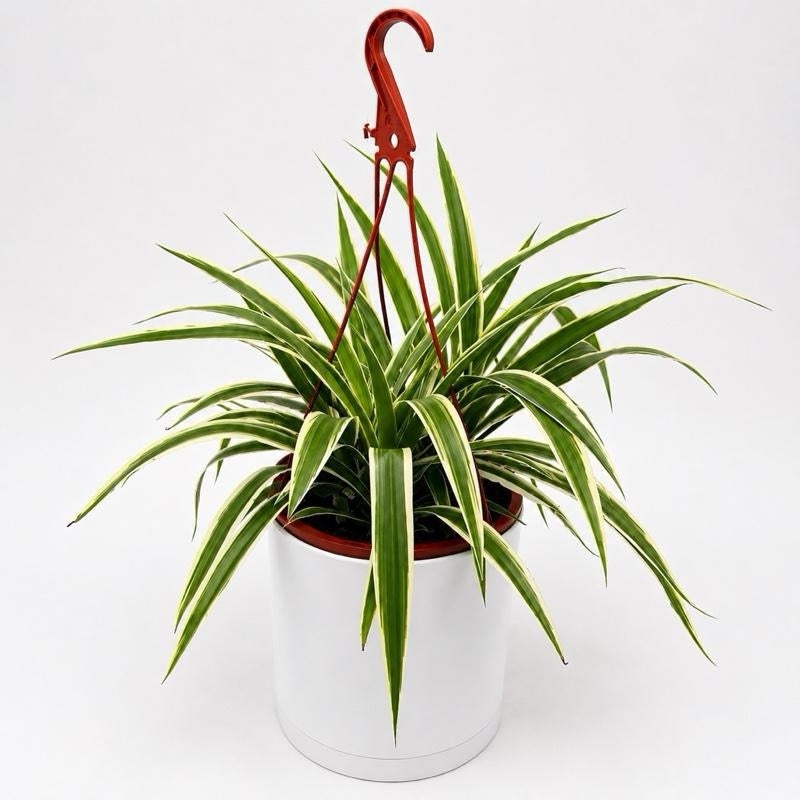
Chlorophytum Comosum (Spider Plant)
Pothos and Dracaena show up constantly in the same conversation, even though Runo Plants doesn't carry them right now. Both shrug off the dry air and uneven light that come with window units and blinds left half-closed, which makes them common swaps once someone already owns a Spider Plant and wants more variety on a shelf.
- Spider Plant: arching variegated leaves, free spiderettes to propagate
- Pothos: trailing vines, roots in a jar of water
- Dracaena: upright stalks, slower growth, fewer repots needed
All three handle the swings in humidity and light that come with apartment living, and none demand a greenhouse setup to get through the week. Anyone starting from scratch can browse the easy care beginner collection to compare what fits before buying.
Compact Snake Plants for Tight Spaces and Desks
Two dwarf snake plants solve the same desk-space problem: the Sansevieria Hahnii 'Black Star' and 'Forest Star'. Black Star runs $25.88 and grows in a tight, almost black-green rosette that reads modern against white walls or metal furniture, while Forest Star, also $25.88, holds the same bird's-nest shape in a softer emerald tone that blends into a shelf full of greenery.
Both stay under a foot tall and need watering only every two to three weeks, so a desk plant forgotten over a long weekend won't suffer for it. Full-size snake plants, the tall-leafed ones most people picture first, share that drought tolerance but take up floor space these dwarf versions don't need.
- Black Star: near-black foliage, fits modern or minimal decor
- Forest Star: emerald tone, softer look on mixed plant shelves
- Full-size Sansevieria: same low care, needs floor space instead of a desk corner
Anyone setting up a home office in Homestead can fit either Hahnii on a windowsill that gets only a few hours of light a day, since both tolerate low to bright conditions without complaint.
Lush Statement Plants Worth Knowing About
The Peace Lily draws attention for its white blooms and tolerance for bathroom or kitchen humidity, but it's toxic to cats and dogs if chewed, which rules it out for many pet owners. The ZZ Plant goes the opposite direction, surviving weeks of low light and skipped waterings, which makes it a favorite for windowless offices and cubicles.
The Rubber Plant grows into a tall, glossy-leafed piece that fills an empty corner better than any tabletop plant, though it needs steady bright light to keep that shine. Boston Fern brings a feathery, jungle-like texture but asks for more frequent misting than the others here, since dry indoor air browns its fronds fast.
- Peace Lily: blooms, high humidity tolerance, toxic to pets
- ZZ Plant: near-indestructible, thrives in low light
- Rubber Plant: tall growth, glossy leaves, needs bright light
- Boston Fern: lush texture, frequent misting required
None of these four sit in Runo Plants' current lineup, but knowing their trade-offs helps when weighing them against the compact, lower-maintenance options already covered.
Matching a Plant to Your Room and Routine
Light exposure decides more than any other factor: a north-facing window in a Homestead apartment suits Sansevieria or Dracaena far better than a sun-loving fern, since those windows rarely deliver more than a few hours of indirect light. Rooms with a south or west exposure open the door to brighter-light options like Boston Fern or a Peace Lily.
Pet owners should lean toward the Spider Plant and the Sansevieria Hahnii varieties, since Peace Lily, Rubber Plant, and several other popular picks carry toxicity warnings for cats and dogs. Frequent travelers get more mileage from snake plants than from Boston Fern, because a fern drops fronds after a week without misting while a Sansevieria coasts through three weeks without water.
- North-facing window: choose Sansevieria or Dracaena
- Pets in the home: choose Spider Plant or Sansevieria Hahnii
- Frequent travel: choose snake plants over Boston Fern
- Home office desk: choose the compact Hahnii varieties over floor plants
Desks and shelves in a home office call for the compact Hahnii varieties over a floor-standing Rubber Plant, simply because they fit the footprint without crowding a keyboard or monitor. Readers weighing pet safety against décor can check the pet-friendly plant care guide before bringing a new plant home.
Picking Looks or Low Maintenance First
Pet safety and low upkeep together cut the choice down fast for most apartments in Homestead. If a cat or dog has access to the room, the Spider Plant is the only one of these three that's safe to chew on, so that fact alone can decide things before looks even enter the conversation.
Looks matter less than the room's light once you're down to two or three real options. A dark, north-facing corner makes the Rubber Plant's shine pointless no matter how good it photographs, and the same logic applies to any plant picked for its look over its fit; readers with dim rooms are better served browsing the low light indoor plants collection first.
| Priority | Plant that wins | What you give up |
|---|---|---|
| Pet safety and low upkeep | Spider Plant | Weekly watering instead of none |
| Darker, modern color | Sansevieria 'Black Star' | Not safe around pets |
| Softer emerald tone | Sansevieria 'Forest Star' | Not safe around pets |
Watering once a week versus once every two to three weeks is the honest difference between these picks, and it's the number worth checking against your own schedule before style breaks the tie.
Pick the One Plant You'll Actually Keep Alive
Choose a single plant today, not a cart full of three. Match it to the one fact that won't change: how many hours of light your room gets and how often you'll realistically pick up a watering can. A north-facing apartment window with a cat underfoot points to one plant; a bright desk with no pets points to another. Buy that one, watch how it does for a few weeks, then decide whether a second pot earns a spot on the shelf. If sizing or care questions come up along the way, Runo Plants LLC in Homestead can answer them directly at 7188440045 or support@runoplants.com. One plant, matched honestly to your space, beats three plants picked on looks alone.
Common Questions About Indoor Air Plants
How many air purifying plants do I actually need per room?
There's no fixed count, since room size and your own schedule decide it more than any rule does. A studio apartment with one window does fine with one or two pots, while a home office with a desk, a shelf, and a windowsill can hold three or four without crowding anything. Start with one plant, see how you handle its care, then add more as you get comfortable.
Can I keep an air purifying plant in my bedroom overnight?
Yes, keeping a Spider Plant or either Sansevieria Hahnii in a bedroom overnight is fine. These plants release a small amount of carbon dioxide at night, like all plants do once photosynthesis stops, but the amount is too tiny to affect air quality or sleep in a normal bedroom. Pet owners should still stick with the Spider Plant if a cat or dog sleeps in the room too.
Will these plants smell or attract bugs indoors?
No, Spider Plants and dwarf snake plants don't carry a scent, so there's nothing to notice day to day. Bugs show up when soil stays wet too long, not from the plant itself, which is one more reason the Sansevieria Hahnii varieties work well indoors since they only need water every two to three weeks. Letting soil dry out between waterings keeps gnats and other pests from settling in.
What happens if I forget to water my plant while traveling?
A Sansevieria Hahnii 'Black Star' or 'Forest Star' can sit three weeks or more without water and come back fine, since both tolerate drought well. A Spider Plant has less room for error and may droop or yellow after a week or two of neglect, though it usually recovers once watered again. Anyone who travels often and isn't sure which plant fits their schedule can call Runo Plants LLC at 7188440045 for a straight answer.