

Rare Houseplants for Indoor Plant Collectors
Oct 10, 2026
Rare houseplants can cost anywhere from thirty dollars to several hundred, depending on the species, the leaf pattern, and how hard the plant is to propagate. Demand for these plants has climbed fast among apartment dwellers in Homestead and beyond who want a living centerpiece instead of another throw pillow. A plant with striking variegation or an odd swollen base turns a small space into something worth showing off, and that is exactly why collectors keep hunting for the next one. First-time plant owners get pulled into this world through social media, then realize two sellers can list the same species at wildly different prices and conditions.
Picking the right rare plant means weighing more than looks. A busy home office worker needs something that tolerates missed watering days, while a pet owner needs to know if a plant is toxic before it ever gets near a cat or dog. Some rare plants demand bright, humid conditions that a studio apartment cannot offer, so matching the plant to the space matters as much as matching it to your taste. Buying safely also means checking that the seller ships healthy, well-rooted plants and stands behind what they send.
Table of Contents
Why Collectors Chase Rare Houseplants
A plant earns the label "rare" when it is slow to multiply, hard to import, or unstable in the way it grows new leaves. Nurseries can only make so many copies of a plant each year if that plant only splits from a parent root or caudex instead of growing from easy cuttings. Unstable variegation makes this worse, since a grower might get ten plain green leaves before one shows the white or cream pattern buyers want.
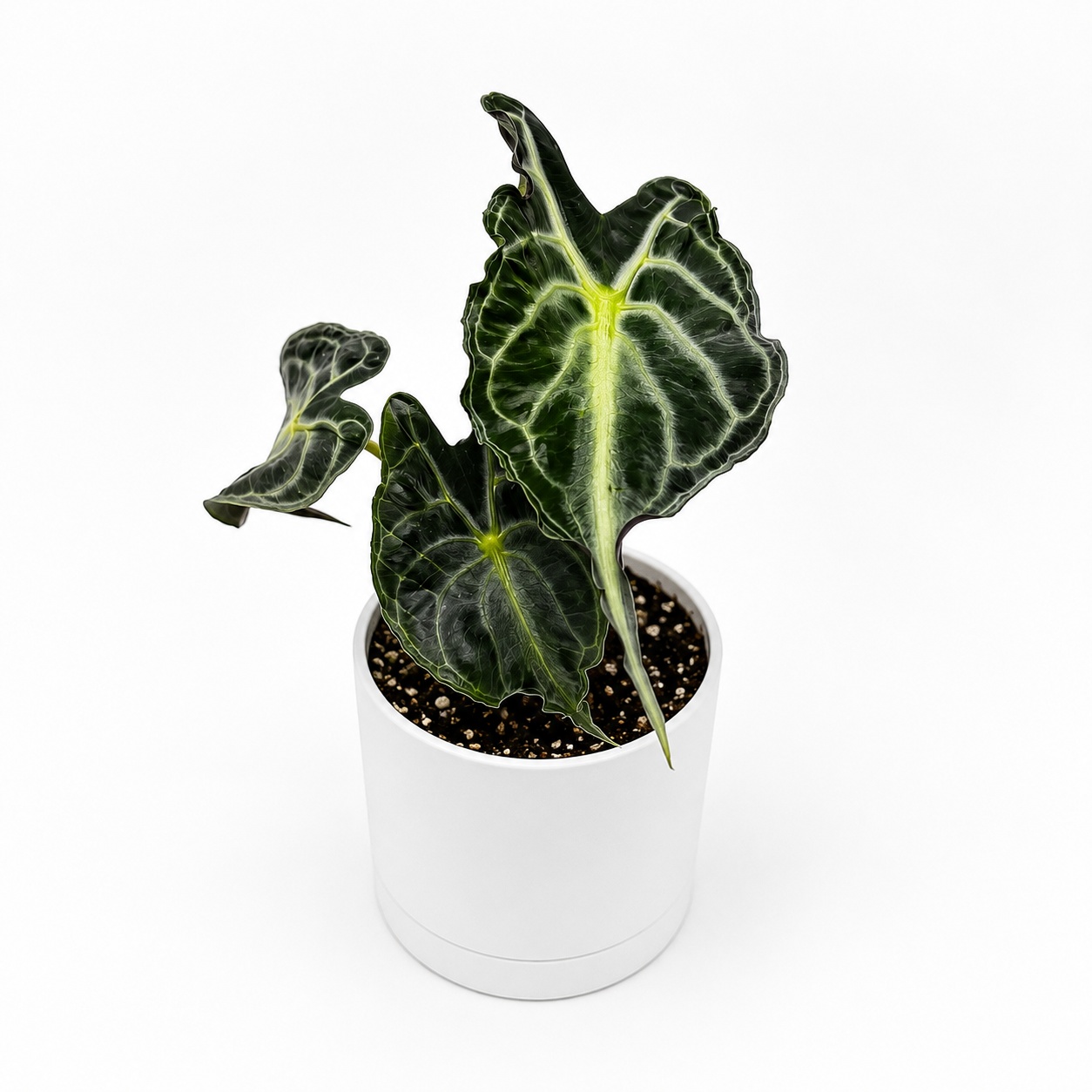
Alocasia 'Venom'
Price on a rare plant tracks three things: how many people want it, how fast it grows new leaves, and how much work it takes to keep it looking good. A plant that grows one leaf a month and needs exact humidity will cost more than a fast grower that forgives a missed watering, even if both look similar in a photo. This is also why two sellers can list what looks like the same species at very different prices, since growth speed and plant health behind the scenes are not always visible in a listing photo.
| Rarity driver | What causes it | Typical effect on price |
|---|---|---|
| Unstable variegation | Random mutation in chlorophyll production | Higher, varies leaf to leaf |
| Caudex growth | Years needed to swell a water-storing base | Higher with plant age |
| Leaf mutation | Genetic shift in shape or texture | Moderate to high |
| Import limits | Customs rules and limited growers overseas | Higher, supply-driven |
A deep black Alocasia leaf, a swollen Gerrardanthus caudex, and marbled Philodendron foliage each sit in a different row of that table, which is why their prices do not move together even when demand for all three climbs at once.
Standout Rare Plants Worth Collecting Now
Three plants carry this collection, each at a different care level and price point. The Alocasia 'Venom' runs $49.80 and shows off deep emerald to near-black leaves with raised, snake-like veins. It stays compact, so it fits on a narrow windowsill in a one-bedroom apartment, and it wants moderate humidity, meaning a bathroom with a window or a spot near a humidifier works better than a dry hallway.
The Gerrardanthus macrorhizus 'Bigfoot' costs $51.00 and builds a swollen, foot-shaped caudex at its base while sending out climbing vines with heart-shaped leaves. Once the caudex is established, it stores its own water, so it tolerates skipped watering days better than most tropicals, though it grows slowly and will test a collector's patience before it fills out.
The Philodendron Jose Bueno sells for $40.80 and carries large, paddle-shaped leaves marbled in cream and white. Its care sits closer to easy, which makes it a fair next step for someone who has kept a pothos alive and wants to try something with real variegation.
- Alocasia 'Venom': $49.80, moderate humidity, compact size for small rooms
- Gerrardanthus 'Bigfoot': $51.00, low water once rooted, slow grower
- Philodendron Jose Bueno: $40.80, easy to moderate, climbing habit
The price gap between all three is under eleven dollars, so the real decision point is care level and growth speed, not budget.
More Rare Finds to Round Out Your Collection
Beyond these three, five other rare houseplants show up often on collector wish lists, each with its own price band and look. Monstera Thai Constellation shows cream speckling across its split leaves and runs $100 to $300, landing on the high end because its variegation pattern is unstable and hard to reproduce. Philodendron Pink Princess shows pink and black variegation that fades without bright, indirect light, priced $40 to $90.
Anthurium Crystallinum carries deep velvet leaves traced in white veins and needs high humidity to hold its shape, priced $60 to $150. Scindapsus Treubii Moonlight shows silvery blue leaves and ranks among the easiest rare plants to keep alive, priced $25 to $60. Hoya Macrophylla Albomarginata grows slowly with cream-edged leaves and asks for very little upkeep, priced $20 to $45.
- Monstera Thai Constellation: $100-$300, moderate care, cream speckled leaves
- Philodendron Pink Princess: $40-$90, needs bright light, pink and black leaves
- Anthurium Crystallinum: $60-$150, high humidity, velvet white-veined leaves
- Scindapsus Treubii Moonlight: $25-$60, very easy, silvery blue leaves
- Hoya Macrophylla Albomarginata: $20-$45, slow grower, low maintenance
That spread shows a $280 gap between the cheapest and priciest plants on this list, driven mostly by leaf stability and humidity demands.
Picking the Right Rare Plant for Your Space
Start with the light your space actually gets, not the light you wish it had. A home office desk a few feet from an east-facing window suits a Philodendron Jose Bueno, while a dim corner calls for checking the low light indoor plants collection before committing to anything variegated, since pale patterns fade fast without enough brightness.
Pet owners need to check toxicity before anything else, since Alocasia and Philodendron are both aroids and can irritate a cat or dog's mouth and throat if chewed. Anyone shopping with pets in the house should browse options built around that concern, including plants covered in the pet-friendly plant care guide, before bringing home something toxic.
Next, decide what the plant is for. A single statement piece like the Gerrardanthus 'Bigfoot' asks for one spot of honor, while building a shelf collection favors smaller, faster plants that fill in gaps between pots.
- Match light: bright window for variegated leaves, shade-tolerant pick for dim rooms
- Check pet safety before buying any aroid
- Pick a goal: one centerpiece or a growing shelf collection
- Set a budget range, from $25 starters to $300 grails
A plant bought on looks alone with no light check first is the most common reason a rare plant dies within its first month.
Buying Rare Plants Without Getting Burned
A trustworthy seller shows clear, current photos of the actual plant size, states pot dimensions, and spells out a return or replacement policy before you pay. Skip listings with only stock photos or vague size descriptions, since those details tell you what you are actually getting.
Watch for red flags like unverified social media accounts selling rare cuttings at prices far under market average, since that usually means mislabeled species or plants that will arrive unrooted. A Monstera Thai Constellation priced at $20 is not a deal, it is a warning sign.
Shipping matters as much as the plant itself. Reputable growers pack rare plants with support stakes and moisture control so leaves do not snap or dry out in transit, and a seller who skips this step is gambling with your money, not theirs. Runo Plants LLC, based at 19605 SW 334th Street, Homestead, ST 33034, ships rare plants with that kind of packing care, and buyers can also reach the team directly at 7188440045 with questions before ordering.
- Clear photos of the actual plant and pot size
- Written return or replacement policy
- Prices in line with the market range for that species
- Packaging built to prevent transit damage
A seller missing two or more of those four points is worth skipping, no matter how good the photo looks.
Buying to Keep vs Buying to Resell
Tissue culture labs are catching up to plants that were once hard to find. Philodendrons and Monsteras that sold for hundreds a few years ago now show up in lab-grown batches, and that steady supply pushes prices down over time.
Caudiciform plants resist that trend because labs cannot speed up a caudex. A Gerrardanthus takes years to swell its base, so supply stays thin no matter how much demand grows, which is why plants like 'Bigfoot' tend to hold their price longer than fast-propagating aroids.
Variegation adds a different kind of risk. A plant with unstable white or cream patterning can revert to solid green as it grows, and once that happens the plant loses the trait that made it valuable in the first place.
| Plant type | Price trend | Why |
|---|---|---|
| Tissue-cultured Philodendron or Monstera | Falling | Lab propagation increases supply |
| Caudiciform (Gerrardanthus) | Holding steady or rising | Cannot be mass propagated |
| Unstable variegated plant | Unpredictable | Can revert to green over time |
None of this matters much if the plant is bought to enjoy rather than flip. A collector who picks a plant for its look and buys it from a source like the rare houseplants collection avoids the disappointment of watching a price drop, since the plant's job was never to resell for a profit.
Choose One Plant and Order It This Week
Pick the one plant that matches the light you already have, the space you already have, and the amount you already planned to spend, then stop browsing and order it. If your desk sits a few feet from a bright window and you want something you can hand to a beginner, that's the Jose Bueno. If your home gets dim afternoon light and you want a plant that forgives a missed Saturday watering, that's the Bigfoot. If you've got a sunny spot and want the boldest leaf on the shelf, that's the Venom. Buying one well-sourced plant from a seller like Runo Plants LLC and getting it established builds the confidence to add a second, a third, and eventually a real collection, in a way that three plants bought at once never does.
Rare Houseplant Questions from Homestead Buyers
How do I know if a rare plant I'm buying online is actually healthy before it arrives?
Ask the seller for a current photo of the exact plant and its root ball, not a stock image of the species. Healthy rare plants show firm stems, no yellow spotting, and roots that fill the pot without circling tightly. A seller who hesitates to send that photo, or who only has one old picture for every listing, is not someone to trust with a plant worth fifty dollars or more.
Why do some rare plants cost hundreds more than similar-looking common varieties?
Price comes down to how hard a plant is to reproduce, not how it looks in a photo. A Monstera Thai Constellation and a plain green Monstera can share the same leaf shape, but the Constellation's cream pattern comes from unstable variegation that only shows up in some offspring, which keeps supply low and price high. Two plants that look alike on a shelf can sit years apart in how long they took to grow.
Can I keep a rare variegated plant looking the same, or will it change over time?
You cannot lock a variegation pattern in place, but strong light slows the change. Variegated leaves carry less chlorophyll, so a plant kept in low light will often push out plainer green growth as it tries to catch more energy. Keeping the plant near a bright window and trimming fully reverted stems as soon as you see them is the only real control a home grower has.
What should I do if my rare plant arrives damaged or different from the photo?
Photograph the plant and its packaging the moment you open the box, then contact the seller the same day. Runo Plants LLC takes replacement requests through support@runoplants.com or by phone at 7188440045, and having clear photos ready speeds up the process. Waiting more than a day or two to report damage makes it harder for any seller to verify what happened in transit.