

Best Pet Friendly Houseplants Safe for Cats and Dogs
Oct 07, 2026
Yes, pet friendly houseplants exist in plenty, and you do not have to give up good looking greenery to keep your cat or dog safe. The ASPCA lists hundreds of common houseplants as toxic to cats and dogs, including popular picks like pothos, philodendron, and many succulents found on windowsills across the country. That list is long, but it is not the whole story for plant lovers.
Homestead pet owners do not have to choose between a home full of plants and a home that is safe for a curious cat or a chewing puppy. Plenty of plants are built to live alongside pets without causing harm if nibbled or pawed at. A Syngonium Snow White, with its white and green marbled leaves, is one option that is both pet safe and the kind of plant people stop and ask about. A Cat Palm, despite the name, is another non-toxic pick that brings full tropical fronds into a living room or office without any risk to the animals living there too.
Table of Contents
What Makes a Houseplant Actually Pet Safe
Toxicity in houseplants usually comes down to one compound: calcium oxalate crystals. These microscopic, needle shaped crystals sit inside the leaves and stems of plants like pothos and philodendron, and when a cat or dog bites down, the crystals puncture the mouth and throat tissue. That irritation causes drooling, swelling, and pawing at the face, which is why so many common houseplants land on toxic lists even though they rarely cause fatal poisoning.
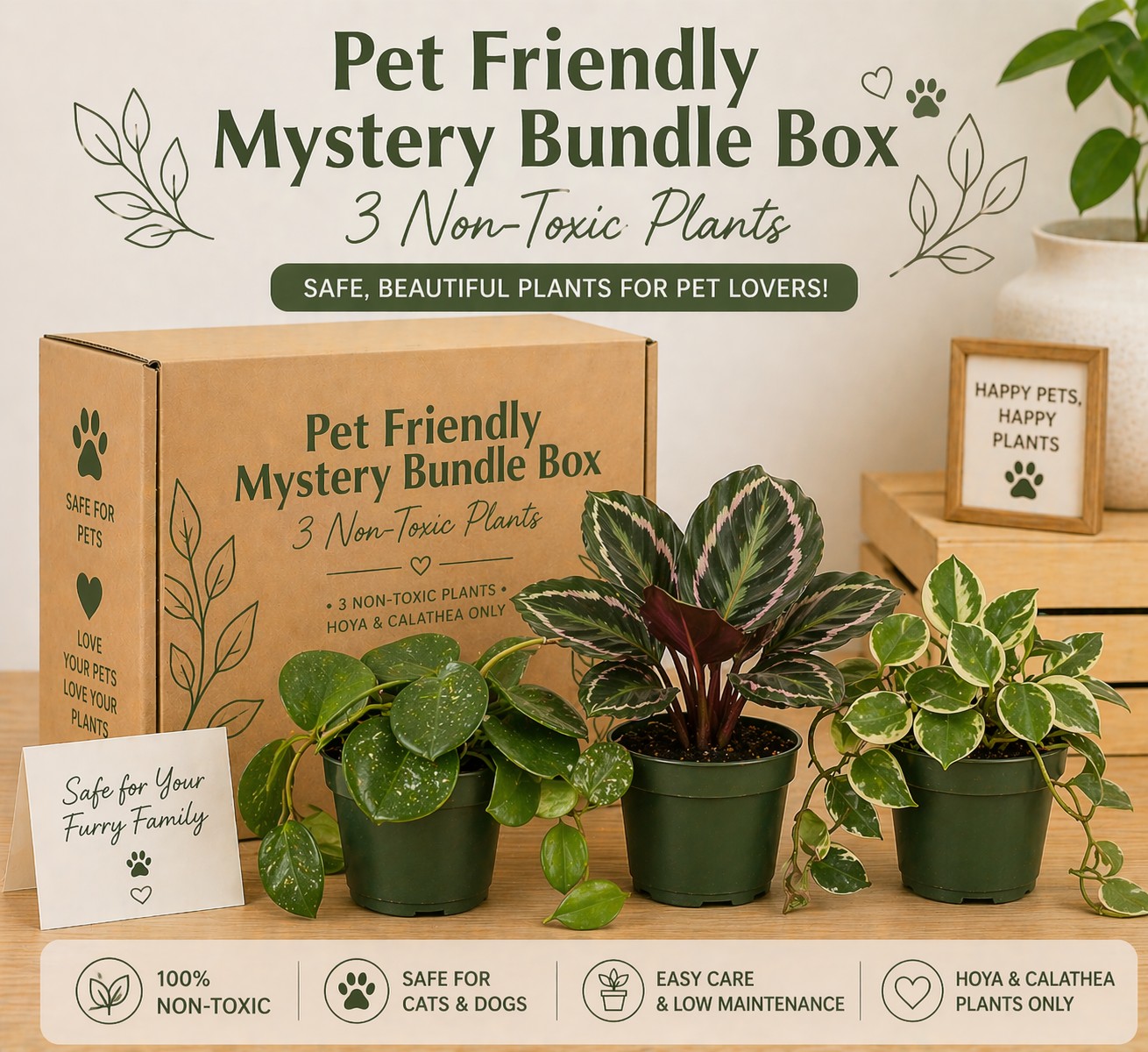
Pet Friendly Mystery Bundle Box - 3 Non-Toxic Plants
Being labeled pet safe only means a plant will not poison your animal if eaten. It says nothing about whether the plant can survive a determined chewer, so a non-toxic plant on a low shelf can still end up shredded or stripped bare by a bored cat. Anyone shopping for pet friendly plants still needs to think about placement, not just the species label.
Before buying any plant, the ASPCA's plant database is the source to check, since it lists both toxic and non-toxic species by common and scientific name. A quick search there before checkout saves a trip to the vet later.
- Toxic mechanism: calcium oxalate crystals cause mouth and throat irritation
- Pet safe meaning: non-toxic if eaten, not chew proof
- Verification source: ASPCA plant database, searchable by plant name
Trailing Plants That Won't Hurt Curious Paws
Trailing and vining plants work well on shelves, bookcases, or hanging baskets where a cat can bat at the leaves without reaching the pot itself. The Syngonium 'Snow White' grows arrow-shaped leaves marbled in white, mint, and deep green, and it does best in bright indirect light with a weekly watering schedule. It's rated easy difficulty and runs $38.88, making it a low-risk first plant for apartment shelves in Homestead.
Hoya kerrii, often called the sweetheart plant, is another trailing option built for beginners. It tolerates low humidity and can go two to three weeks between waterings without sulking, which makes it forgiving for anyone who travels or forgets a watering day. Both plants are listed non-toxic by the ASPCA, so a stray nibble from a cat on a hanging basket won't send you to the emergency vet.
- Syngonium 'Snow White': bright indirect light, water weekly, easy care, $38.88
- Hoya kerrii: medium to bright light, water every 2-3 weeks, beginner friendly
- Both climb or trail, so hanging baskets keep leaves out of constant paw range
- Both are safe if chewed, per the ASPCA plant database
Bigger Plants That Fill Empty Corners Safely
A tall, full plant can anchor an empty corner without carrying the risk that comes with a traditional Sago Palm or fig. The Cat Palm grows in a dense, bushy clump of arching fronds rather than a single trunk, and it needs bright indirect light plus consistently moist soil to stay full. It's a moderate difficulty plant priced at $54.68, so it suits someone who already waters on a routine.
Parlor Palm offers a similar soft, feathery look but tolerates lower light and a few missed waterings better than Cat Palm does, which makes it a better fit for a dim home office corner. Neither plant contains the oxalate crystals found in Sago Palm, which is actually a cycad and one of the most dangerous common plants for pets if chewed.
- Cat Palm: bright indirect light, keep soil moist, moderate care, $54.68
- Parlor Palm: tolerates lower light, forgives drier spells, easier for beginners
- Both grow full and bushy instead of tall and leggy
- Neither carries the oxalate risk found in Sago Palm
Tabletop Plants Small Enough for Any Shelf
Small apartments and desks call for plants that stay compact without demanding floor space. Spider plant is about as forgiving as houseplants get, handling missed waterings and a range of light from bright to medium while still putting out its signature striped, arching leaves. It's rated very easy, which makes it a common first plant for renters who aren't sure how much light their unit actually gets.
Peperomia varieties bring a different texture to a desk or windowsill, with thick, fleshy leaves that store water and tolerate lower humidity than many tropical houseplants. Growth is slow, so repotting isn't a frequent chore. Both spider plant and peperomia are listed non-toxic, which matters on a desk a dog can reach or a shelf a cat can jump to.
- Spider plant: bright to medium light, tolerates neglect, very easy care
- Peperomia: lower humidity tolerance, slow growth, minimal repotting
- Both stay small enough for a desk, nightstand, or narrow shelf
- Both are safe if a pet grabs a leaf off the table
Low-Maintenance Picks for Beginners With Pets
Beginners with pets need plants that survive inconsistent watering and whatever light a rental apartment happens to offer. Calathea brings patterned, often two-toned leaves and does best in medium light with higher humidity, which puts it at moderate difficulty since it can show stress if the air gets too dry. A bathroom with a window or a spot near a humidifier usually keeps it happy.
Haworthia, a small succulent, sits at the opposite end of the effort scale. It wants bright light and infrequent watering, and it's close to indestructible for someone who forgets a plant exists for a few weeks. Both are safe for pets to chew on without harm, and for anyone who wants a few beginner-safe plants picked out already, the pet friendly mystery bundle box ships three non-toxic plants in 4-inch pots in one order.
- Calathea: medium light, higher humidity, moderate care
- Haworthia: bright light, infrequent watering, near indestructible
- Both tolerate curious pets without any poisoning risk
- Both fit well in a first-time plant owner's starter collection
One Plant or a Starter Box
Three plants in one box costs $49.98, which works out to about $16.66 per plant. Buying a single Syngonium Snow White at $38.88 or a Cat Palm at $54.68 costs more per plant, but you know exactly what shows up at your door.
That trade-off is the whole decision. A single plant purchase is right for someone who already picked a spot, like a bright shelf for trailing marbled leaves or a tropical corner that needs fuller fronds. A bundle box is right for someone who has the pet safety part figured out but has not decided what look fits their apartment yet.
| Option | Cost | Best for |
|---|---|---|
| Single plant (Syngonium Snow White) | $38.88 | Specific look, known spot picked out |
| Single plant (Cat Palm) | $54.68 | Filling a larger corner, full fronds wanted |
| Mystery bundle box | $49.98 for 3 plants | Renters or first-timers still testing their space |
Renters in Homestead who move often, or who are not sure how much light their unit gets, get more value testing three different non-toxic plants at once than committing to one species. First-time owners get the same benefit: three plants means three chances to learn what you can keep alive before you spend more on a specific favorite. Anyone who already knows they want the marbled look of a Syngonium or the tropical fullness of a Cat Palm is better off buying that plant directly from the pet friendly plant collection instead of leaving it to chance.
Choosing Which Pet Safe Plant Goes Home With You
Walk through your space before you order anything. Stand where you want the plant to live and check the light at that exact spot, not the brightest window in the house, since a Cat Palm in a dim corner will thin out while a Haworthia in that same corner will rot from too little sun. Match the plant to that one spot, then order from Runo Plants LLC at 19605 sw 334th street, homestead, ST 33034. If you are unsure which pick fits your room or your pet's habits, email support@runoplants.com or call 7188440045 before you check out, not after the box arrives.
Pet Safe Plant Questions Homestead Owners Ask
What should I do if my pet eats a piece of a non-toxic plant anyway?
Watch for vomiting, diarrhea, or lethargy over the next few hours, since even non-toxic plants can upset a stomach if a pet eats a large amount of fiber at once. A bite or two off a Syngonium or Cat Palm is unlikely to cause more than mild drooling. If symptoms last more than a day or the amount eaten was large, call your vet and tell them the exact plant name.
Can pets get sick from eating potting soil or fertilizer even if the plant is safe?
Yes, soil and fertilizer can make a pet sick even when the plant itself is harmless. Fertilizer often contains concentrated nitrogen and other salts that irritate the gut if licked straight from the bag or the top of the soil. Potting mix can also contain perlite or bark that causes choking or blockage in small dogs. Keep fertilizer sealed and out of reach, and top soil with decorative stone if your pet digs.
Are succulents and cacti always safe for cats and dogs?
No, succulents and cacti are a mixed group, not a single safe category. Haworthia and haworthia-like rosettes are non-toxic, but others like Jade plant and Kalanchoe are listed toxic by the ASPCA and can cause vomiting or a slowed heart rate if chewed. Check each succulent by its specific name before buying, since the label "succulent" alone tells you nothing about pet safety.
How do I stop my cat or dog from digging in the pot itself?
Cover the soil surface with something a paw does not want to dig through, like smooth river stones, pinecones, or a layer of moss pressed down firmly. Placing the pot slightly out of easy jumping range, on a stand or a shelf, also cuts down on digging since most pets lose interest once the plant is less convenient to reach. A heavier ceramic pot resists tipping better than plastic if digging still happens.