

Money Tree Care Tips for Light, Watering, Pruning, and Leaf Drop
Oct 05, 2026
A money tree needs bright indirect light, a deep soak only after the soil dries out, and steady humidity, and most leaf drop traces back to getting one of those three wrong. Good money tree care starts with understanding the plant's history: that braided trunk is not one tree, it is three to five young Pachira aquatica stems woven together on purpose while they are still flexible, a trick growers started using decades ago because the look sells better than a single straight trunk. As the stems mature they fuse together at the base, which is why older money trees look solid even though they started as separate seedlings. For readers around Homestead, where indoor air runs on the dry side thanks to air conditioning most of the year, that humidity piece matters as much as light does.
Dropped leaves almost always point to one clear cause, not a mystery. A money tree sitting in low light will drop leaves slowly over weeks, while one that got overwatered will drop leaves fast, often with yellow spots first. Cold drafts near an apartment window or an office AC vent cause sudden, patchy leaf loss even when watering and light are fine. Once you match the pattern to the cause, most money trees recover within a few weeks of a fix.
Table of Contents
Why Your Money Tree Acts This Way
Pachira aquatica grows wild in swamps and wetlands across Central and South America, often standing in shallow water or saturated ground. That origin explains why the plant pulls moisture from the air through its leaves and still handles a dry spell at the roots between waterings. Wild Pachira roots are built to survive flooding followed by drought, which is exactly the cycle your indoor watering schedule should copy.
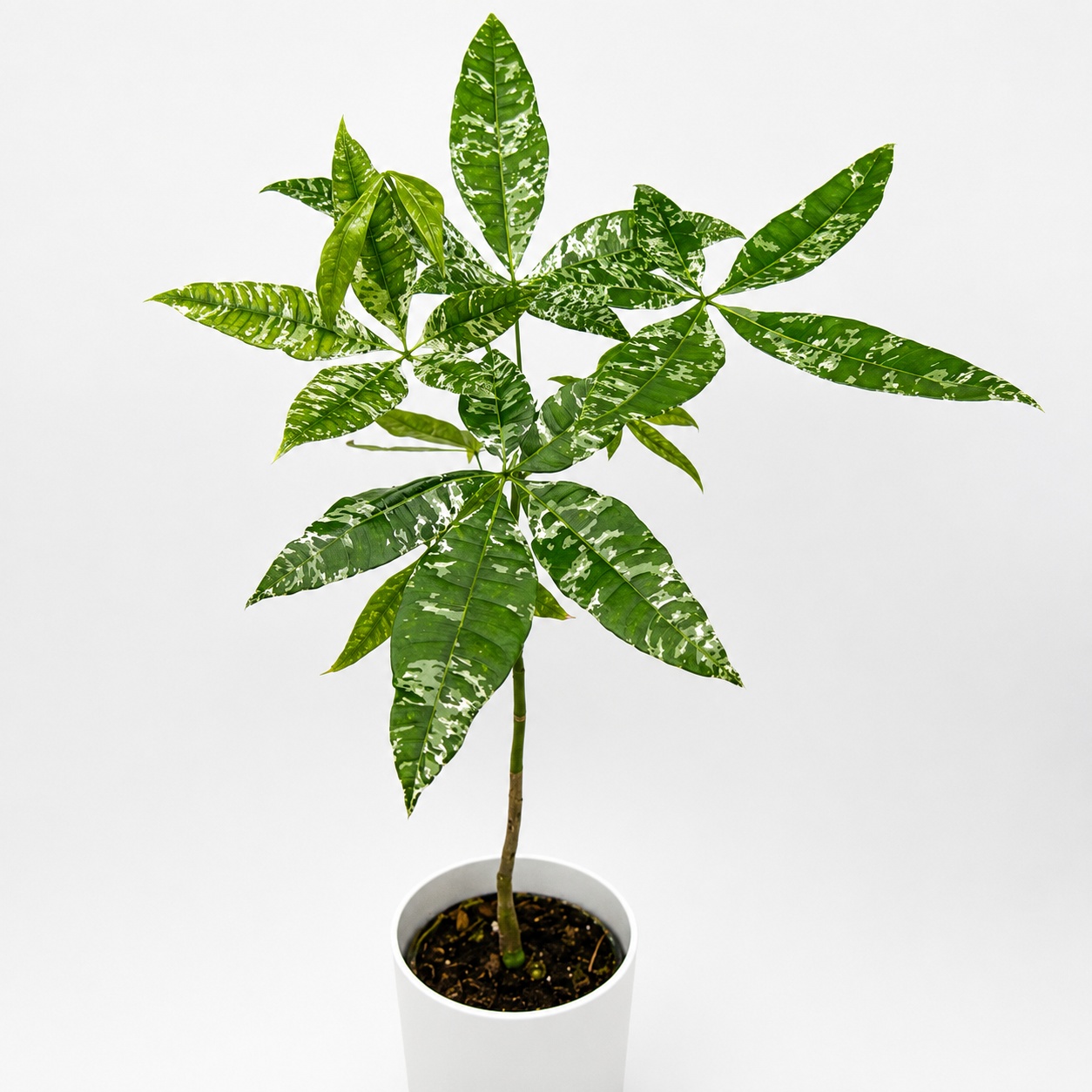
Variegated Money Tree
The numbers below come straight from that native wetland climate and give you a target range instead of a guess.
| Factor | Ideal Range |
|---|---|
| Light | Bright, indirect, 6-8 hours daily |
| Water | Soak soil fully, then let top 2-3 inches dry |
| Humidity | 50% or higher |
| Temperature | 65-80°F, no sudden drops |
Pulling any one of these numbers too far outside range is what starts the leaf problems described above, not just one bad watering day. If your trunk already looks compact and you want a plant built for shaping instead of height, a pre-bonsai Pachira aquatica starts in that same wetland-adapted root system.
Finding the Right Spot for Bright Leaves
An east or south-facing window gives a money tree the bright, indirect light it needs without the risk of scorched leaves. In an apartment, that often means a few feet back from the glass, not pressed against it, so the sun hits the leaves filtered rather than direct.
Low light shows up as leggy stems stretching toward the nearest window and new leaves coming in smaller than the old ones. Too much direct sun does the opposite damage, leaving brown, crisp patches on leaves that face the glass. Turn the pot a quarter turn every two to three weeks so every side gets equal light and the canopy fills out evenly instead of leaning one direction.
- East window: gentle morning sun, safe for most of the day
- South window: strong light, keep plant 3 to 5 feet back
- West window: hot afternoon sun, use a sheer curtain
- North window: usually too dim without a grow light
A Pre-Bonsai Money Tree needs this consistency more than a mature plant does, since uneven light during training can throw off the trunk and canopy shape you are working to build.
Watering Without Drowning the Roots
Water a money tree only when the top 2 to 3 inches of soil feel dry to the touch, not on a fixed weekly schedule. Push a finger into the pot before every watering instead of guessing by the calendar, since light, temperature, and pot size all change how fast soil dries.
Overwatering is the top cause of root rot and yellowing leaves in money trees kept indoors. A pot without drainage holes is the single fastest way to kill the roots, because water pools at the bottom and the roots sit in it with no way out.
- Press a finger 2 to 3 inches into the soil before watering
- Choose a pot with drainage holes and a saucer underneath
- Water slowly until it runs out the bottom, then empty the saucer
- Cut watering back by about half once fall and winter growth slows
Apartment dwellers often water on autopilot every Sunday regardless of soil condition, which is exactly the habit that leads to soggy roots. Check the soil first, every time, and let that decide the schedule instead of the day of the week.
Keeping Humidity and Temperature Steady
Money trees do best with humidity at 50 percent or higher, a level most Homestead apartments fall short of once the air conditioning runs most of the year. Dry indoor air pulls moisture out of the leaves faster than the roots can replace it, and the first sign is usually crispy, browning edges on the lower leaves.
Grouping a few plants together raises the humidity around them naturally, since each leaf releases moisture into the shared air pocket. A pebble tray filled with water under the pot works the same way without wetting the roots, as the water evaporates up around the leaves instead of soaking the soil.
- Group plants on a shelf or windowsill to share humidity
- Set the pot on a pebble tray with water below the pot base
- Keep at least 2 feet from AC vents and heating registers
- Avoid drafty windows that let in cold air in winter
Cold drafts do more than dry the air out, they shock the plant with a sudden temperature swing it was not built to handle.
Pruning to Shape Growth and Stop Leaf Drop
Prune any leggy or overgrown stem just above a leaf node, the small bump where a leaf attaches, to push the plant toward fuller branching instead of one long stretch. This cut tells the plant to send energy sideways into new growth rather than upward into more height.
On a Pre-Bonsai Money Tree, pinch off the newest growth tips early and often, since that habit is what trains the compact, balanced structure bonsai shaping depends on. Waiting too long to pinch new growth lets the plant put its energy into height instead of the shape you are working toward.
- Overwatering: fast leaf drop, often with yellow spots first
- Sudden temperature shift: patchy drop even with good light and water
- Low light: slow leaf drop over several weeks
- Natural aging: one or two yellow leaves falling here and there
That last pattern is nothing to worry about. A healthy money tree sheds an old leaf now and then as it grows, and that single leaf is not a sign anything is wrong with your care routine.
Picking Between a Standard and a Variegated Money Tree
Most leaf drop and yellowing trace back to a watering habit, not a pest or a disease. Bugs and fungal issues show up as spots, webbing, or sticky residue on the leaves themselves, while a plant with no visible damage that still drops leaves is almost always reacting to a soil moisture problem. If you have ruled out overwatering and drafts and the plant still looks off, light is the next thing to check, especially with a variegated variety.
A Variegated Money Tree needs more light than a solid green one to keep its cream and yellow patterning from fading back to plain green. The cream sections of a variegated leaf have less chlorophyll than the green parts, so they produce less energy and need extra brightness to hold their color and keep the plant growing at a normal pace. A north-facing apartment window that works fine for a standard money tree usually is not bright enough for the variegated type.
The choice comes down to how much light your space actually gets, not which one looks nicer in a photo.
| Option | Light needed | Best for | Trade-off |
|---|---|---|---|
| Standard Money Tree | Bright indirect, tolerates lower light | North-facing rooms, first apartments | Solid green, no pattern |
| Variegated Money Tree | Bright indirect, several hours more daily | East or south windows, home offices with a bright desk spot | Costs more, fades without enough light |
| Pre-Bonsai Money Tree | Bright indirect, consistent all sides | Growers who want to shape the trunk over time | Needs regular pinching, slower to fill out |
If your Homestead apartment only has a north window, a standard Money Tree will hold up better than a variegated one in that same spot. If you have a bright east or south window and want the marbled look, a Variegated Money Tree is worth the extra light commitment.
Matching the Plant to the Room You're Putting It In
Walk over to the spot where the plant will actually live and check what kind of light hits it at midday. A north-facing apartment window or a desk tucked away from glass calls for a standard Money Tree, since it tolerates lower light without fading or stalling out. A bright east or south window, especially one lighting up a home office, can support a Variegated Money Tree and keep its cream and yellow pattern from washing back to green. If you want a project to shape over the next few years, start with a Pre-Bonsai Money Tree instead of training a mature plant from scratch. Runo Plants LLC in Homestead ships rooted, healthy trees ready to go into any of these spots, and support@runoplants.com or 7188440045 can answer questions about a specific plant before it ships.
Money Tree Questions Homestead Owners Ask
Is a money tree safe to keep around cats and dogs?
Yes, Pachira aquatica is non-toxic to cats and dogs according to the ASPCA. That makes it a safer pick than many common houseplants for pet owners who want greenery without worrying about a curious cat chewing a leaf. Still keep soil out of reach, since digging and eating potting mix can upset a pet's stomach regardless of the plant.
Why does my money tree have a swollen or bulging trunk?
A swollen base on a money tree usually means the plant is storing water, a trait it carries straight from its swamp origins. This is normal and not a sign of disease or overwatering by itself. Check that the swelling is firm, not soft or mushy, since a soft, spongy trunk paired with yellow leaves points to root rot instead of healthy water storage.
Can I keep a money tree outside on my balcony in Homestead's heat?
A money tree can live on a shaded or partly shaded balcony in Homestead, but direct afternoon sun and temperatures above 90°F will stress it fast. Pick a spot with morning sun only, or filtered light under a covered patio, and bring the pot indoors if a cold front drops temperatures below the 65°F minimum the plant needs.
What's the difference between caring for a braided trunk versus a Pre-Bonsai Money Tree?
A braided trunk money tree is grown for a finished look and mostly just needs the standard light, water, and humidity routine to stay healthy. A Pre-Bonsai Money Tree, like the one Runo Plants LLC sells, is still being shaped, so it needs regular pinching and even light on all sides to build the compact trunk and canopy a bonsai depends on.