

ZZ Plant Care Guide for Low Light, Watering, Soil, and Rot
Oct 03, 2026
A ZZ plant can go three or four weeks without water and come out fine, because it stores its own reserves in thick underground rhizomes that look almost like potatoes. That storage system is the whole reason ZZ plant care feels different from most houseplants: the plant is built to wait you out, not the other way around. For apartment dwellers in Homestead who travel for work or just forget a watering can on the counter, that built-in buffer is what makes this plant forgiving instead of fussy. Real care still comes down to four things: enough indirect light, water only when the soil is dry, a potting mix that drains fast, and a quick check for yellow leaves before they spread.
Overwatering is the single habit behind almost every ZZ plant problem people run into. Those rhizomes can only hold so much water before they start to rot, and once rot sets in at the base, the leaves yellow and soften no matter how good the light is. A plant kept in a dim home office corner with soil that stays soggy will fail faster than one in a bright room watered every three weeks. Checking the soil with a finger before refilling, and picking a mix that lets water pass through instead of pooling, solves most of what goes wrong with this plant.
Table of Contents
What Makes the ZZ Plant So Tough
The ZZ plant comes from the dry grasslands and rocky hillsides of eastern Africa, mostly Kenya and Tanzania, where rain is unpredictable and soil drains fast. Plants that survive there need a way to store food and water for long dry stretches, which is exactly what the rhizomes under the soil do. That native environment explains why a ZZ plant left in a plastic bag of wet soil struggles more than one planted in a loose, gritty mix.
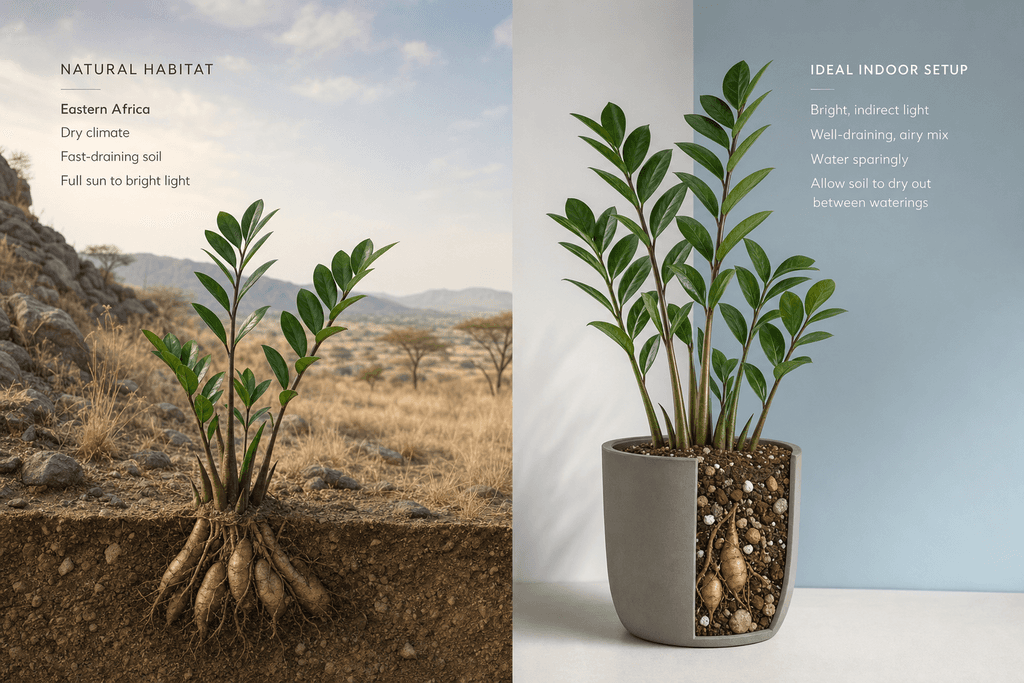
Each leaflet on a ZZ plant has a waxy, almost rubbery coating that slows down water loss through the surface. That coating is also what gives the leaves their glossy shine and why dust wipes off so easily with a damp cloth. Less water lost through the leaves means less water the plant needs from the roots, which is the second half of why this plant tolerates neglect.
Compared with other common houseplants, the ZZ plant sits near the low end of care demands, though it isn't the only tough option for a home office desk or a dim apartment hallway.
| Plant | Watering Frequency | Light Needs | Toxicity |
|---|---|---|---|
| ZZ Plant | Every 3-4 weeks | Low to bright indirect | Toxic to pets and people |
| Pothos | Every 1-2 weeks | Medium to bright indirect | Toxic to pets |
| Snake Plant | Every 2-3 weeks | Low to bright indirect | Mildly toxic to pets |
None of these three are safe for homes with curious cats or dogs, so a low light indoor plant that's pet-safe is worth checking separately if that's a concern.
How Much Light a ZZ Plant Actually Needs
A ZZ plant survives in low light but it grows noticeably faster and fuller in medium to bright indirect light. Direct sun is the one thing to skip, since it scorches the glossy leaf surface and leaves brown, crisp patches that don't heal. Dark-leaved varieties like the ZZ 'Super Nova' still need some indirect brightness to keep that deep emerald-to-black color, because low light pushes new growth to stay pale green instead of maturing darker.
For an apartment in Homestead, a spot a few feet back from an east or north facing window works well, and so does a desk under standard office fluorescent lights. Compare a few common placements before picking one:
- East window, 3 to 5 feet back: bright indirect light, fastest growth
- North window, any distance: soft steady light, slower but safe growth
- Office fluorescent lights, no window nearby: survives, very slow growth
- South or west window with no curtain: too strong, risk of leaf scorch
If you want a plant tuned for a dim hallway or a windowless corner, it's worth comparing options built for exactly that in a low-light combination planter.
Getting Watering Right Without Guessing
Water a ZZ plant only when the top 2 to 3 inches of soil are completely dry, not just dry on the surface. Indoors that usually lands somewhere between every 2 and 4 weeks, depending on light, pot size, and the season, with winter stretches running longer than summer ones. Skipping a week or two past that schedule causes no harm, since the rhizomes are already holding a reserve for exactly this kind of gap.
Guessing by the calendar is how overwatering starts, so check the soil itself before you reach for the can. A few steps make this quick and reliable:
- Push a finger 2 to 3 inches into the soil near the rhizome
- If soil sticks to your finger or feels cool, wait and check again in a few days
- If soil falls off dry and crumbly, it's time to water
- Lift the pot if you're unsure, since dry soil weighs noticeably less
- Water slowly until it drains from the bottom, then stop
Underwatering a ZZ plant costs you some growth speed. Overwatering costs you the plant, which is why erring dry is always the safer mistake.
Choosing Soil That Keeps Roots Dry
ZZ plants need a fast-draining, chunky soil mix, not the dense potting dirt sold for leafy tropicals. A good mix leans on perlite, pine bark, and coarse organic matter so water moves through fast instead of sitting around the rhizome. Pots need drainage holes, full stop, because a cachepot or decorative container without one traps water at the bottom no matter how careful you are with the watering can.
Building your own mix means getting the ratio right, which takes some trial and error if you're new to it. A ready-made option skips that guesswork, and the ZZ Plant Premium Potting Mix is hand mixed specifically for Zamioculcas roots, working for Super Nova, Raven, or variegated types alike. When picking or mixing soil, look for these traits:
- Visible chunks of bark or perlite, not a smooth solid texture
- Water that drains through within seconds of pouring, not minutes
- A pot with at least one drainage hole at the bottom
- Soil that dries out within 2 to 4 weeks under normal indoor conditions
Why ZZ Plant Leaves Turn Yellow and How to Fix It
Overwatering and soggy soil cause most yellow, mushy ZZ plant leaves, and it's the first thing to rule out before blaming anything else. Poor drainage or a pot without holes traps water around the rhizome even when you're watering on a reasonable schedule, which rots the storage tissue from the inside out. Low light on its own rarely causes yellowing, but it does slow growth enough that old leaves fade and drop faster than new ones replace them.
Depleted soil is a separate issue, showing up as dull, pale, or yellow leaves on a plant that's otherwise dry and well lit, usually because it hasn't been repotted in a couple of years. Mushy, blackened rhizome tissue needs to come out, not just the yellow leaves above it, or the rot keeps spreading underground. The fix follows a set order:
- Unpot the plant and rinse soil off the rhizomes
- Cut away any black, soft, or foul-smelling sections with a clean blade
- Let the cut surfaces air dry for a few hours before repotting
- Repot in fresh, dry, fast-draining mix
- Hold off watering for at least a week to let new roots settle
If the rot has spread through most of the rhizome, starting over with a fresh plant from a basic Zamioculcas care guide is often faster than nursing a badly damaged one back.
Watch for Rot Signs or Trust the Dry Spell
Most ZZ plant losses trace back to fear, not carelessness. New owners hear the plant can survive weeks without water and still panic the first time a leaf droops, so they reach for the watering can out of worry instead of checking the soil. That overcorrection is what drowns the rhizome, not forgetting to water it.
A monthly finger-check habit beats any fixed schedule because it reacts to what's actually happening in the pot, not a date on a calendar. Push a finger into the soil once a month, and if it's still damp, skip watering entirely and check again in a few weeks. This habit catches a slow-drying pot in a dim office corner just as fast as a quick-drying one on a bright windowsill.
A soft or yellow-tinted base on a stem is an early sign of rot starting underground, before the leaves above it show any damage. The stem is the first visible part connected to the rhizome, so a change there usually means trouble has already started below the soil line. Catching that early means you trim the damaged tissue and repot in fresh mix, which is a lot less work than losing the whole plant.
- Fear-based watering: too frequent, leads to rot, costs the plant
- Monthly finger-check: slower pace, catches dryness accurately, costs a few minutes
- Ignoring soft stems: no effort now, costs the whole rhizome later
Anyone second-guessing whether a stem change is rot or just normal aging can compare symptoms against a dedicated ZZ plant care tips reference before deciding to cut.
Picking Your Spot and Starting This Week
Settle on one light spot for your ZZ plant today, whether that's three feet back from an east window or a desk under office lights, and leave it there instead of moving it room to room. Mark a date on your phone calendar for a soil check once a month, not a weekly watering reminder. If you're repotting into a faster-draining mix for the first time, do it once and move on rather than second-guessing the ratio. Readers near Homestead can find ZZ plants and the matching potting mix at Runo Plants LLC, 19605 SW 334th Street, Homestead, ST 33034, and anyone with a specific plant question can call 718-844-0045 or email support@runoplants.com.
ZZ Plant Questions People Still Ask
Can a ZZ plant survive under fluorescent office lights with no windows?
Yes, a ZZ plant can live under fluorescent office lights with no window nearby, but growth slows down a lot compared to a spot with indirect daylight. Expect new leaves to take months longer to unfurl, and watering intervals to stretch even longer since the soil dries slower without sun hitting the pot. It will not die, it just won't fill out fast.
Is it normal for a ZZ plant to drop one stem while the rest stay healthy?
Yes, one stem can die back while the rest of the plant stays fine, especially on an older ZZ plant with several stems coming from different rhizome sections. Check the base of that stem for softness or a foul smell before assuming the worst. If it's isolated and the other stems feel firm, cut the bad one at the soil line and leave the rest alone.
How long should I wait after repotting a rotted ZZ plant before watering again?
Wait at least a week after repotting a rotted ZZ plant before adding any water, longer if the cut sections on the rhizome still look slightly damp. The goal is letting those cut surfaces callous over fully, since fresh wounds in wet soil invite rot right back. If you're unsure, a ZZ Plant Premium Potting Mix drains fast enough that an extra few days of waiting won't hurt the roots either way.
Will a ZZ plant recover on its own if I catch yellow leaves early?
No, yellow leaves don't reverse on their own, even if you catch them early. The yellowed leaf itself won't turn green again, but catching the cause early does stop more leaves from going the same way. Remove the yellow leaf, fix the watering or drainage issue behind it, and the next round of growth should come in normal.