

Peperomia Plant Care Guide for Healthy Indoor Growth
Aug 22, 2026
You just brought home a peperomia plant from the store, placed it on your desk, and now you're wondering if you'll accidentally kill it like the last three houseplants. The good news is that peperomia plants are nearly impossible to mess up because they store water in their thick leaves, which means they forgive you when you forget to water them. Whether you're working from a cramped apartment or just want something green and safe around your pets, understanding how these low-maintenance plants work will help you keep them thriving for years.
How often should I water a peperomia plant?
Peperomia plants should be watered every 7-10 days, allowing the top 2 inches of soil to dry out completely between waterings. Overwatering is the most common cause of peperomia plant failure, as their thick, succulent-like leaves store water efficiently.
What kind of light does a peperomia need?
Peperomia plants thrive in bright, indirect light and can tolerate low to medium light conditions, but should never be placed in direct sunlight which causes leaf burn. They perform best when positioned 3-5 feet from an east or west-facing window.
Why are my peperomia leaves turning yellow?
Yellow leaves on peperomia plants indicate overwatering or poor drainage, which leads to root rot. Reduce watering frequency immediately and ensure the pot has drainage holes and the soil is well-draining with perlite or orchid bark mixed in.
Table of Contents
Getting to Know Your Peperomia
The peperomia plant family includes over 1,000 different varieties, each with its own unique leaf shape, color, and pattern. These little plants originally come from the tropical regions of Central and South America, where they grow naturally on forest floors under the shade of larger trees. Unlike many houseplants that need constant attention, peperomias have a semi-succulent nature that stores water in their thick leaves, making them surprisingly forgiving if you forget to water them for a while. Their compact size and slow growth habit make them perfect for small apartments, office desks, or anywhere you're short on space but want some greenery.
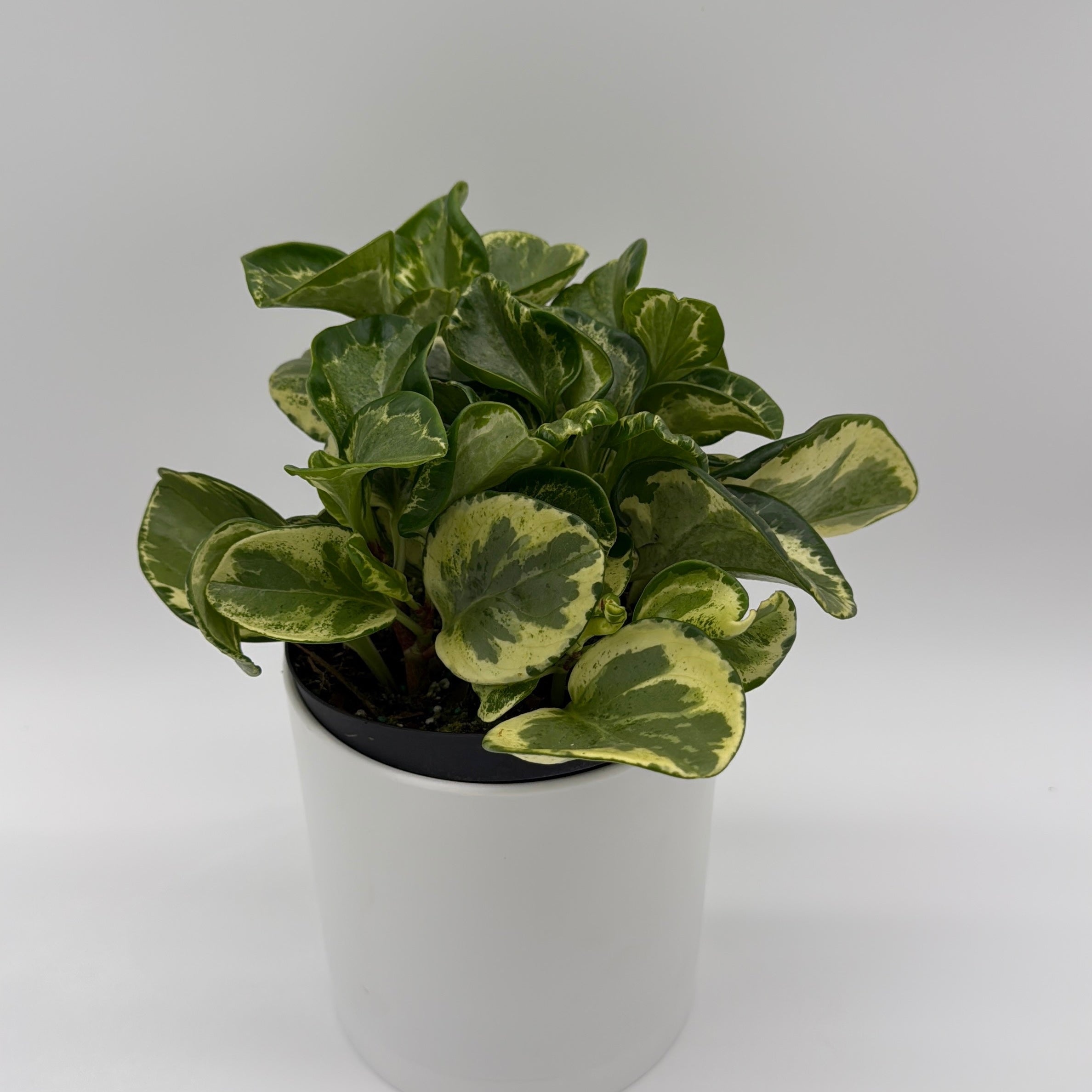
Peperomia Obtusifolia 'Golden Gate'
Why Peperomias Are Different
Most tropical plants throw a fit if you don't water them on schedule, but peperomias play by different rules. Their thick, fleshy leaves work like tiny water tanks, storing moisture for dry periods. This means they can handle a bit of neglect, which is great news for busy plant parents or anyone just starting out with houseplants.
In their natural habitat, peperomias grow as understory plants, meaning they're used to filtered light rather than direct sun. They've adapted to thrive in the dappled shade of rainforest floors, which is why they do so well in typical indoor lighting conditions. This natural adaptation makes them one of the easiest houseplants to keep alive, even in rooms without bright windows.
Popular Varieties Worth Knowing
With so many types available, peperomias offer something for everyone. Some have rippled leaves, others have smooth glossy surfaces, and many feature stunning variegation patterns. The Peperomia Obtusifolia 'Golden Gate' stands out with its creamy yellow and green marbled leaves that look like they've been hand-painted.
| Variety | Leaf Type | Growth Pattern | Light Needs |
|---|---|---|---|
| Golden Gate | Glossy, variegated | Upright, compact | Bright indirect |
| Watermelon | Striped, rounded | Upright | Medium to bright |
| Rosso | Dark green, red underside | Compact rosette | Medium light |
| Hope | Round, trailing | Cascading vines | Bright indirect |
| Frost | Silver-frosted | Upright | Bright indirect |
What Makes Them Perfect Houseplants
Beyond their good looks, peperomias bring some practical benefits to your indoor space. They stay small, rarely growing taller than 12 inches, which means they won't take over your room or need constant pruning. Their slow growth rate also means less repotting and maintenance compared to fast-growing plants that quickly outgrow their pots.
Here's what makes peperomias stand out as houseplants:
- They tolerate lower light conditions better than most tropical plants
- Their water-storing leaves mean less frequent watering
- They rarely attract pests or develop diseases
- Most varieties stay compact and don't need pruning
The peperomia plant also works well in different settings. You can group several varieties together for a mini collection, use them as desk plants, or tuck them into terrariums. Some people even grow them in bathrooms where the humidity mimics their natural environment, though they're not picky about moisture levels like some other tropical plants.
Light and Location Secrets
Peperomia plants thrive in bright indirect light, which means they want to be near a window but not baking in direct sun. The thick, glossy leaves of varieties like the Peperomia Obtusifolia 'Golden Gate' can actually scorch and develop brown patches when exposed to harsh afternoon rays. This is especially true for variegated types, where the creamy yellow portions are more sensitive than the green parts. The good news is that peperomias are pretty flexible and can handle lower light conditions better than most houseplants, though they might grow a bit slower.
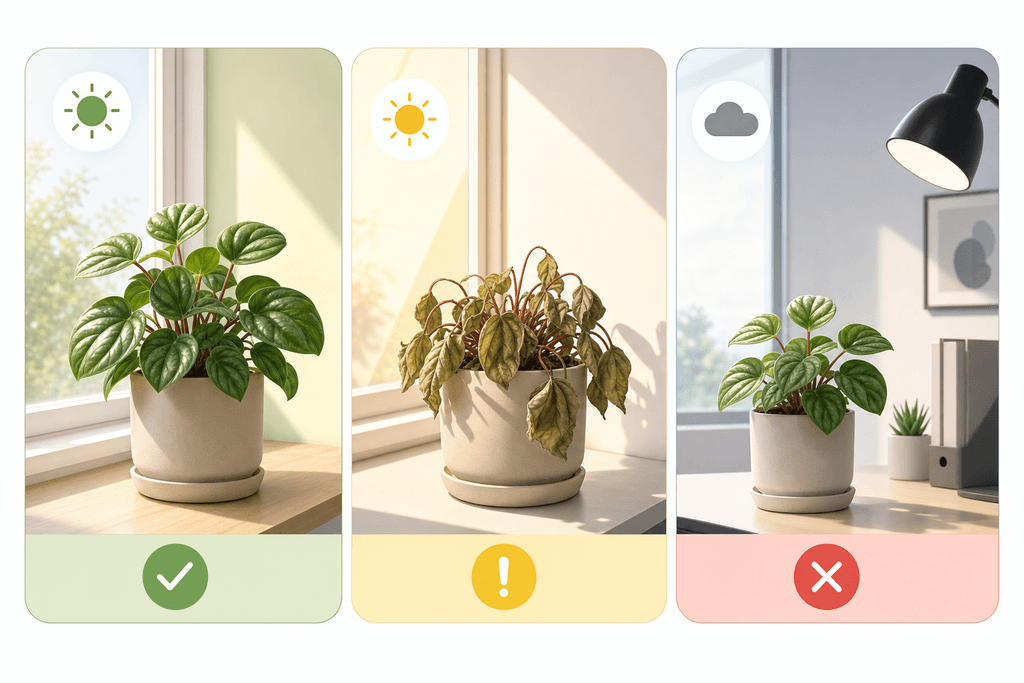
Finding the right spot in your apartment or home office doesn't have to be complicated. An east-facing window gives gentle morning light, while a north-facing window provides consistent but softer illumination throughout the day.
Best placement options for different spaces:- Apartments: 3-5 feet from a south or west-facing window, or directly on an east-facing sill
- Home offices: On a desk near a window with sheer curtains to filter harsh light
- Bathrooms: Near frosted windows where humidity is naturally higher
- Shelving units: Upper shelves that catch ambient light without direct exposure
Your peperomia plant will tell you if something's wrong with its lighting situation. Leaves that look pale, washed out, or stretched toward the light mean your plant is begging for a brighter spot. On the flip side, brown crispy edges or faded variegation usually signal too much direct sun.
Rotating your plant a quarter turn every week helps it grow evenly instead of leaning dramatically toward the light source. This simple habit takes five seconds but makes a real difference in how balanced and full your plant looks over time.
- Can you read a book comfortably without artificial light during the day?
- Does the spot get direct sun for less than 2 hours daily?
- Is the location away from heating vents or air conditioning drafts?
- Can you easily access the plant for watering and maintenance?
- Is the temperature consistently between 65-75°F?
Watering Without the Guesswork
The semi-succulent leaves of peperomia plants store water like tiny reservoirs, which means they're built to handle a bit of neglect. This storage system is what makes them so forgiving for first-time plant owners who might forget to water for a week or two. Understanding this feature changes everything about how you approach watering, because the biggest mistake people make is treating peperomias like thirsty tropical plants that need constant moisture.
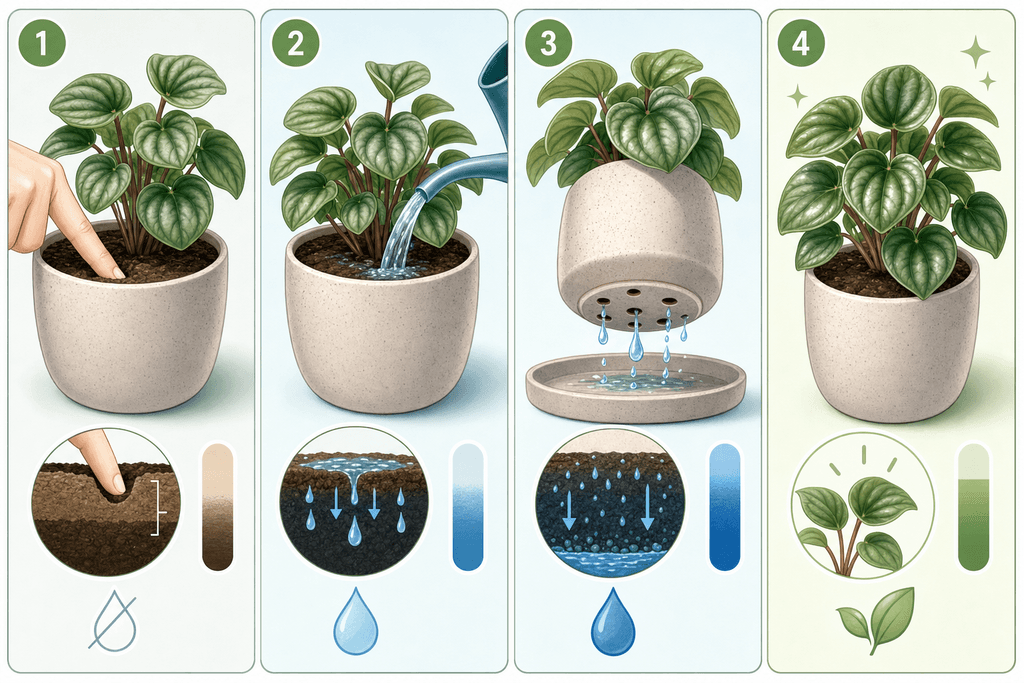
The finger test is your best friend here. Stick your finger about two inches into the soil, and if it feels dry at that depth, it's time to water. If there's any moisture, wait a few more days and check again.
Watering frequency guide:- Spring and summer: Every 7-10 days when growth is active
- Fall and winter: Every 10-14 days when the plant is resting
- High humidity environments: Less frequent watering needed
- Dry climates or heated rooms: May need water every 5-7 days
Overwatering shows up as yellowing leaves that feel mushy or soft to the touch, often starting from the bottom of the plant. You might also notice the stems turning black or the soil staying wet for days after watering. Underwatering looks different, with leaves that wrinkle, curl, or feel thin and papery instead of plump and firm.
Room temperature water works best because cold water can shock the roots and slow down growth. Tap water is usually fine, but if your water is heavily chlorinated, letting it sit out overnight allows the chlorine to evaporate.
| Watering Method | Effectiveness | Best For |
|---|---|---|
| Top watering | High | Most situations |
| Bottom watering | Very high | Preventing root rot |
| Misting leaves | Low | Humidity only |
| Self-watering pots | Medium | Busy schedules |
Soil, Feeding, and Maintenance Made Simple
Peperomia plants need soil that drains quickly and doesn't hold onto moisture for too long. A mix of regular potting soil, perlite, and orchid bark in equal parts creates the perfect balance of drainage and aeration that prevents root rot. You can also use a cactus or succulent mix straight from the bag, which already has the gritty texture these plants prefer. The key is making sure water flows through the pot within seconds, not minutes, when you water.
Fertilizing should happen during the growing season from spring through early fall, using a balanced liquid fertilizer diluted to half strength. Once a month is plenty, because peperomias are slow growers that don't need heavy feeding.
- Use a 10-10-10 or 20-20-20 fertilizer diluted to 50% strength
- Apply only to moist soil, never dry soil which can burn roots
- Skip fertilizing completely in winter when growth naturally slows
- Watch for salt buildup (white crust on soil) and flush with water if needed
Repotting becomes necessary when roots start poking through drainage holes or the plant looks too big for its pot. This usually happens every 2-3 years for most peperomias. Choose a pot only one size larger, because too much extra soil holds excess moisture that can lead to problems.
Cleaning the leaves with a damp cloth removes dust that blocks light and reduces the plant's ability to photosynthesize. This simple task every few weeks keeps your Peperomia Obtusifolia 'Golden Gate' looking glossy and vibrant while helping it absorb more light.
Pruning tips for bushier growth:- Pinch off leggy stems just above a leaf node to encourage branching
- Remove any yellow or damaged leaves at the base of the stem
- Cut back overgrown sections in spring when new growth is starting
- Use clean, sharp scissors to prevent disease transmission
Common pests like mealybugs and spider mites occasionally show up but are easy to handle with a cotton swab dipped in rubbing alcohol. Check the undersides of leaves and stem joints where these bugs like to hide.
- Monthly: Check soil moisture, wipe leaves, inspect for pests, rotate plant
- Spring: Fertilize, repot if needed, prune leggy growth
- Summer: Increase watering frequency, maintain fertilizing schedule
- Fall: Reduce fertilizing, prepare for slower growth period
- Winter: Water less frequently, skip fertilizer, maintain humidity
Troubleshooting Common Problems
Yellow leaves on a peperomia plant almost always point to watering issues, with overwatering being the main culprit. When the soil stays soggy for too long, roots can't breathe and start to rot, which cuts off nutrient flow to the leaves. A few yellow leaves on an older plant is normal aging, but multiple yellow leaves appearing quickly means you need to check your watering routine and soil drainage. The solution is letting the soil dry out more between waterings and possibly repotting into fresh, well-draining mix.
Drooping or wilting despite regular watering usually means root rot has already set in. The roots are damaged and can't absorb water even when it's available, so the plant looks thirsty no matter what you do.
| Problem | Main Cause | Quick Fix |
|---|---|---|
| Yellow leaves | Overwatering | Reduce watering frequency |
| Brown leaf edges | Low humidity or salts | Increase humidity, flush soil |
| Drooping stems | Root rot | Repot, trim bad roots |
| Leggy growth | Insufficient light | Move to brighter spot |
| Leaf drop | Temperature shock or drafts | Relocate away from vents |
| Pale leaves | Too much light | Move away from window |
Brown leaf edges and tips typically come from low humidity, fluoride in tap water, or fertilizer salt buildup in the soil. Pet owners and apartment dwellers often see this issue in winter when heating systems dry out the air.
Leggy growth happens when your peperomia plant stretches toward a light source that's too far away or too dim. The stems get long and sparse with big gaps between leaves instead of the compact, bushy look these plants are known for. Moving the plant closer to a window or adding a grow light fixes this, and pruning back the leggy stems encourages fuller growth.
Leaf drop can be alarming but isn't always serious. Sudden temperature changes, cold drafts from windows or AC units, or moving the plant to a drastically different environment can cause leaves to fall off. The plant usually recovers once conditions stabilize, though it might look a bit bare for a while.
Normal plant behavior includes older bottom leaves occasionally yellowing and dropping, slight color changes with the seasons, and slower growth in winter months. These aren't problems that need fixing, just natural cycles. If you're interested in exploring other peperomia varieties with similar care needs, check out guides for Peperomia Hope, Peperomia Watermelon, or String of Turtles to see how different types compare.
Your Peperomia Success Story Starts Here
Peperomia plants are some of the most forgiving houseplants you can grow, which makes them perfect for anyone just starting out with indoor plants. They don't need constant attention, they bounce back from most mistakes, and they actually prefer a bit of neglect over too much fussing. If you've killed a plant before, a peperomia plant won't hold it against you. The thick, semi-succulent leaves store water, so missing a watering here and there won't spell disaster.
Every plant parent makes mistakes, and that's completely normal. You might overwater once or place your plant in a spot that's too dark, but peperomias give you time to notice and fix things. The Peperomia Obtusifolia 'Golden Gate' is especially good for beginners because its variegated leaves actually tell you when something's off.
The care routine is simple enough to remember without writing it down. Water when the soil is dry, give it bright indirect light, and leave it alone most of the time. That's really all there is to it.
If you want to explore other varieties, check out our guides on Peperomia Watermelon or Peperomia Hope to see which one fits your space best. Each type has its own look, but they all share that same easygoing nature that makes peperomias worth keeping around.
Trust the basics, watch your plant, and adjust as needed. You'll figure out what works in your specific apartment or office pretty quickly.
Common Peperomia Questions Answered
New peperomia plant owners often have the same questions pop up during their first few months of care. These plants are pretty forgiving, but a few common issues can catch people off guard if they're used to caring for other houseplants. The good news is that most peperomia problems have simple fixes once you understand what's going on. Here are the answers to the questions we hear most often from people growing these compact beauties indoors.
How often should I water my peperomia?
Water your peperomia plant every 1-2 weeks, but only when the top two inches of soil feel completely dry to the touch. These plants have semi-succulent leaves that store water, so they actually prefer to dry out a bit between waterings rather than sitting in constantly moist soil. Overwatering is the number one killer of peperomias, so when in doubt, wait an extra day or two.
Are peperomia plants safe for cats and dogs?
Yes, peperomia plants are completely non-toxic to both cats and dogs according to the ASPCA. This makes them a perfect choice for pet owners who want to add greenery without worrying about their furry friends taking a nibble. The Peperomia Obtusifolia 'Golden Gate' is especially great for pet-friendly homes since its thick leaves are less tempting to chew than delicate, dangly foliage.
Why are my peperomia leaves falling off?
Leaf drop in peperomia plants usually happens because of watering issues, either too much or too little. Overwatering causes root rot, which prevents the plant from absorbing nutrients and leads to leaves falling off from the bottom up. Underwatering can also cause leaves to shrivel and drop, but you'll usually notice the leaves getting wrinkly first. Check your soil moisture and adjust your watering schedule accordingly.
Can peperomia grow in low light?
Peperomia plants can tolerate low light conditions, but they won't thrive or grow much in those spots. They do best in bright, indirect light where their colors stay vibrant and growth remains steady. If you only have low-light areas available, your peperomia will survive but may become leggy and lose some of its variegation over time.
How do I make my peperomia bushier?
Pinch or trim the growing tips of your peperomia plant to encourage branching and create a fuller, bushier shape. When you remove the top growth, the plant responds by sending out new shoots from lower nodes along the stem. You can also make sure your plant gets enough light, since insufficient light causes leggy, sparse growth instead of the compact form peperomias are known for.
Do pepeperomias need humidity?
Peperomia plants appreciate moderate humidity but don't require the high humidity levels that many tropical plants demand. Normal household humidity between 40-50% works just fine for most varieties. If your home is extremely dry, you might notice some leaf edges browning, but these plants are much more adaptable to average indoor conditions than ferns or calatheas.