

Common Houseplant Pests and How to Treat Each One
Nov 21, 2026
Plant pests can turn a healthy houseplant into a problem in a matter of days, because a single spider mite can lay up to 300 eggs in its lifetime. That kind of math is why a few specks on a leaf one week can turn into webbing and yellow spots the next. Six pests cause most of the houseplant damage seen in homes and offices: spider mites, mealybugs, aphids, scale, fungus gnats, and thrips. Each one leaves a different calling card on your leaves, and each one needs a different fix.
Matching the right symptom to the right treatment saves you time and saves your plant. A plant covered in sticky residue has a different problem than one with cottony white clumps in the leaf joints, and spraying the wrong thing can waste weeks while the pest keeps breeding. For plant owners in Homestead dealing with humid, warm conditions most of the year, pests can establish faster than in drier climates, so catching the signs early matters even more.
Table of Contents
Why Indoor Plants Attract Bugs in the First Place
Central heating and AC strip moisture out of indoor air, and that dry air is exactly what spider mites need to multiply fast. In a Homestead apartment or office running AC most of the year, humidity can drop low enough near vents and windows to give mites the dry conditions they favor, even though the outdoor air stays humid.
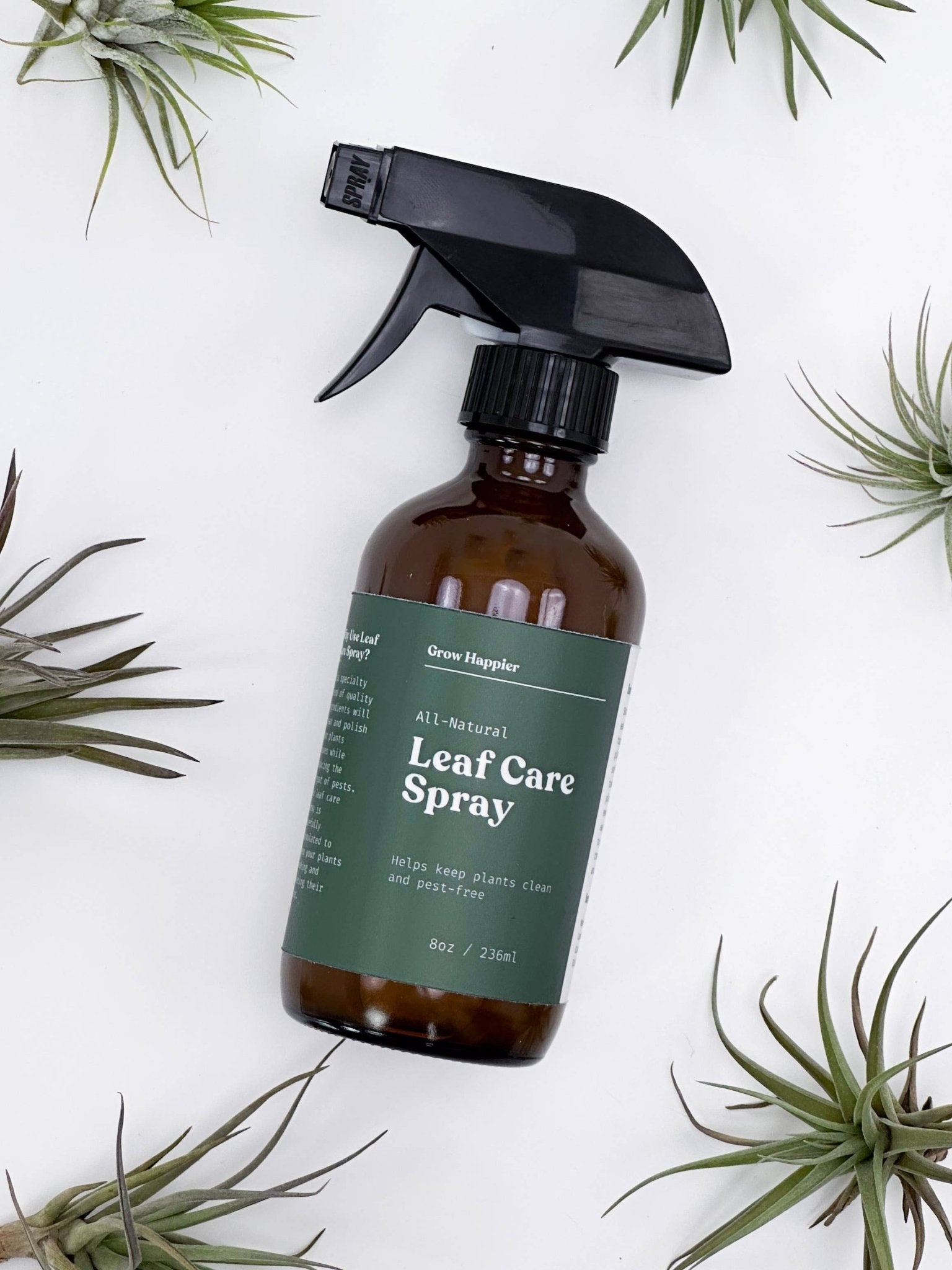
Plant Leaf Care Spray - 8oz
Overwatering is the main trigger for fungus gnats, not dry air. Gnats lay eggs in soggy potting soil, and the larvae feed on wet organic matter near the surface, so a plant that sits in water after every watering becomes a breeding site within days. Letting the top inch of soil dry out between waterings, a step covered in how often should I water my houseplants, removes the one condition gnats need.
New plants from big box stores often carry pest eggs that are not visible at purchase, since eggs can sit on the underside of leaves or in the soil for weeks before hatching. A quarantine period of two to three weeks away from other plants lets any hidden eggs hatch and show themselves before they spread.
| Pest | Favorite Condition | First Sign to Watch |
|---|---|---|
| Spider mites | Dry air, low humidity | Fine webbing, speckled leaves |
| Fungus gnats | Wet, soggy soil | Small flies near the soil line |
| Mealybugs | Warm, still air | White cottony clumps in leaf joints |
| Aphids | New, tender growth | Clusters on stems and buds |
Spotting the Early Warning Signs on Your Plant
The first clue a plant gives you rarely tells you which bug caused it, so learn the symptom before you chase the name. Fine webbing stretched between leaves or along stems almost always means spider mites have moved in. A sticky, clear film on leaves or on the table under a pot points to aphids, mealybugs, or scale, since all three excrete the same sugary waste called honeydew.
Tiny flying insects hovering near the soil surface, especially when you water, signal fungus gnats rather than anything chewing on the leaves themselves. Silvery streaks across leaf surfaces or new growth that comes in twisted and stunted usually means thrips are feeding on the plant's newest tissue. Cottony white clumps tucked into leaf joints or where a stem meets a branch are the calling card of mealybugs, and they are often the easiest symptom to spot by eye.
- Check the undersides of leaves for webbing or tiny moving dots
- Press a finger on any sticky spot and check for residue
- Look at the soil line for small black flies at dusk
- Inspect new leaves for silvery scarring or curling edges
Catching these signs within the first week cuts your treatment time roughly in half compared to waiting until the infestation spreads across the whole plant.
Matching Each Pest to Its Exact Symptoms
Each of the six common houseplant pests has a look and a favorite spot that sets it apart from the rest. Spider mites cause speckled, yellowed leaves and spin webbing on the underside, and they get worse fast in rooms with dry heat or air conditioning running. Aphids cluster on new growth and flower buds, where the tissue is softest, and leave behind the same sticky residue mentioned above.
Mealybugs hide inside leaf joints and stem crevices, protected by a waxy white coating that sheds water and some sprays. Scale insects look like small brown or tan bumps stuck to stems and leaf veins, and unlike most pests, adult scale does not move once it has settled. Fungus gnats show up as small black flies buzzing near wet soil, while their larvae feed just below the surface. Thrips leave silvery scarring across leaf surfaces along with tiny black specks of waste, and new growth often comes in twisted. For a closer look at one of the trickiest pests to catch early, see how to spot and treat spider mites on houseplants.
| Pest | Visible Symptom | Typical Hiding Spot |
|---|---|---|
| Spider mites | Speckled yellow leaves, fine webbing | Underside of leaves |
| Aphids | Clusters, sticky residue | New growth, buds |
| Mealybugs | White cottony clumps | Leaf joints, stem crevices |
| Scale | Brown or tan bumps, stationary | Stems, leaf veins |
| Fungus gnats | Small black flies | Soil surface |
| Thrips | Silvery scarring, black specks | New leaves |
Scale is the only one of the six that does not move as an adult, which is why scraping it off by hand works even when sprays struggle to reach it under its shell.
Treatment Methods for Each Pest and When to Use Them
The right treatment depends on the pest's body and its hiding spot, not on which product is strongest. Rubbing alcohol on a cotton swab kills mealybugs and scale on contact because it dissolves the waxy coating that protects them from water-based sprays. Neem oil spray smothers aphids, thrips, and spider mites within a few days of regular use, since it coats their breathing pores and disrupts feeding.
Yellow sticky traps catch adult fungus gnats and winged aphids as they fly between plants, which cuts down the next generation before it lays eggs; pairing traps with drier soil, covered in how to get rid of fungus gnats, handles both the adults and the breeding site. Insecticidal soap works fast on soft-bodied bugs like aphids and mites because it breaks down their outer layer on contact. Chemical systemic pesticides should stay a last resort, saved for infestations that cover most of the plant after other methods have failed.
- Rubbing alcohol: spot treatment for mealybugs and scale
- Neem oil spray: full-plant coverage for aphids, thrips, mites
- Sticky traps: catches flying adults, does not treat eggs
- Insecticidal soap: fast knockdown on soft-bodied pests
Wiping leaves after any spray treatment removes eggs and residue the spray missed, and a ready-made option like Plant Leaf Care Spray already blends neem oil with castile soap for this exact step.
Keeping Pests From Coming Back After Treatment
Treating an infestation once does not keep it from returning, so prevention has to become part of your regular plant care routine. Quarantine every new plant for two weeks before placing it near the rest of your collection, since that's long enough for hidden eggs to hatch and show themselves. Wipe leaves weekly to clear off dust and catch any new eggs before they mature into a full outbreak.
Let the soil dry out between waterings, since soggy soil is the single biggest reason fungus gnats keep coming back no matter how many adults you trap. Rotating plants occasionally so every side gets even light also keeps pests from settling into one shaded corner undisturbed for weeks. Weekly wiping catches eggs before they hatch, which matters more than any spray applied after the fact.
- Quarantine new arrivals for two full weeks
- Wipe leaves on a weekly schedule, not just when pests appear
- Check soil moisture before every watering
- Rotate pots so no single side stays shaded and still
A set of leaf shine cloth wipes made for routine cleaning removes the dust and residue that attract pests in the first place, long before an infestation has a chance to start.
Natural or Chemical, Who Each One Fits
Households with pets, kids, or a shared home office space do better with natural treatments like neem oil and castile soap, since those ingredients do not carry the inhalation or contact warnings printed on most chemical pesticide labels. A cat that walks across a treated leaf or a toddler who touches the soil is not exposed to anything stronger than diluted soap and plant oil. That makes natural methods the right starting point for most Homestead apartments and offices, not just the safer-sounding one.
Chemical pesticides knock down an infestation faster, often within a day or two, but that speed comes with a real cost indoors. Sprays strong enough to kill pests on contact can also irritate skin, lungs, and eyes in a closed room without the airflow an outdoor garden gets. They are built for scale and greenhouse use, not for a living room with a couch six feet from the pot.
Most home infestations caught in the first week respond fully to natural methods, since mites, aphids, and mealybugs all have soft bodies or waxy coatings that neem oil and rubbing alcohol break down without help from anything harsher. The exception is an infestation that has already spread across most of the plant or come back after two full treatment rounds. At that point a rotation between neem oil and a stronger product, spaced a week apart, clears pests that have built up a tolerance to one method alone.
- Pets or kids in the home: start natural, treat weekly, watch for regrowth
- Caught in week one: natural methods alone usually clear it
- Spread across most of the plant: rotate in a stronger product
- Returned after two natural treatments: switch methods, do not repeat the same one
A plant care routine built around pet-friendly products, the kind covered in how to care for pet-friendly plants, keeps the natural option workable for most of the year. Anyone shopping for the next addition to their plant collection can browse common houseplants bred for easy care before deciding how much pest pressure they are signing up for.
What to Check on Your Plants Today
Pick a time today, not this weekend, to turn over every leaf on every plant you own and look at both sides. A pest problem spotted on day one takes a single treatment to clear, while the same problem left two more weeks turns into webbing, sticky residue, or cottony clumps spread across the whole plant. If you see even one speck, one sticky patch, or one cottony dot, treat it that same day instead of watching it to see if it spreads, because it will. Build a standing weekly habit of wiping leaves down, since that single step catches new eggs before they hatch and keeps most Homestead households from ever dealing with a full infestation. A bottle of Plant Leaf Care Spray next to your watering can is enough to make that weekly check an easy habit to keep.
Houseplant Pest Questions Answered
Can pests spread to other plants just from being nearby?
Yes, pests like spider mites, aphids, and mealybugs crawl from leaf to leaf when plants touch or sit close together on the same shelf or windowsill. Some also travel short distances through the air or get carried on your hands or clothing. Keep a few inches of space between pots and isolate any plant showing symptoms right away.
Is neem oil spray safe to use around cats that chew on leaves?
Diluted neem oil sprays made for houseplants are generally considered low risk for pets, but concentrated neem oil can upset a cat's stomach if licked or eaten in quantity. Let sprayed leaves dry fully before letting a cat near the plant, and skip neem on any plant your cat chews regularly. For households with curious pets, choosing plants that are nontoxic in the first place removes the guesswork entirely.
How long after treatment should I see dead pests fall off?
Most treatments show visible results within 2 to 4 days, with dead mites, aphids, and mealybugs drying up and dropping off the leaf. Eggs can still hatch after that window, so a second treatment 7 days later catches anything the first round missed. If leaves still show new activity after two rounds, the infestation has likely built up resistance to that single method.
Should I throw away a plant if the infestation keeps coming back?
Not right away. A returning infestation usually means eggs are hiding somewhere the spray never reached, like deep in a root ball or a crevice near the soil line, not that the plant is beyond saving. Repot into fresh soil, trim off the worst-affected leaves, and switch treatment methods before giving up on it. Only consider replacing the plant if the stems and roots have rotted or collapsed underneath the pest damage.