

Anthurium Care Guide for Light, Watering, Humidity, and Blooms
Sep 28, 2026
Anthuriums in the wild grow on trees, not in dirt, clinging to bark with roots that breathe open air. That single fact explains almost every care mistake people make with these plants, from soggy soil to leaves that turn yellow and sad. This guide breaks down exactly what your anthurium needs for light, water, humidity, and blooms, so if you're in Homestead and want a plant that actually thrives, Runo Plants LLC has healthy anthuriums bred for real home conditions, not just greenhouse perfection.
How much light does an Anthurium need?
Anthuriums need bright, indirect light for 6–8 hours a day, such as near an east- or north-facing window. Direct sun scorches the leaves, while too little light stops the plant from blooming.
How often should you water an Anthurium?
Water Anthuriums every 7–10 days, once the top 2 inches of soil have dried out. Overwatering causes root rot, so well-draining soil and a pot with drainage holes are essential.
How do you get an Anthurium to rebloom?
To rebloom an Anthurium, provide bright indirect light, maintain temperatures between 65–80°F, and feed it every 6 weeks with a phosphorus-rich fertilizer (10-30-10). Under these conditions, Anthuriums can rebloom every 3 months, with each flower lasting 6–8 weeks.
Table of Contents
Getting Light and Watering Right
Anthuriums grow best under bright, indirect light, ideally near an east or north-facing window. Direct sun will scorch those velvety leaves fast, leaving brown crispy patches that never heal. If you're in an apartment in Homestead, the light coming through south or west windows is often stronger than people expect, so keep plants a few feet back or use a sheer curtain.
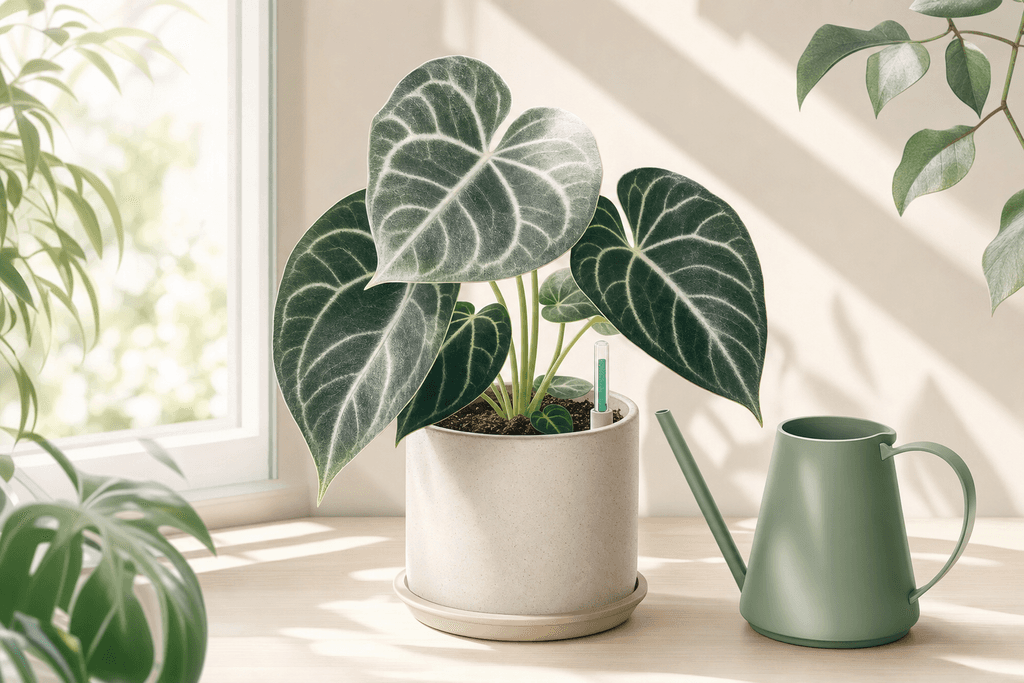
Watering comes down to checking the soil, not sticking to a fixed calendar. Stick your finger in about 1-2 inches deep, and if it's dry, water. This usually works out to every 7-10 days, but humidity and pot size change that math.
- Light: bright, indirect, no direct sun
- Water: when top 1-2 inches of soil are dry
- Frequency: roughly every 7-10 days
- Watch for: overwatering, which kills faster than underwatering
Root rot from overwatering is the number one reason these plants die in someone's living room. Let the soil dry out between waterings rather than keeping it constantly damp, and your anthurium's roots will stay healthy a lot longer.
Humidity and Soil That Anthuriums Love
Anthuriums come from tropical rainforests, so they want humidity between 60% and 80%. A humidifier works well, but a pebble tray or even placing the pot in a steamy bathroom can get you close enough.
Collector varieties like the Anthurium Queen and the Anthurium 'Delta Force' need extra humidity to keep that velvety texture looking sharp. Low humidity shows up fast as crispy brown edges, which is a common problem in apartments running central heat or AC all day.
Soil matters just as much as humidity. These plants need a chunky, well-draining mix so water moves through without sitting around the roots.
| Ingredient | Ratio |
|---|---|
| Orchid bark | 40% |
| Perlite | 30% |
| Sphagnum moss | 30% |
Skip regular potting soil on its own. It holds too much water and suffocates the roots over time, which is the fastest way to lose a plant like the Anthurium Red Crystal Crystallinum.
Encouraging Repeat Blooms Indoors
Anthuriums can flower repeatedly indoors if you feed them consistently. Use a balanced liquid fertilizer every 4-6 weeks during spring and summer, then ease off in fall and winter when growth slows down.
Temperature plays a bigger role than most people realize. Keep your plant between 65°F and 85°F, since cold drafts near a window or door can stall blooming completely.
- Feed every 4-6 weeks (spring/summer only)
- Ideal temperature range 65-85°F
- Remove spent flowers and yellow leaves regularly
- Repot every 1-2 years for stronger flower spikes
Cutting off spent flowers and yellowing leaves sends energy back into new growth instead of wasted tissue. Repotting every year or two also gives the roots enough room to support more blooms over time, something that really shows on mature plants like the Anthurium Queen.
If you want a deeper dive into specific varieties, our guides on Anthurium Crystallinum care and Anthurium Red Crystal Crystallinum care break down watering and light needs plant by plant. For anyone eyeing a warocqueanum specifically, the Anthurium Queen care guide covers the exact humidity setup that keeps those long pendant leaves from crisping up.
Wrap-up Your Anthurium Care Routine
Good anthurium care comes down to four things: bright indirect light, letting the soil dry out between waterings, high humidity, and chunky soil that drains fast. Add regular feeding and a little grooming (wiping leaves, trimming dead growth), and you're setting your plant up to bloom again and again.
If you're in Homestead and want to start or grow a collection, Runo Plants LLC carries collector varieties like the Anthurium Queen and the Delta Force. Each species has its own quirks, so check out our guides on Anthurium Crystallinum and Anthurium Magnificum before you pick your next one.
Still have questions about watering schedules or why your leaves aren't perking up? The next section covers the ones we hear most.
Anthurium Care Questions Answered
Got more questions rattling around your head about your leafy friend? Here are three we hear all the time, answered plain and simple.
How often do anthuriums bloom
A healthy anthurium can bloom every few months once it's mature, especially if it gets bright indirect light and steady warmth. Flowering slows down in low light or cold rooms. If you want that classic red bloom show, keep humidity up and feed it lightly during spring and summer.
Are anthuriums safe for pets
No, anthuriums aren't pet safe. The leaves and sap contain calcium oxalate crystals, which can irritate a cat or dog's mouth and stomach if chewed. Keep the plant up high on a shelf or in a room your pets can't get into, just to be safe.
How do you fix drooping leaves
Drooping usually means the roots are either too dry or sitting in soggy soil. Check the roots first, trim any mushy brown ones, then repot in fresh, chunky mix. Collector varieties like our Anthurium Queen bounce back fast once roots get air and the right moisture balance.