

Syngonium Care Guide for Light, Watering, Humidity, and Pruning
Sep 23, 2026
Syngonium plants can survive weeks of neglect and still bounce back with fresh new leaves, which is why they've become a go-to pick for apartment dwellers in Homestead who forget to water on schedule. This guide breaks down exactly what your arrowhead plant needs to stay full and colorful: bright indirect light, a weekly watering habit, moderate humidity, and the occasional trim. Whether you just brought home a Syngonium 'Snow White' or you're eyeing a Pink Vein for your desk, these same four basics apply.
How often should you water a Syngonium?
Water Syngonium when the top 1-2 inches of soil feel dry, typically every 7-10 days. Reduce frequency to every 2-3 weeks in winter when growth slows.
What humidity level does Syngonium need to thrive?
Syngonium thrives at 50-60% humidity and will tolerate levels as low as 40%. Below 30% humidity, leaf edges brown and curl.
How do you prune Syngonium to make it fuller?
Pinch or cut stems just above a leaf node every 4-6 weeks during the growing season to encourage bushier growth. Use the cut stem sections, which need at least one node, to propagate new plants in water or moist soil.
Table of Contents
Light and Watering Your Syngonium Needs
Syngonium plants need bright, indirect light to keep their colors sharp. If you own a Neon Pink or Pink Vein and notice the leaves fading to plain green, that's usually a sign the plant isn't getting enough light. An east or north-facing window works great for most apartments in Homestead, especially since direct afternoon sun can scorch the leaves fast.
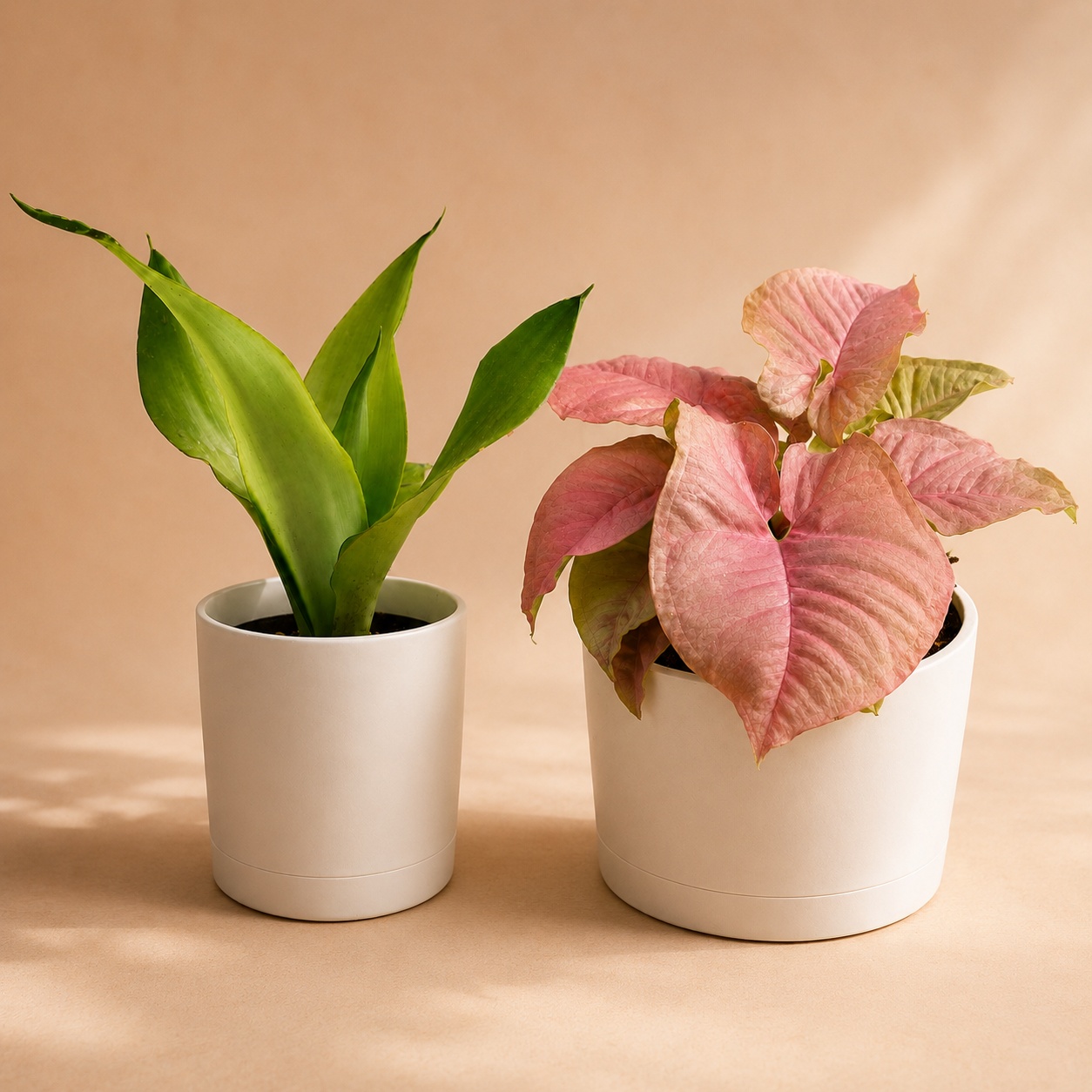
Syngonium Neon Pink & Sansevieria 'Moonshine' Bundle
Watering is simpler than most people think. Stick your finger in the soil, and if the top 1-2 inches feel dry, it's time to water. This usually lands somewhere between 7 to 10 days, but it depends on your home's temperature and light levels.
| Light Level | Watering Frequency |
|---|---|
| Bright indirect | Every 7 days |
| Medium indirect | Every 10 days |
| Low light | Every 12-14 days |
Yellow leaves usually mean you're overwatering, and crispy brown edges mean the opposite. Both are fixable once you know what to look for, but catching it early saves the plant a lot of stress.
Humidity and Temperature for Lush Foliage
Syngonium plants come from tropical regions, so they naturally prefer 50-60% humidity. That said, they're pretty forgiving and can handle typical indoor humidity levels without much fuss, which is part of why they're such a solid pick for apartment life.
The real problem is dry heat. If you run your AC constantly in summer or crank the heater in winter, your Syngonium's leaf tips might start turning crispy and brown.
- Group plants together to raise humidity around them
- Set pots on a pebble tray with water
- Run a small humidifier nearby
- Mist leaves occasionally, though this is a short-term fix
Temperature matters just as much as humidity. Keep your Syngonium in a spot between 65-80°F, and away from cold drafts, open windows in winter, or air vents blasting directly on the leaves. A sudden temperature swing can shock the plant faster than most people expect.
Pruning and Propagating for a Fuller Plant
Syngonium vines can get leggy and sparse over time, especially varieties like Snow White that love to climb. Pruning above a node encourages the plant to branch out instead of just growing longer and thinner.
Propagating cuttings is one of the easiest ways to multiply your collection without spending more money.
- Use clean, sharp shears
- Cut just below a leaf node
- Place the cutting in water or moist soil
- Wait 2-4 weeks for roots to form
- Pot it up once roots are an inch or two long
One thing pet owners should know: Syngonium is toxic if chewed, so keep cuttings and fallen leaves away from curious cats and dogs. If you've got pets that like to nibble on greenery, place your plant somewhere out of reach, or stick to shelves and hanging planters.
Growing Your Syngonium Collection
Once you get the hang of one Syngonium, adding more varieties to your space gets a lot less intimidating. Our Syngonium Snow White and Syngonium Pink Vein both follow the same care routine outlined above, just with their own unique leaf patterns to enjoy.
If you're curious about other types beyond what's covered here, we've got detailed guides on general Syngonium care, plus specific write-ups for Syngonium Moonshine, Syngonium Albo, and Syngonium Batik, among others. Each variety has small quirks worth knowing before you bring one home.
Wrap-Up Keeping Your Syngonium Happy
Four things keep any Syngonium looking full and colorful: bright indirect light, watering only when the topsoil dries out, moderate humidity, and a trim every few months. This routine works whether you've got a Neon Pink, a Pink Vein, or a Snow White on your shelf. There's no need to overthink it once you get the pattern down.
If you're in the Homestead area and want to start with a plant that's already healthy, Runo Plants LLC at 19605 SW 334th Street has starter Syngoniums and bundles ready to go. For more variety, check out our full Syngonium care guide covering other types like Albo and Wendlandii. Good Syngonium care really just comes down to consistency, not luck.
Syngonium Care FAQs
How often should I water my Syngonium
Water your Syngonium about once a week, but always check the soil first. Stick your finger in about two inches deep, and if it's dry, go ahead and water. In lower light or cooler months, it might stretch to every 10 days.
Is Syngonium safe for pets
No, Syngonium is not pet safe. The leaves and stems contain calcium oxalate crystals, which can irritate your cat or dog's mouth and stomach if chewed. Keep it up on a shelf or in a hanging planter if you've got curious pets around.
Why is my Syngonium losing its variegation
Low light is usually the reason. When a variegated Syngonium like our Snow White or Pink Vein doesn't get enough bright, indirect light, it starts producing more plain green leaves to make up for lost chlorophyll. Move it closer to a window and new growth should come back with more color.